Over-the-side
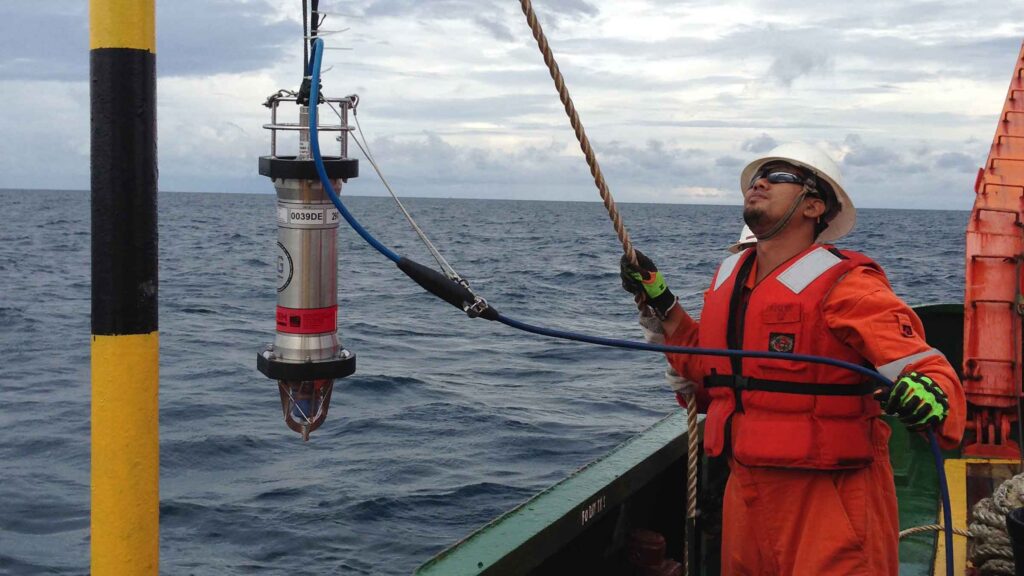
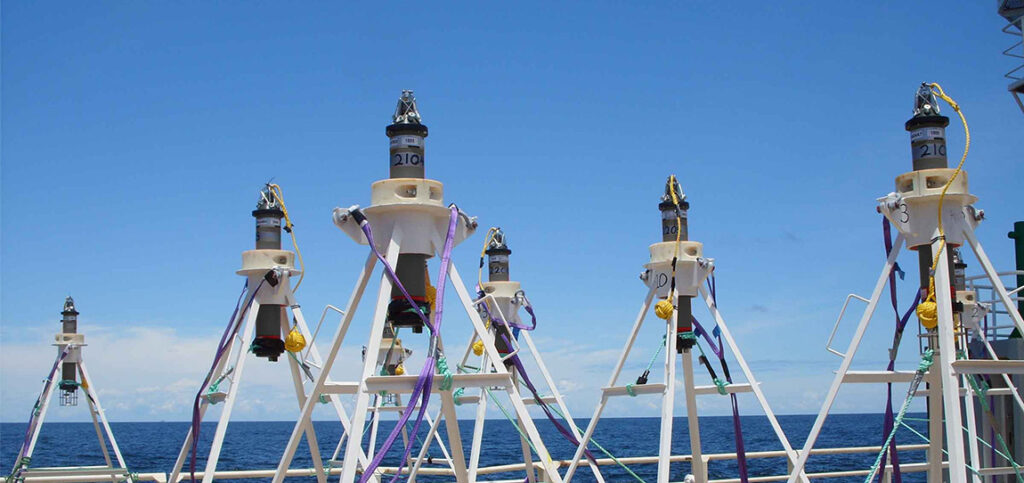
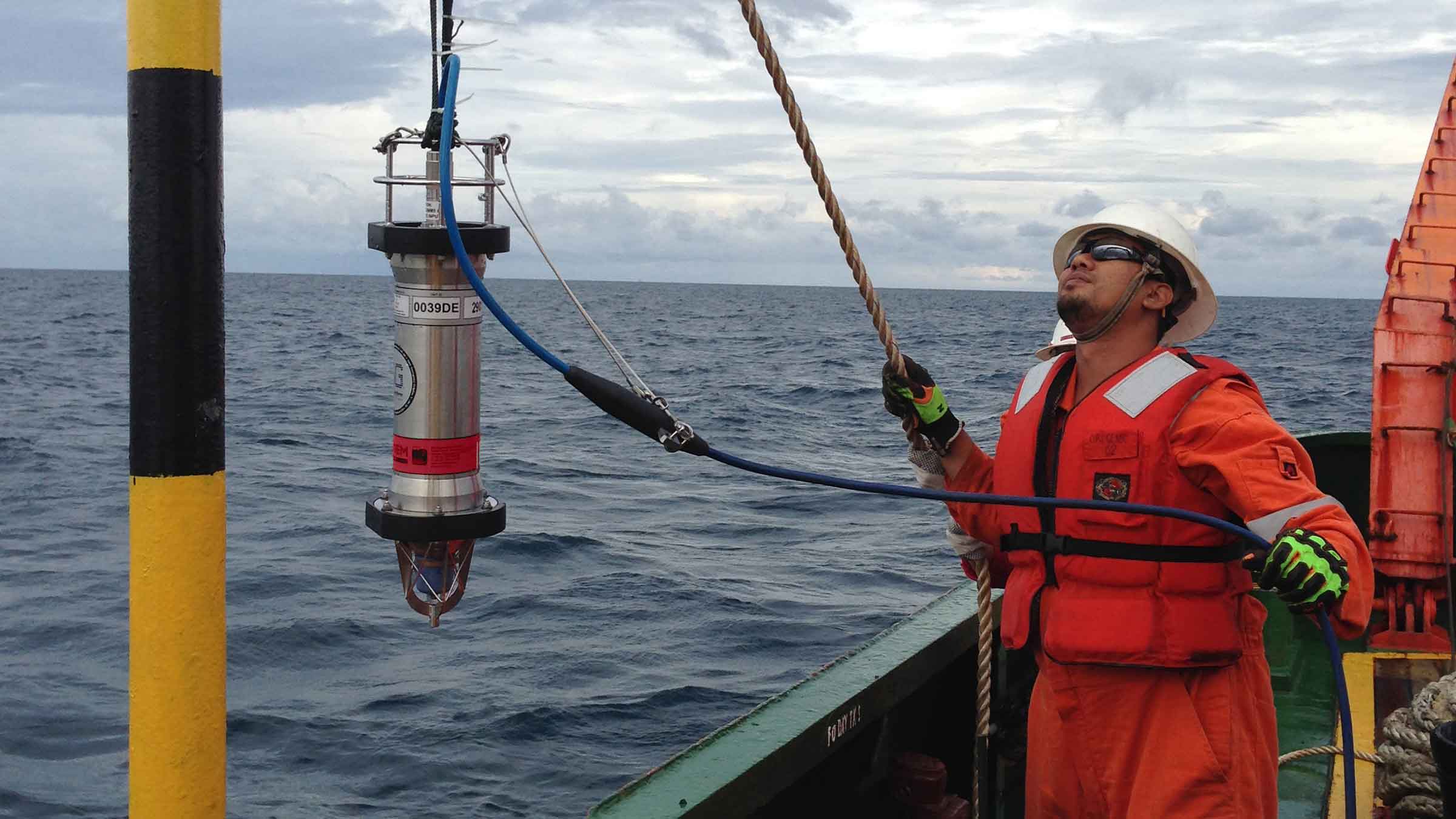
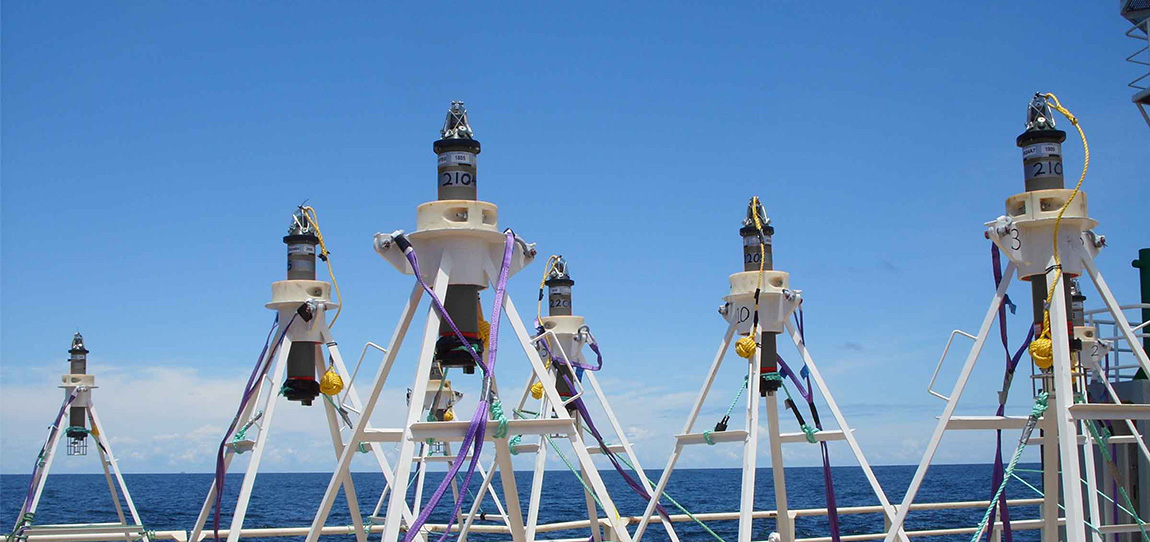
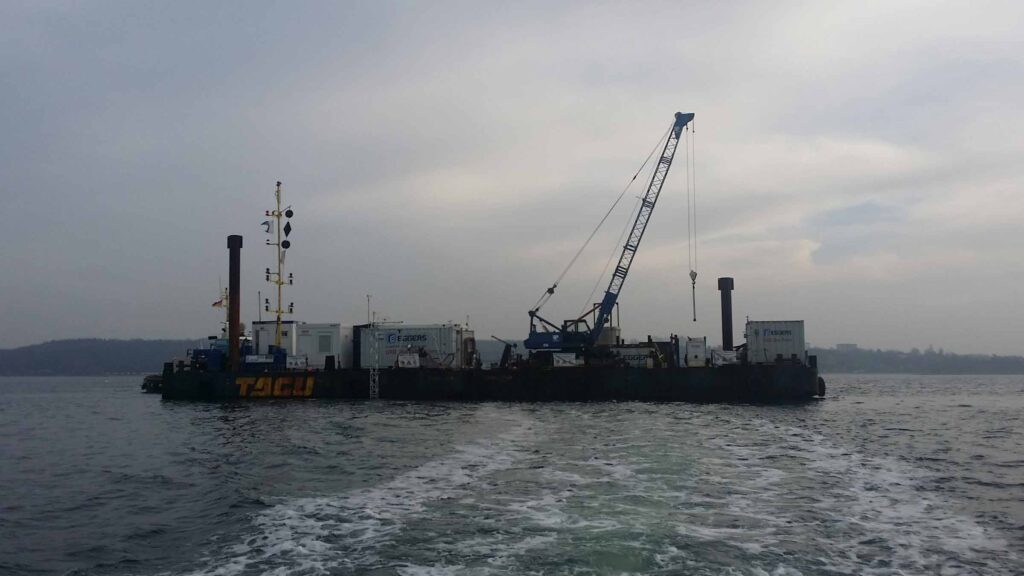
Our modular, over-the-side deployment machine is for vessels where through-hull deployment is not available or practical, or where a temporary installation is required on a vessel-of-opportunity. The design still provides survey grade rigidity without the high cost of dry docking and fitting a gate valve. It can work at operational speeds of up to five knots without degrading USBL positioning performance and to have a survival speed of up to ten knots.
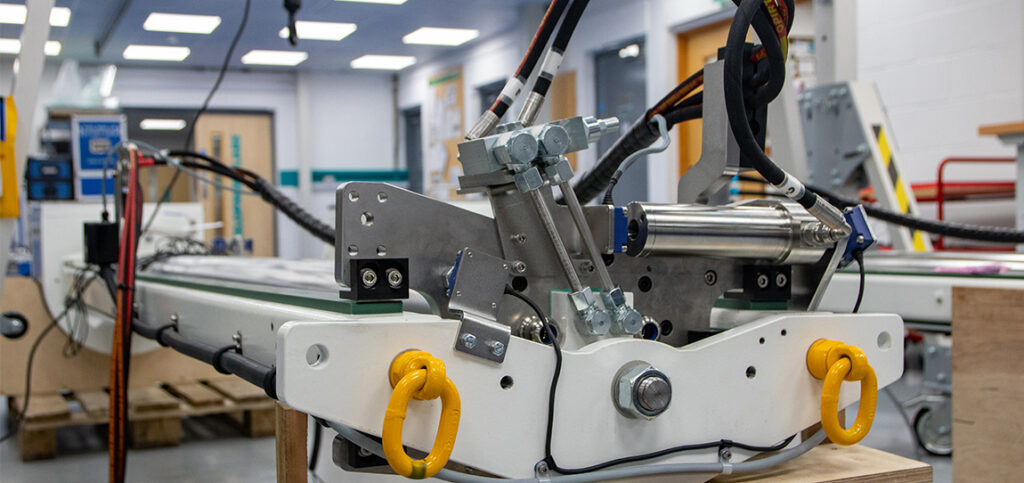
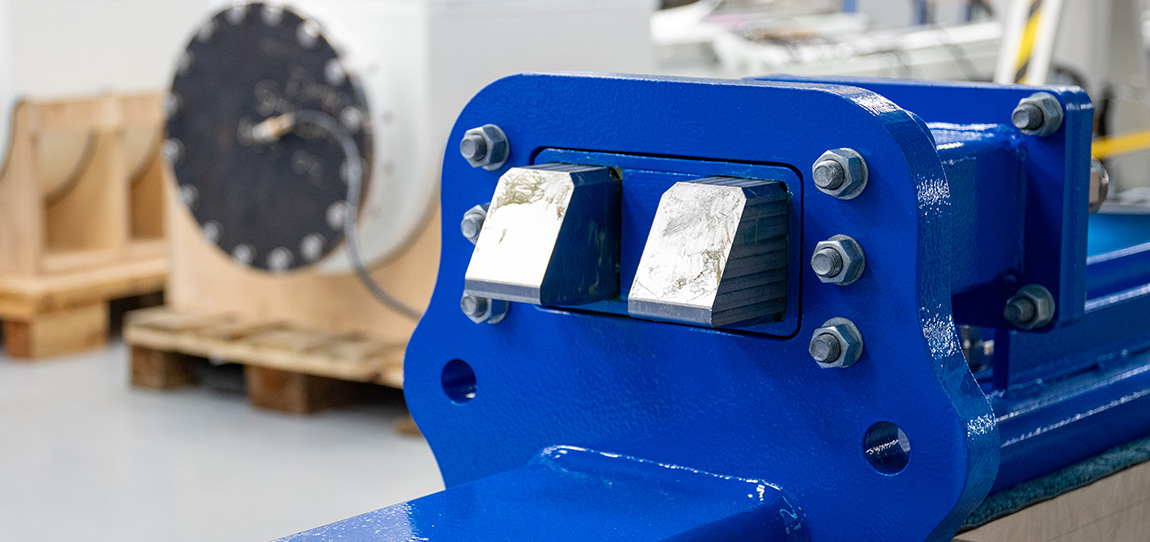
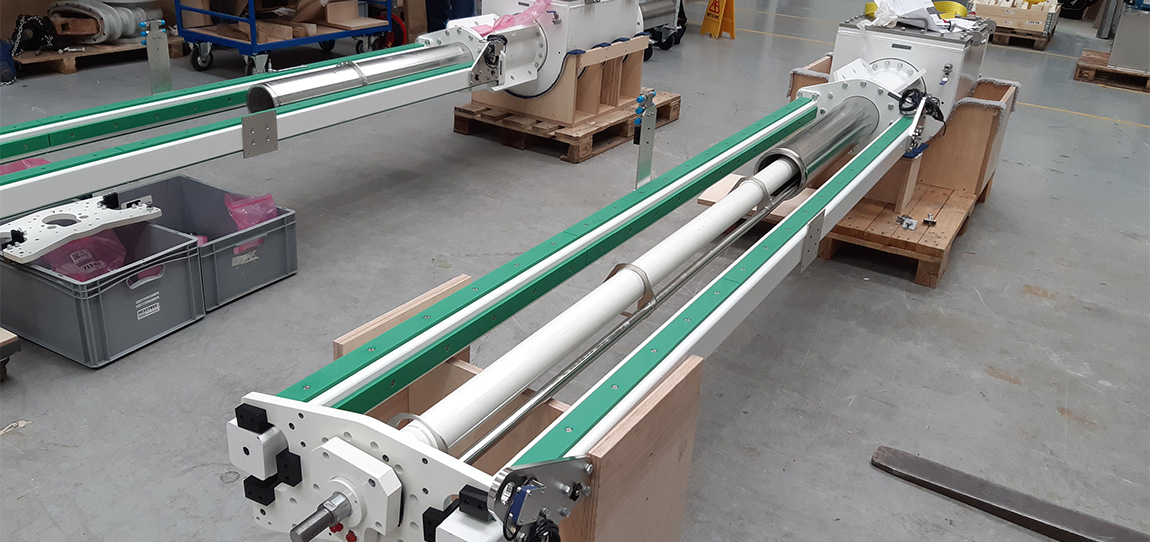
Based on a pivoting sectional pole, the system can be supplied with either a hull or deck mount for the pivot, depending on the vessel arrangement. A brace/lock assembly positioned near the water line and three or four pole sections bolted together to form the arm such that the transceiver on the end of the arm is positioned below the hull by at least 1.5 m. The lower portions of the sectional pole are faired to mitigate against vortex induced vibration which can reduce performance.
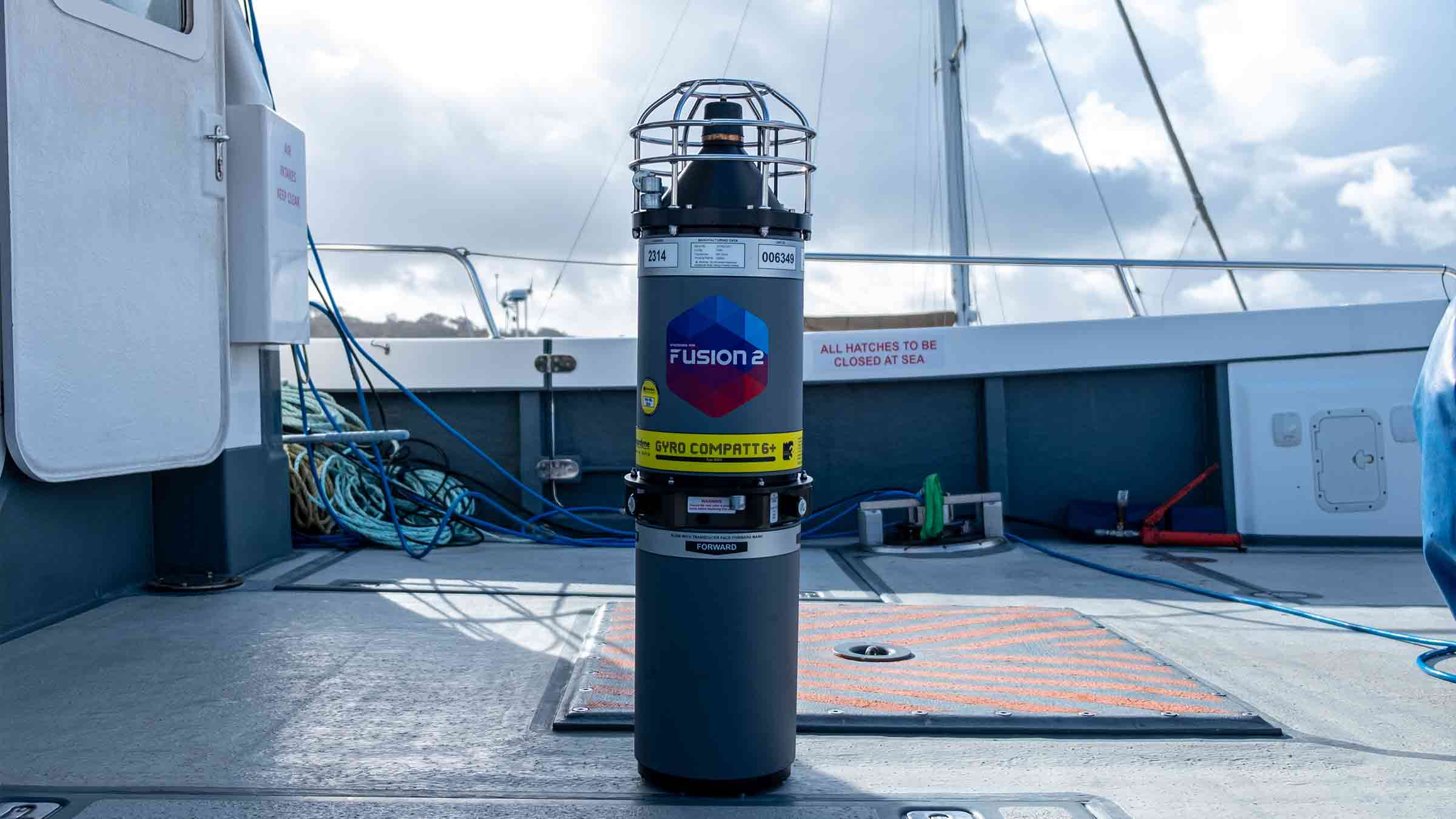
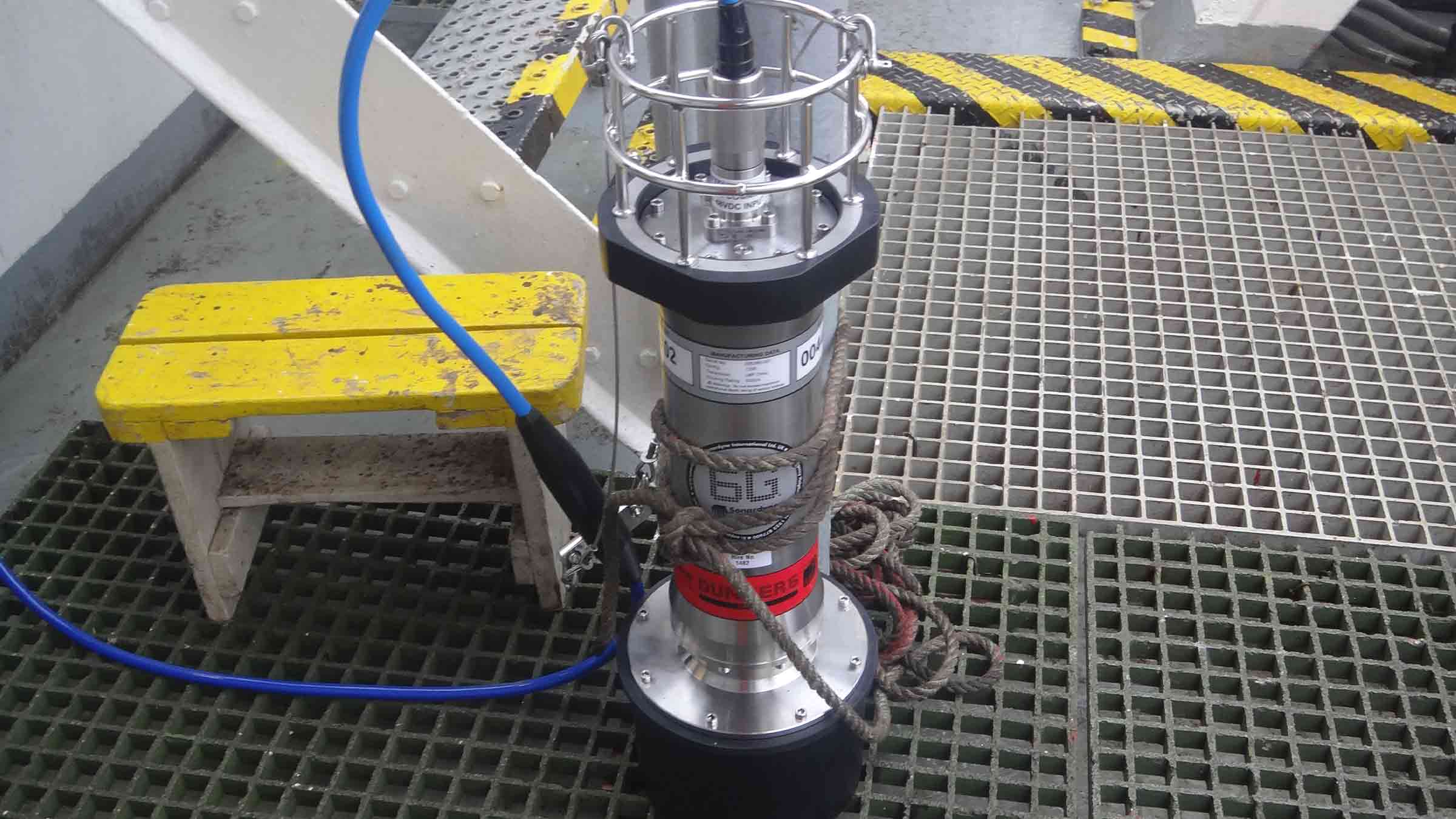
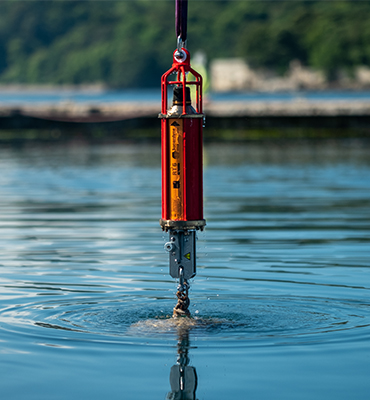
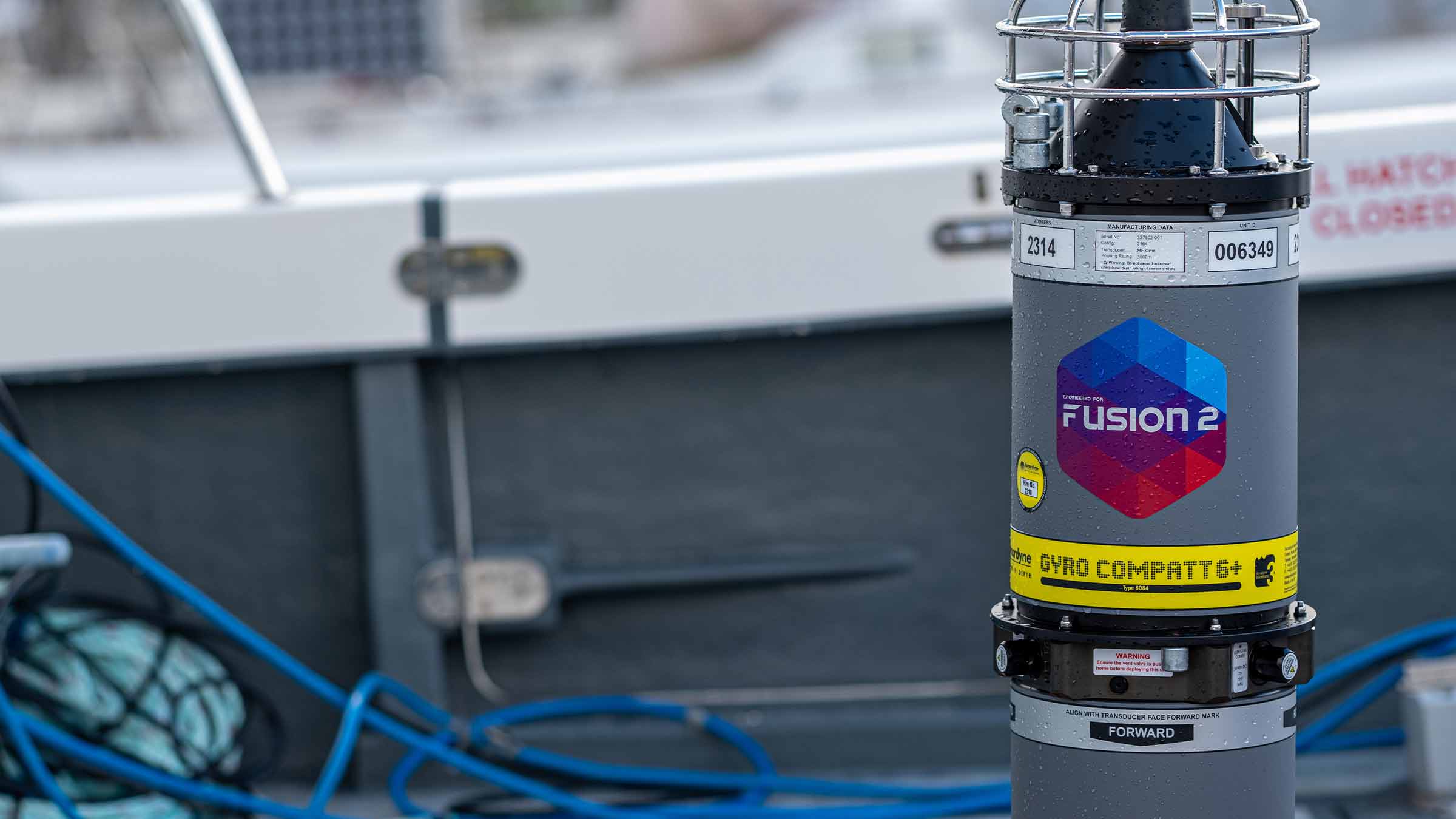
The system is not limited to deploying Sonardyne instrument. We can custom engineer adapters for the end of the pole to accommodate third-party sensors.
Through-tube
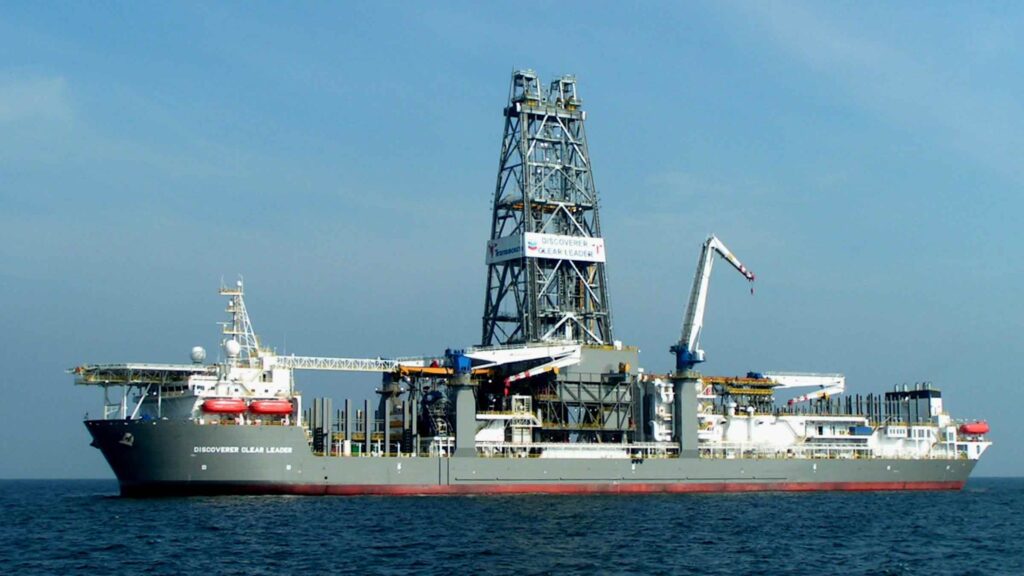
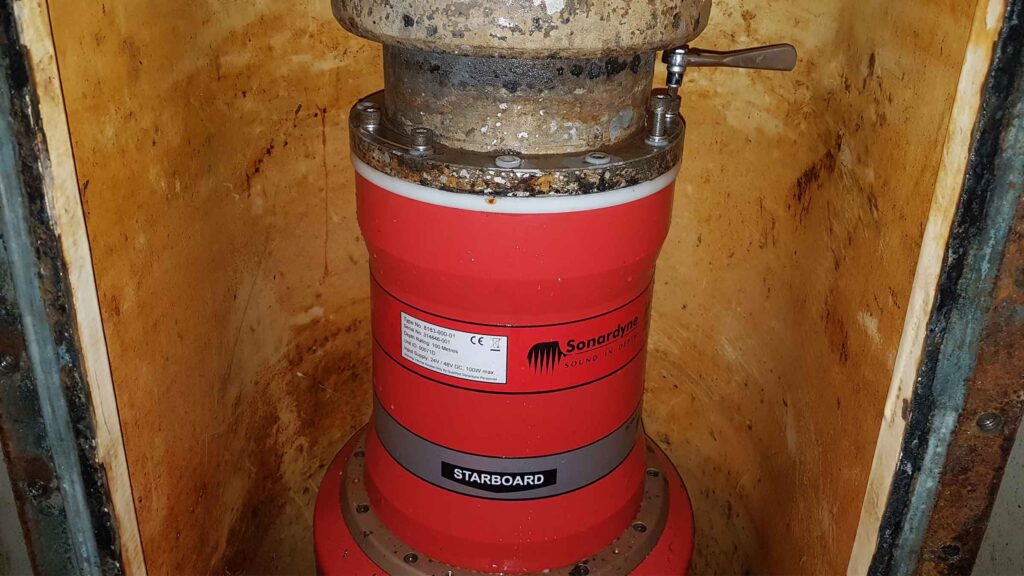
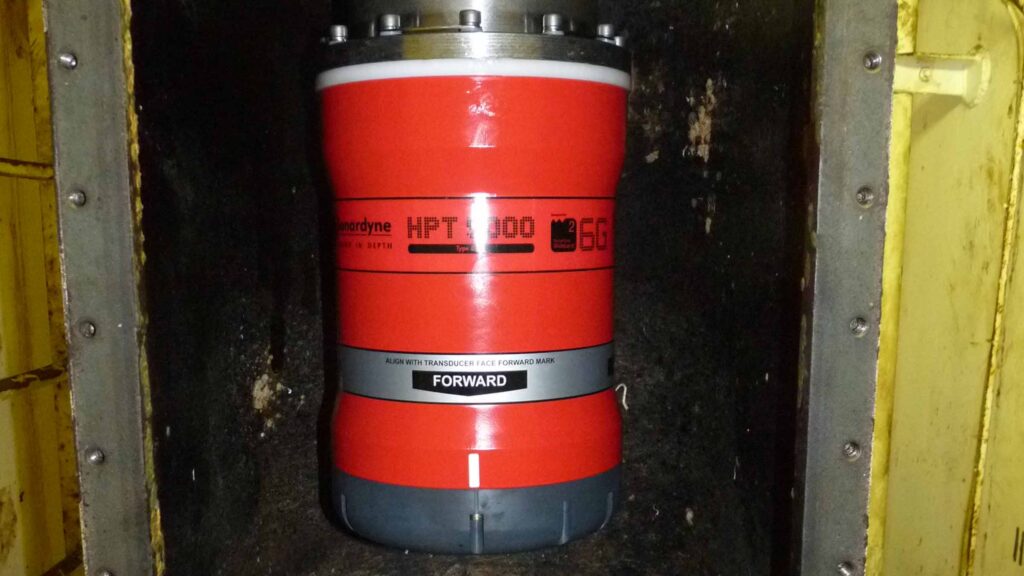
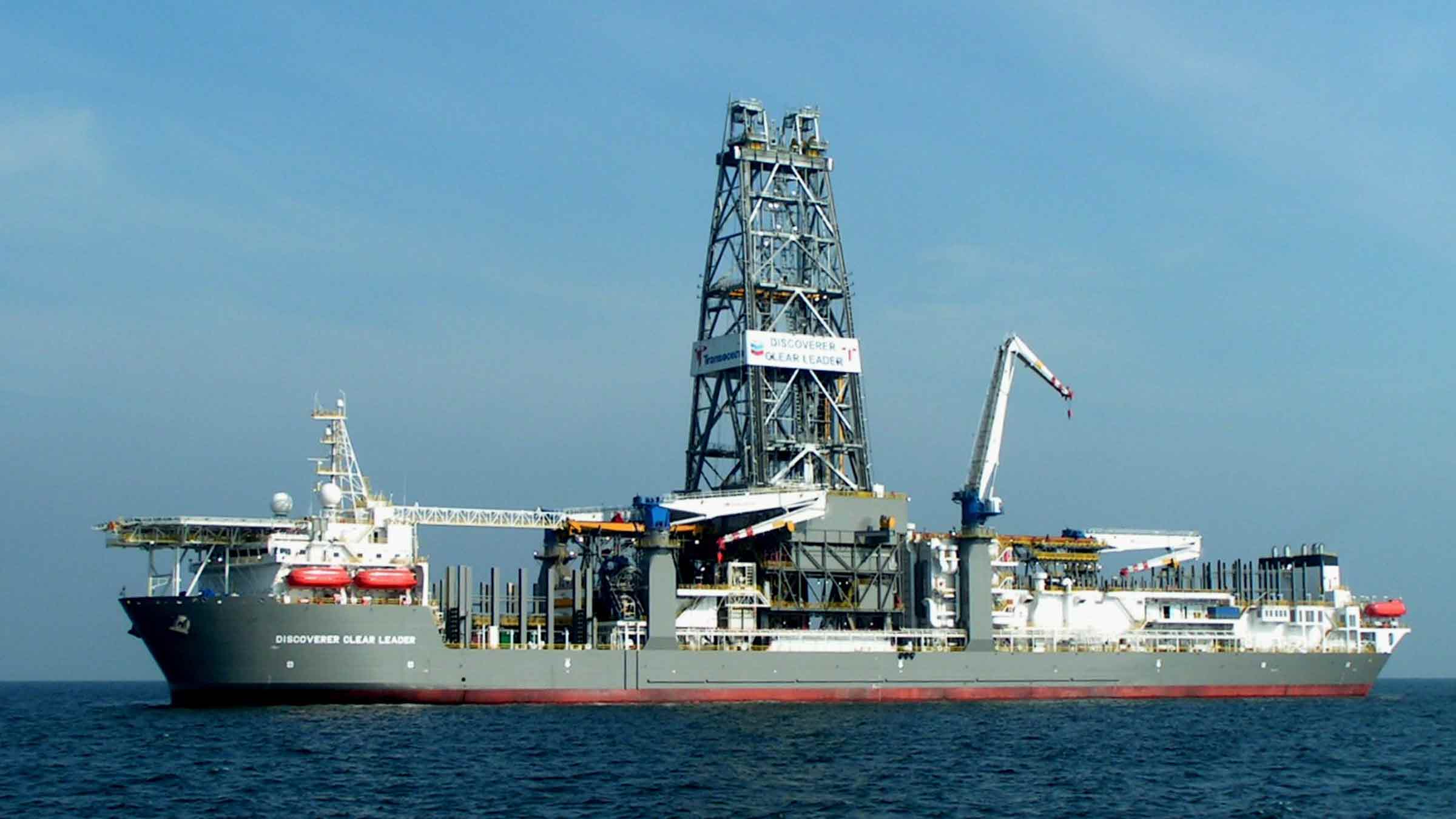
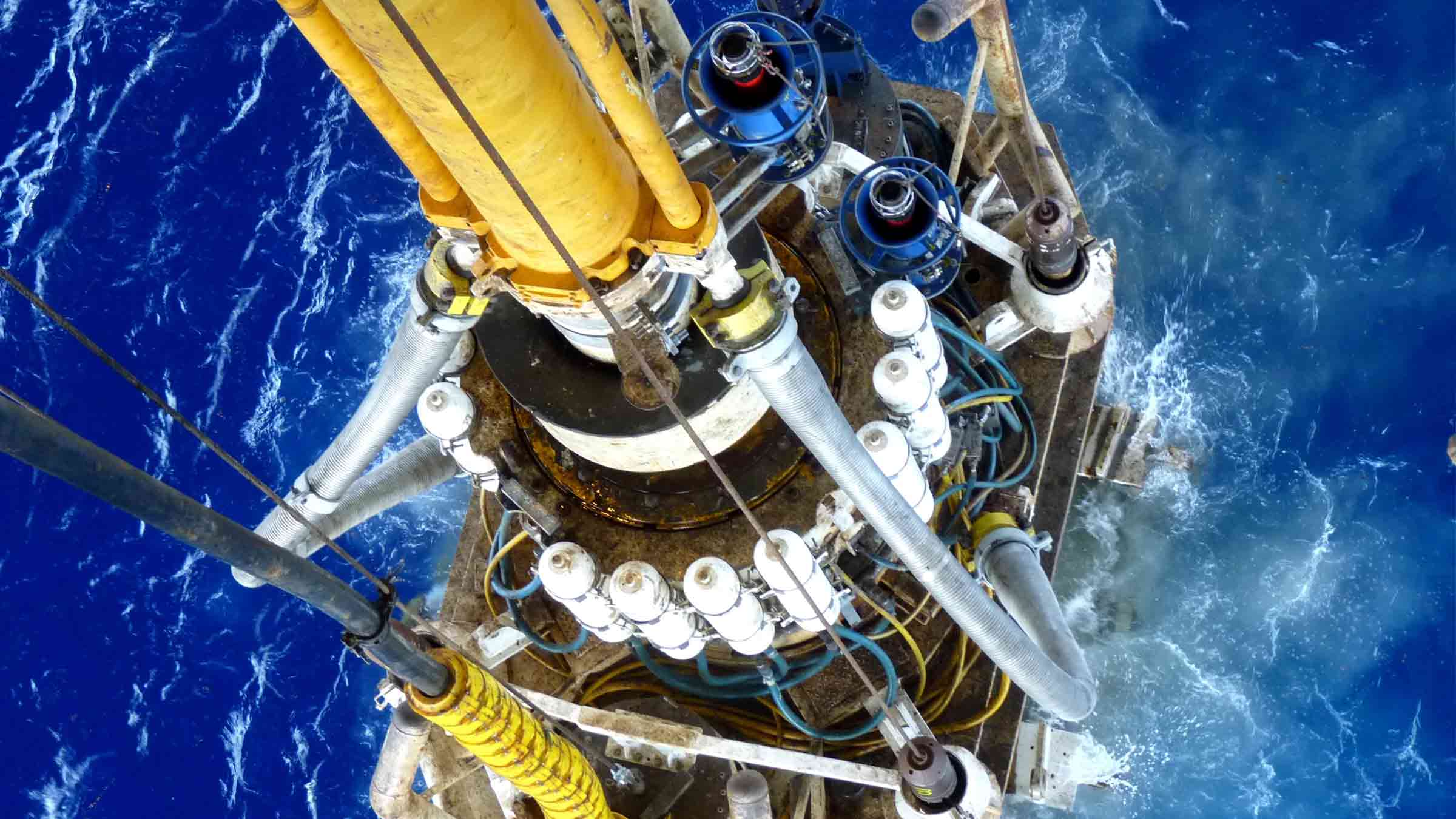
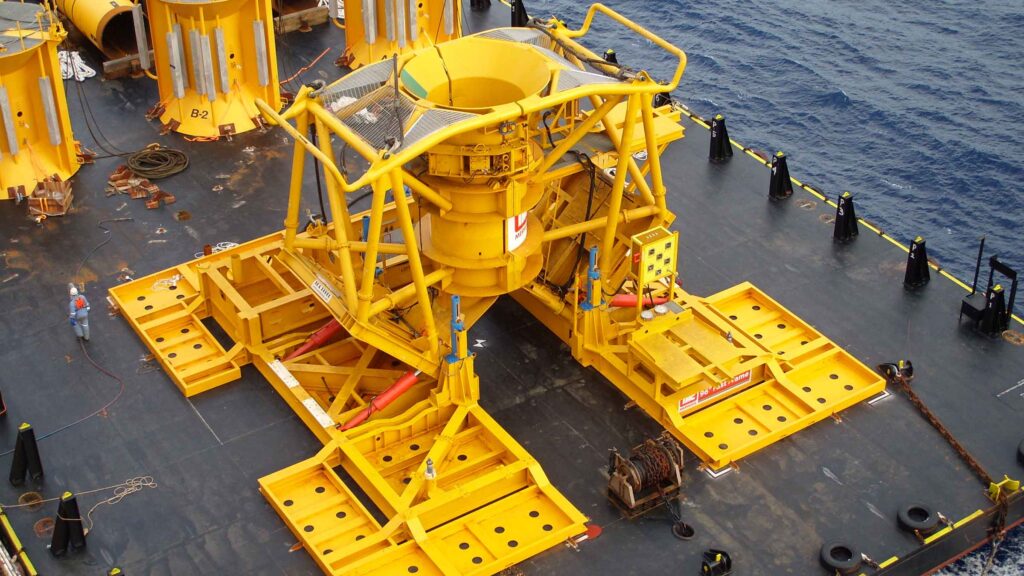
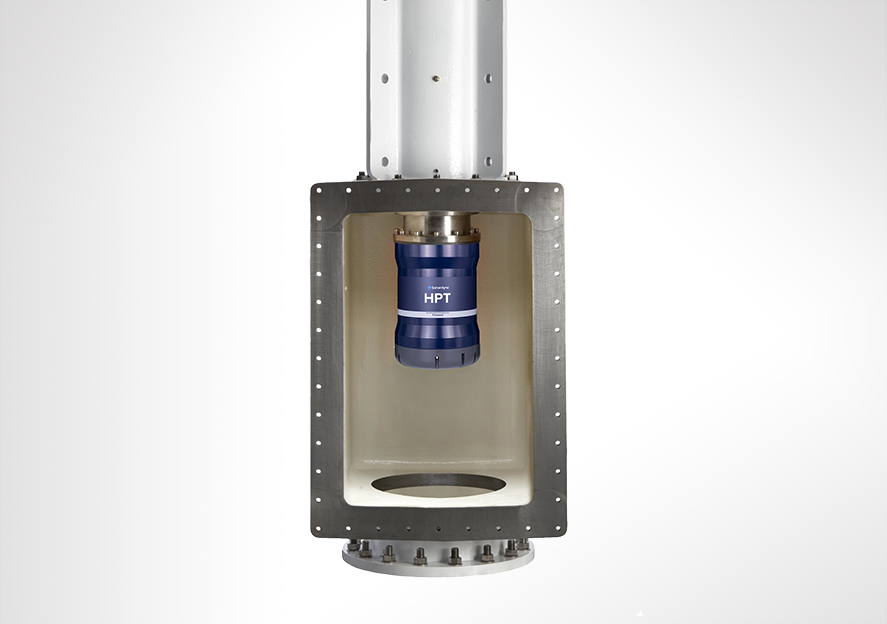
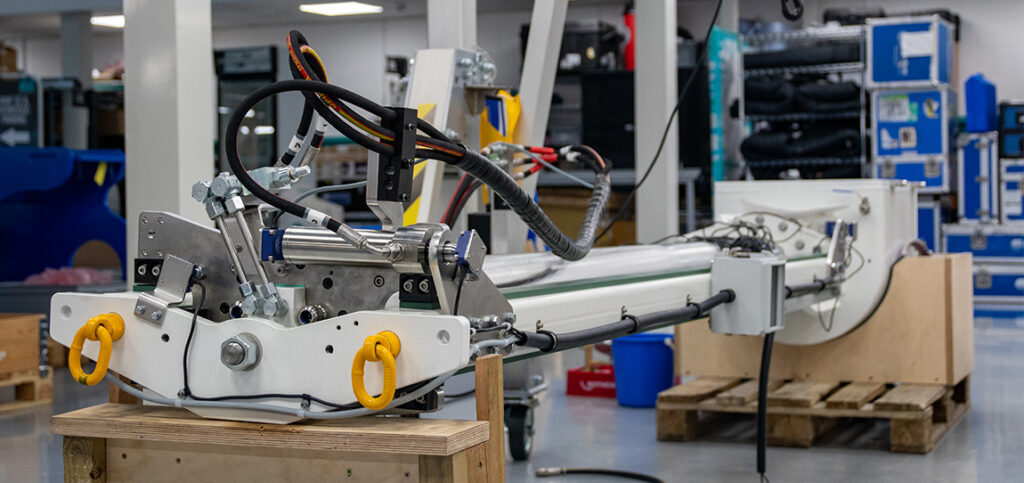
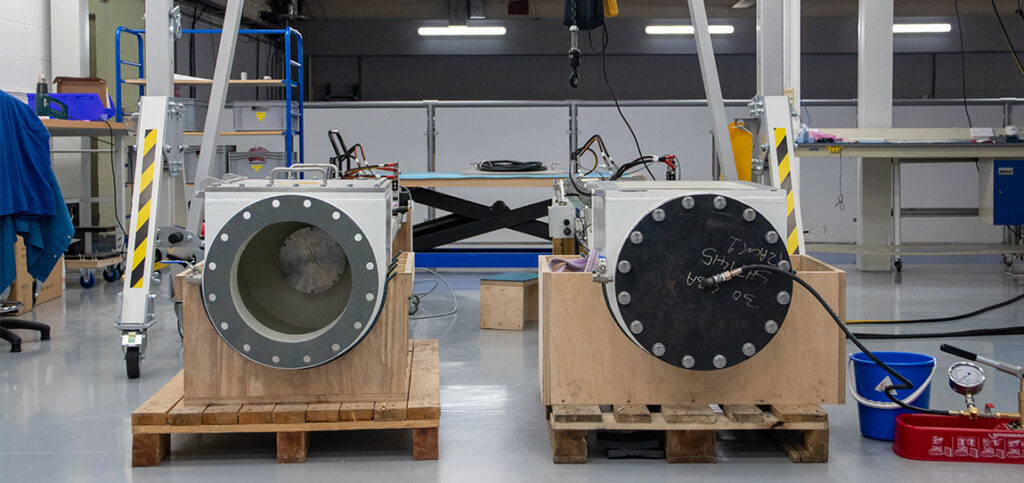
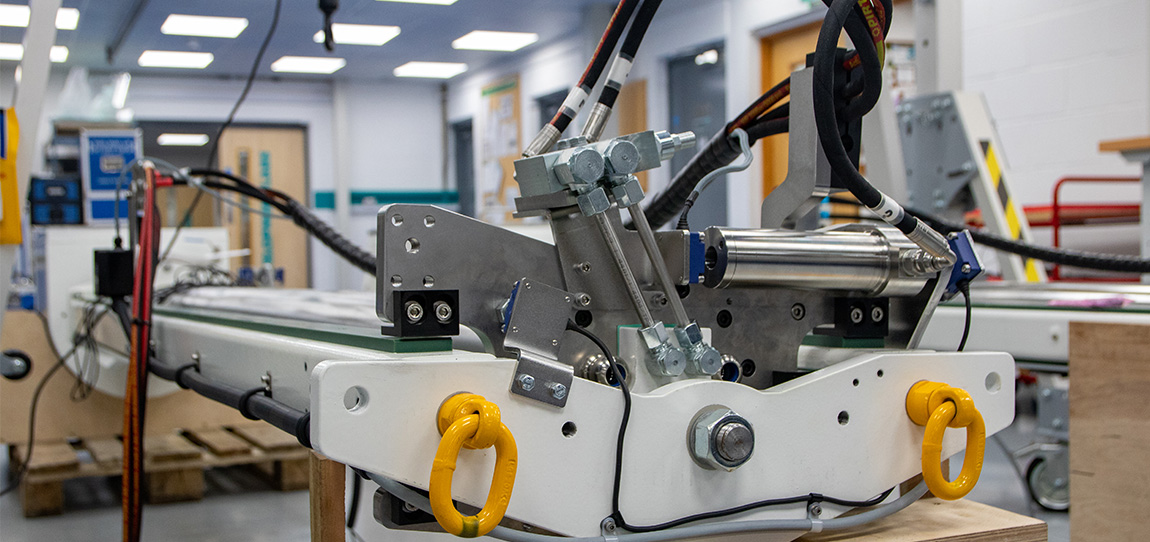
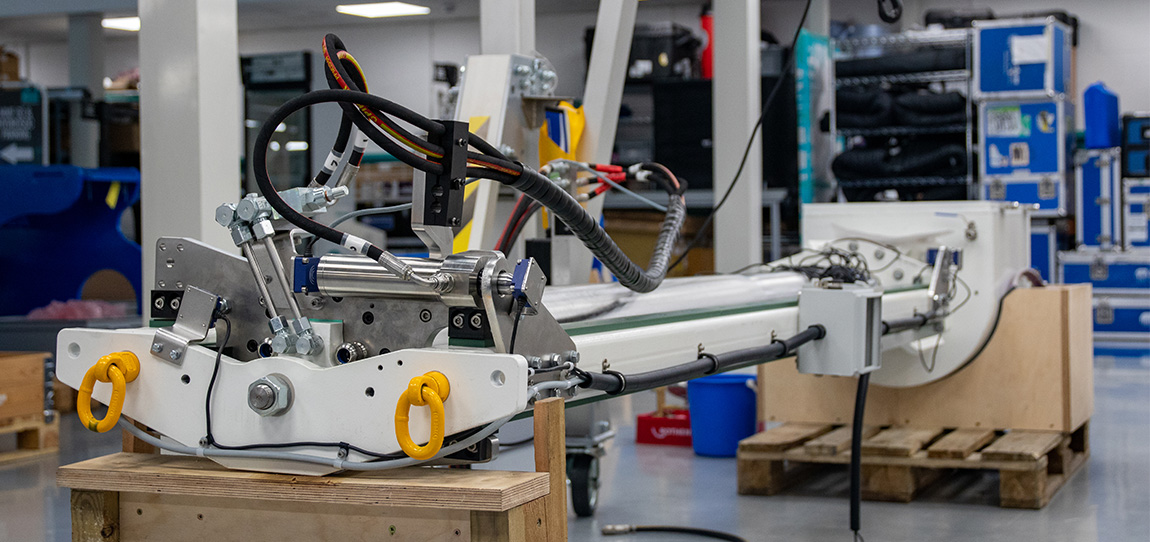
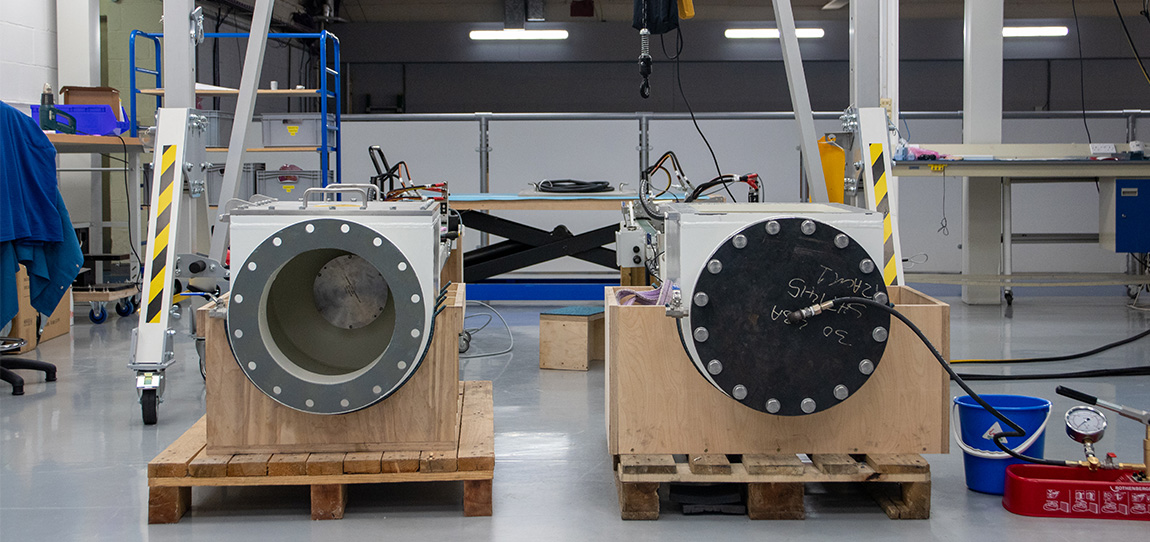
Popular on very large vessels including drilling rigs, our through-tube deployment machine consists of a hydraulically operated pole, a sealed bearing section and a sea chest service section, with inspection door. The whole machine sits on a gate valve which in turn is mounted on the flange of a through hull penetration pipe.
The ideal deployed length is dependent on your particular application, but in general terms it is best to minimise the deployed pole length to achieve a specified acoustic performance. Typically, a length of between one and three metres below the hull has been found to be acceptable. The pole is very rugged and is designed to be highly resistant to vibration caused by vortex shedding. Operational speeds of up to ten knots through the water may be achieved safely with the ability to survive short duration exposure to higher speeds.
We provide detailed application advice on positioning, installing and commissioning the machine. The sea chest, when the gate valve is closed, provides easy access to the retracted transceiver or sonar for service and inspection purposes. The gate valve also allows the machine to be removed without dry docking. An optional hydraulic drive for the valve is available.
The machine can be controlled from a main control panel or locally at the machine. A bridge control is also available as an option. The hydraulic power pack and main control can be mounted remotely if the machine is to be configured for Zone 1 classification. The standard form of machine can be simply configured to the meet individual vessel requirements by changing the height of the machine and providing adaptor flanges for different size or specification gate valves.
For specialist or demanding applications, machines of this general type can be engineered to suit your specific requirements.