Sonardyne
Support Centre
Jump to

Overview

Engineered for precision and performance

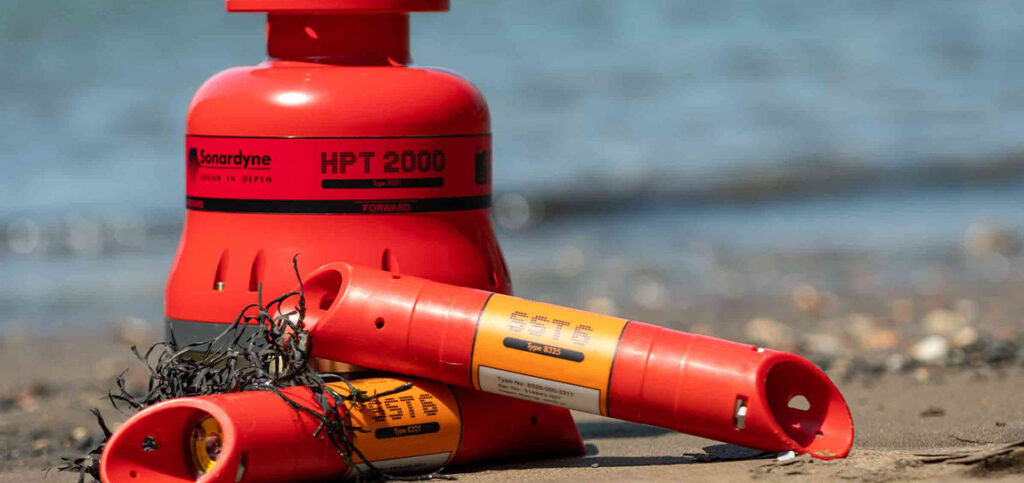
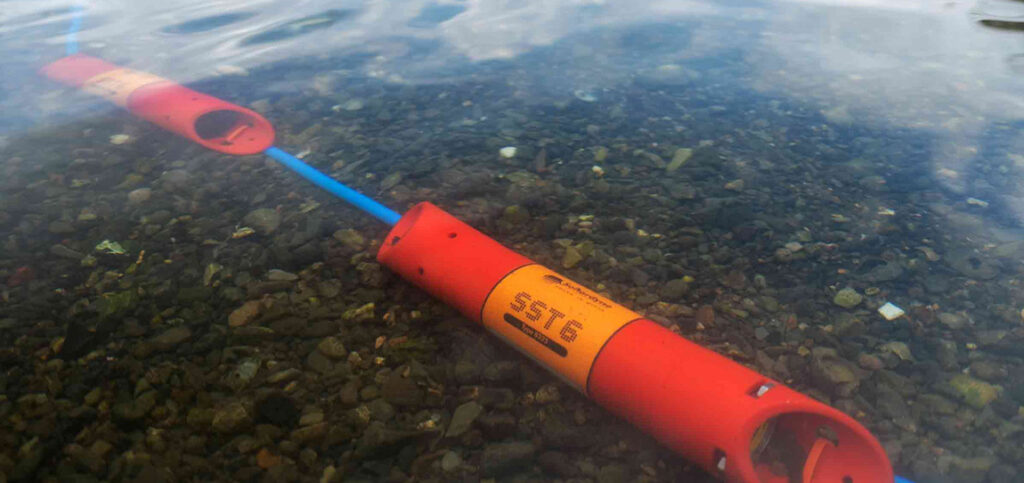
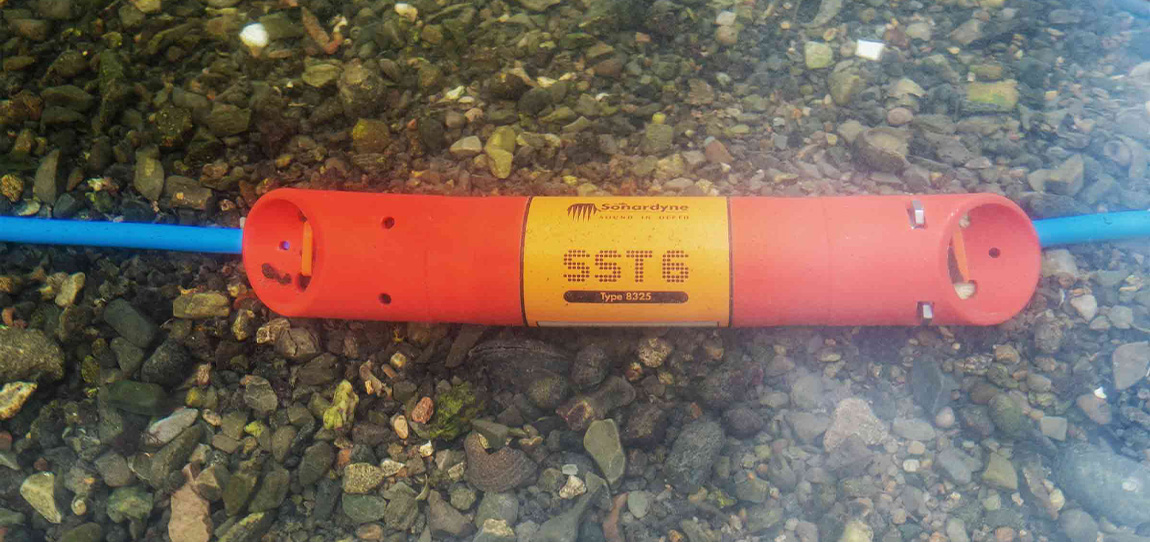
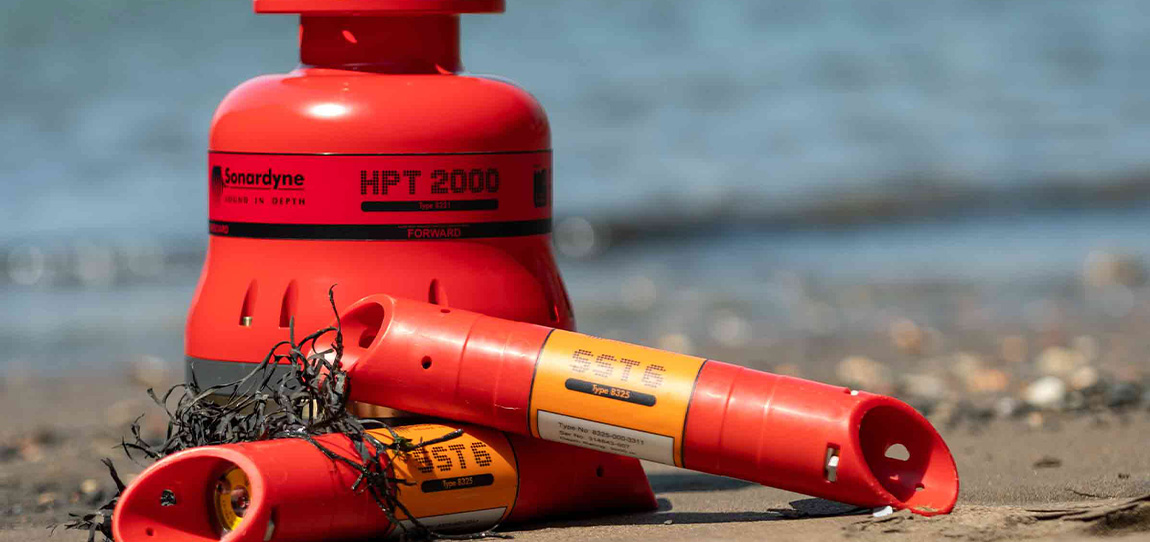
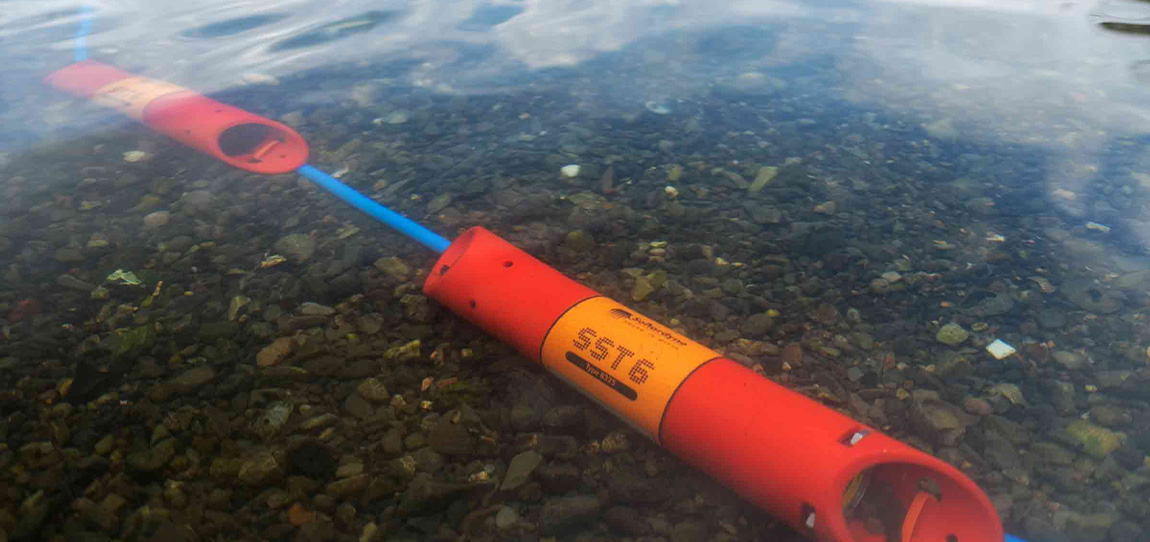
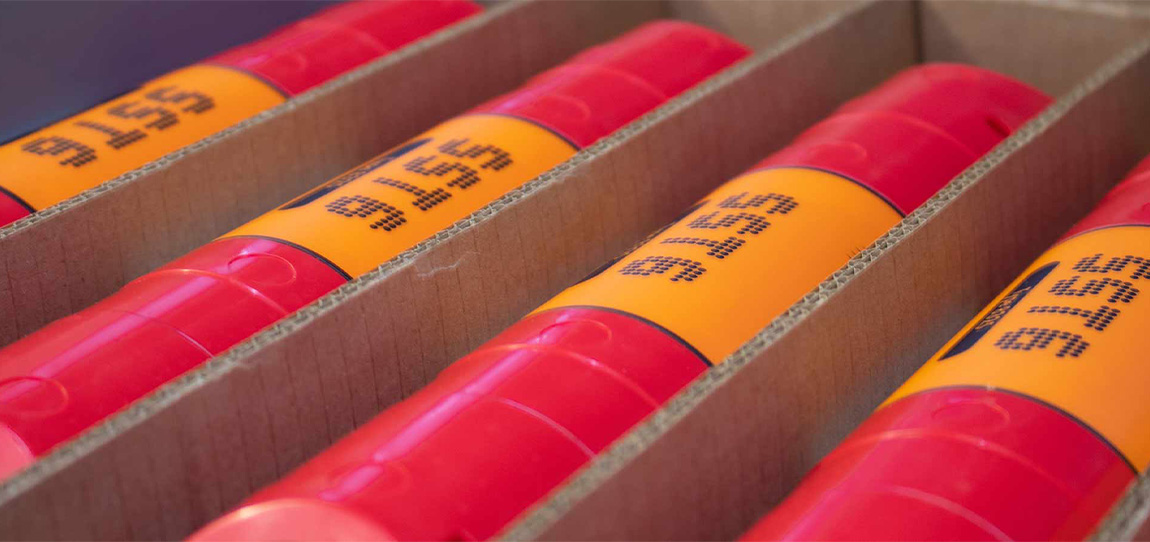
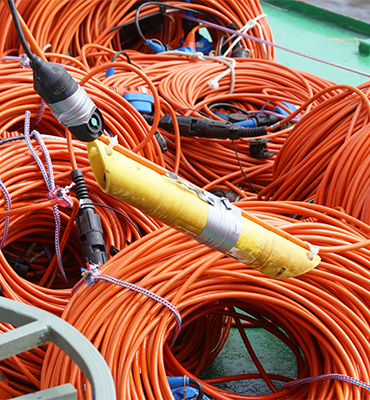
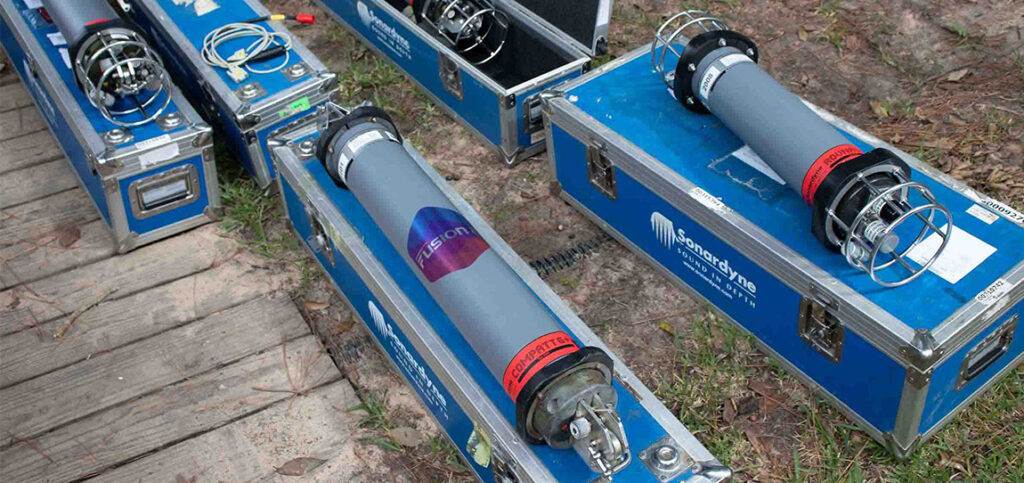
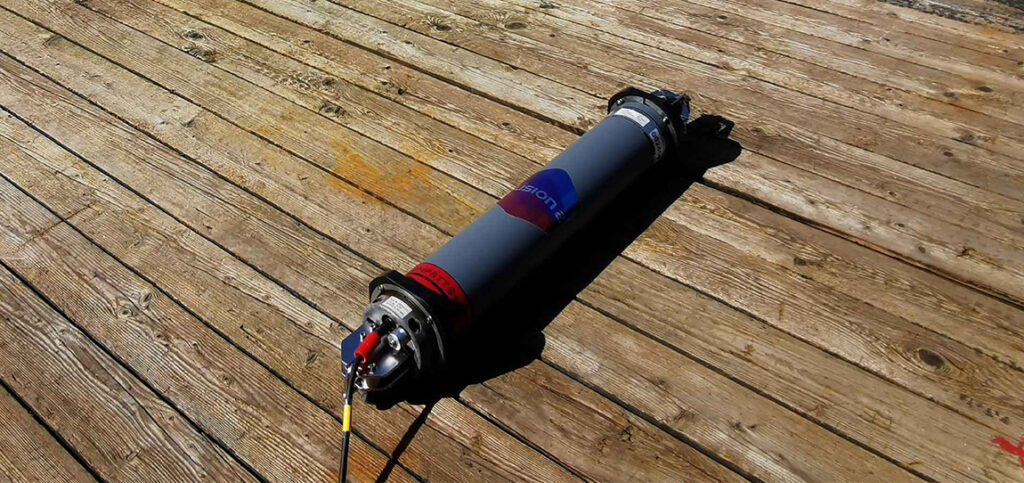
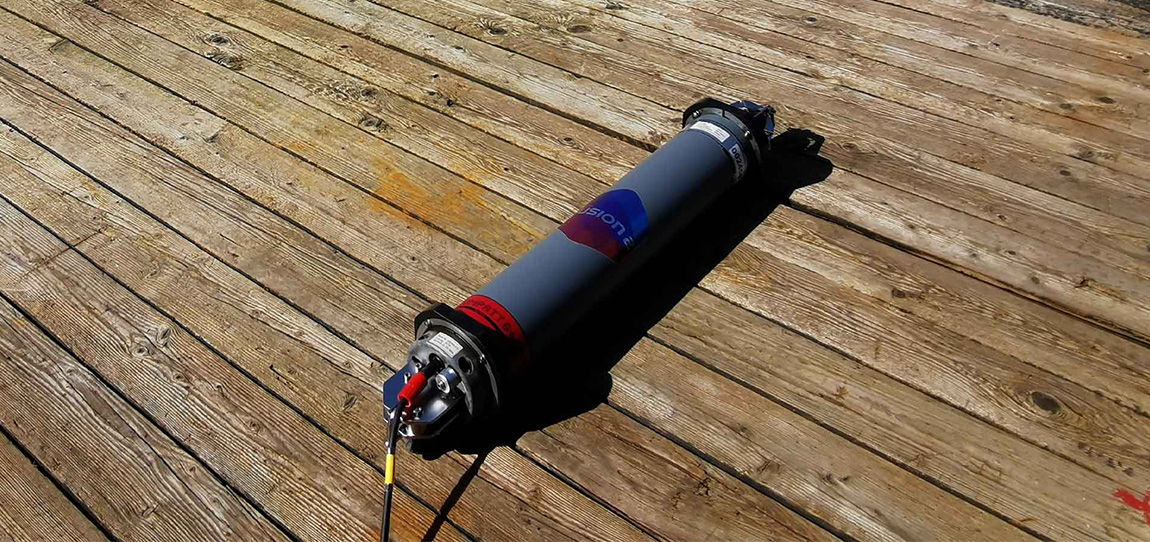
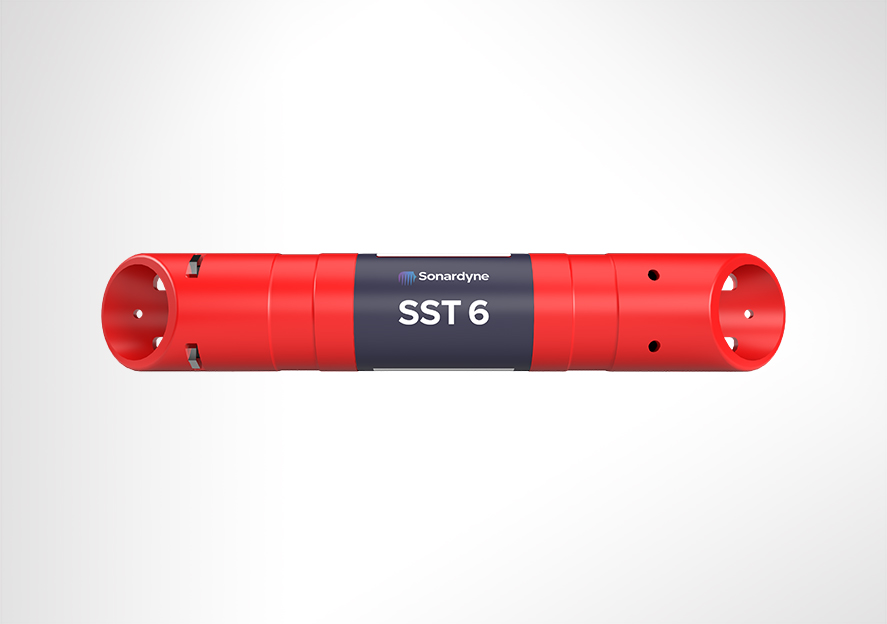
SST 6 is a small rugged transponder for acoustic positioning of ocean bottom seismic cables and nodes, where high performance, small size, low cost and ease of programming are all important operational factors.

Overview

SST 6 is a small rugged transponder designed to acoustically position of ocean bottom seismic cables and nodes, where high performance, small size, low cost and ease of programming are all important operational factors.

SST 6 incorporates our Wideband 2 digital acoustic signal processing architecture to deliver substantial performance gains over the previous generation SST, ensuring robust positioning performance in the most challenging of operational environments.

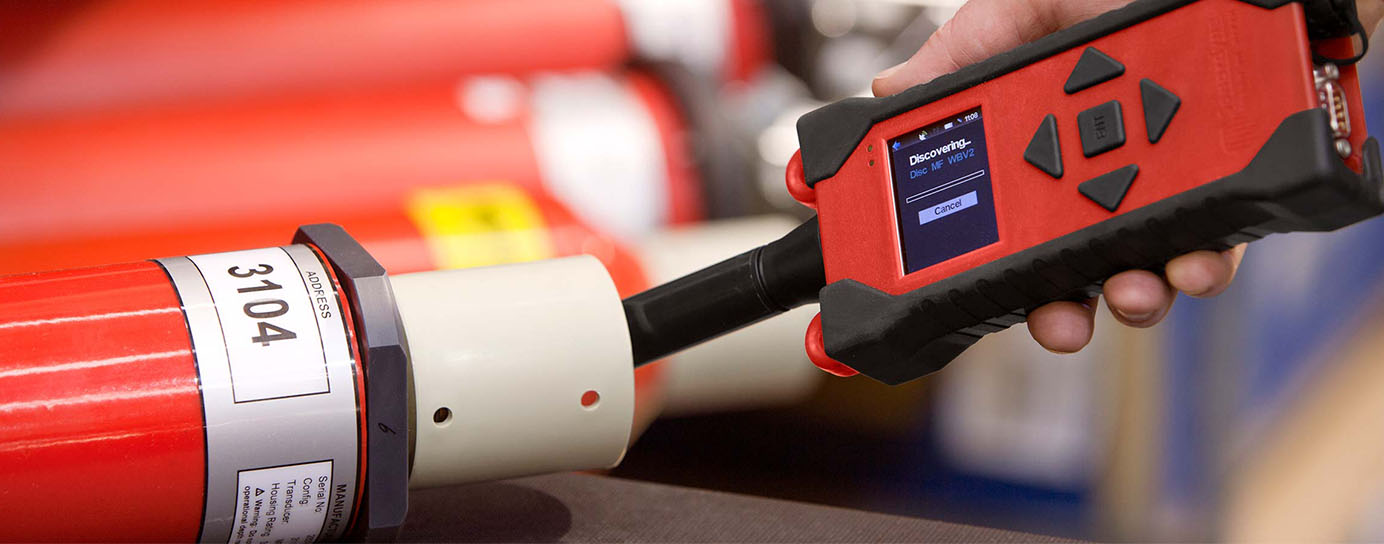
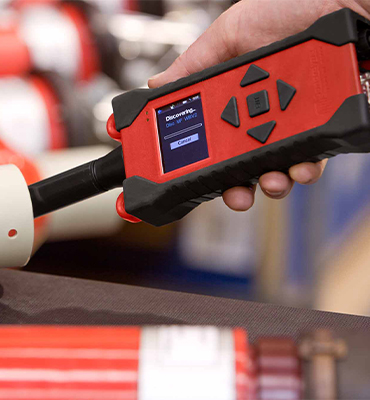
Innovations such as built-in, near field communications (NFC) technology, allow SST 6 transponders to be checked and programmed without human intervention, supporting operators’ vision for fully automated node handling and efficient back-deck ocean bottom seismic (OBS) operations.

At a glance

  • Accurately positions seismic cables and nodes in water depths to 3,000 m
  • Designed on 6G hardware and Wideband 2 technology platforms
  • Compatible with Mini-Ranger and Ranger 2 USBL positioning systems
  • Choice of depth ratings: 1,000 m or 3,000 m
  • Over 1,520 unique acoustic transponder addresses supports large surveys
  • Automated programming using NFC link without human intervention
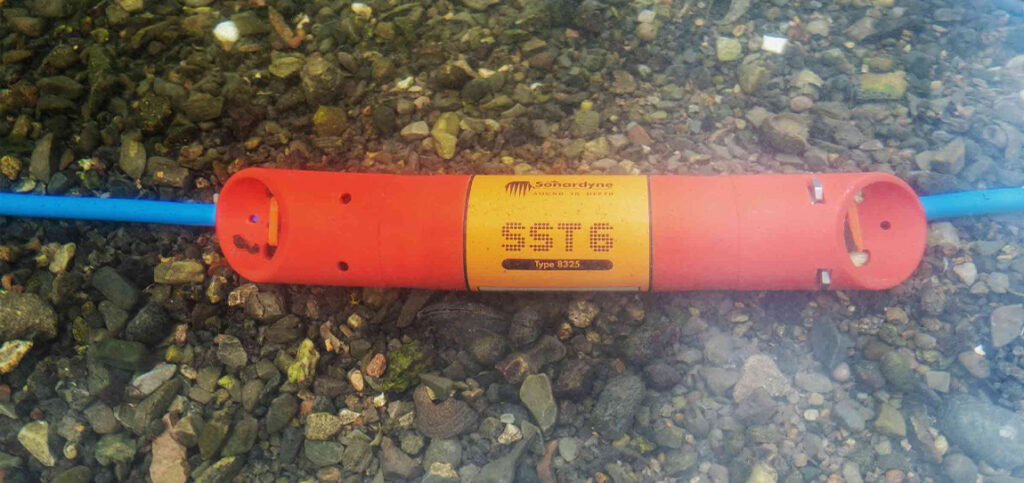
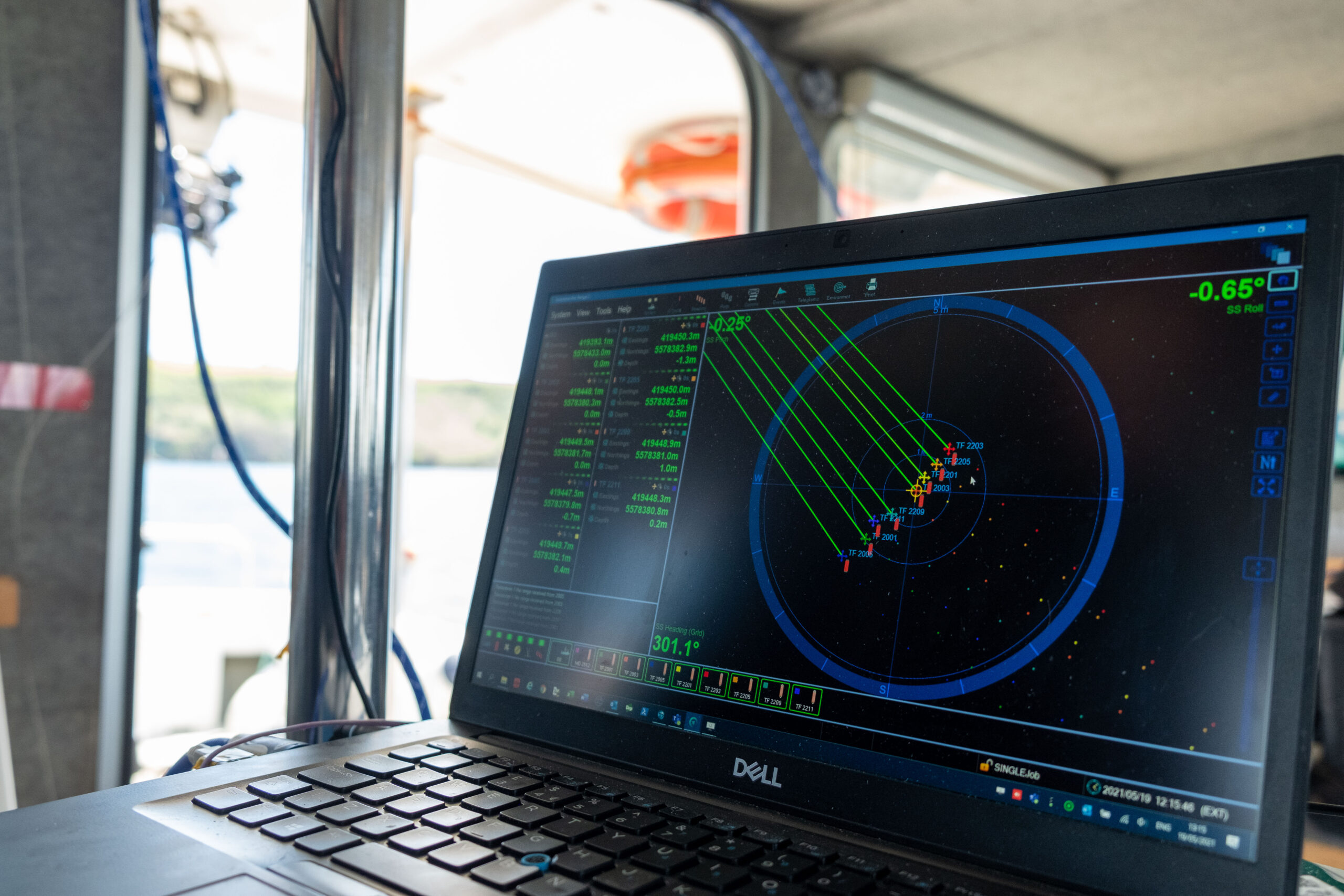
SST 6 operates in the Medium Frequency (MF) band and is compatible with our Ranger 2 USBL systems. Ranger 2 USBL systems measure both range and bearing to SST 6 in the same operation, so an accurate position of the node or cable can be determined very quickly and at a high update rate.
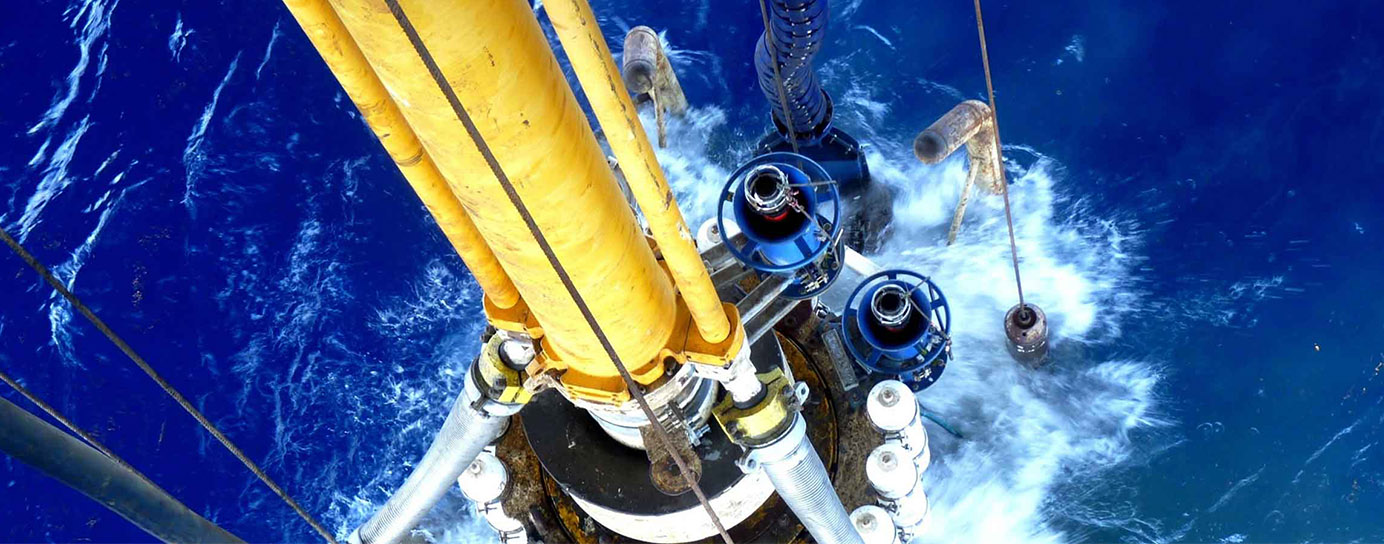
Combining the use of Ranger 2 USBL and SST 6 in this way results in considerable savings in vessel time and new standards of efficiency for seismic operations.

NFC allows fast programming of 16 group interrogation addresses and 95 reply channels providing more than 1,520 unique acoustic identities.
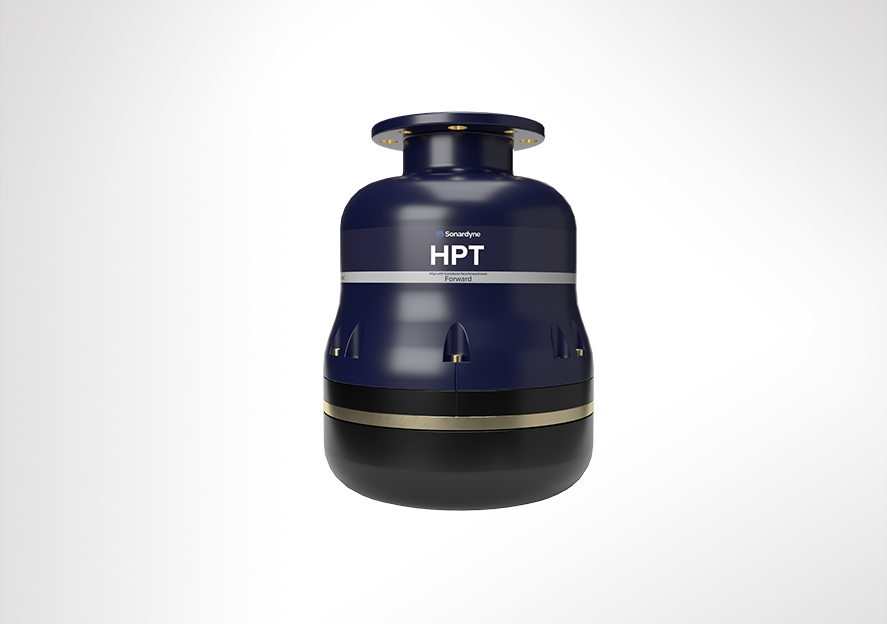
This allows the marking of seismic cables and other applications demanding dense transponder coverage. SST 6 is configured using NFC with a suitable NFC-enabled handset (including NFC enabled Android™ handsets with the Sonardyne NFC App) or a dedicated HF radio frequency identification (RFID) reader.
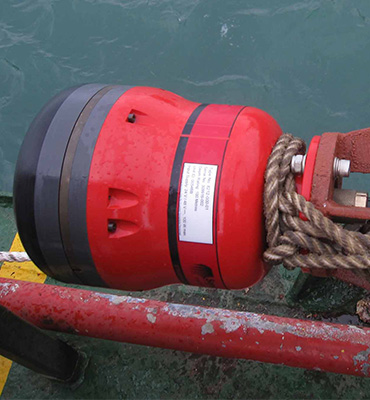
The NFC link provides the ability to enter SST 6 into a storage mode when not in use,  significantly increasing the overall battery endurance.
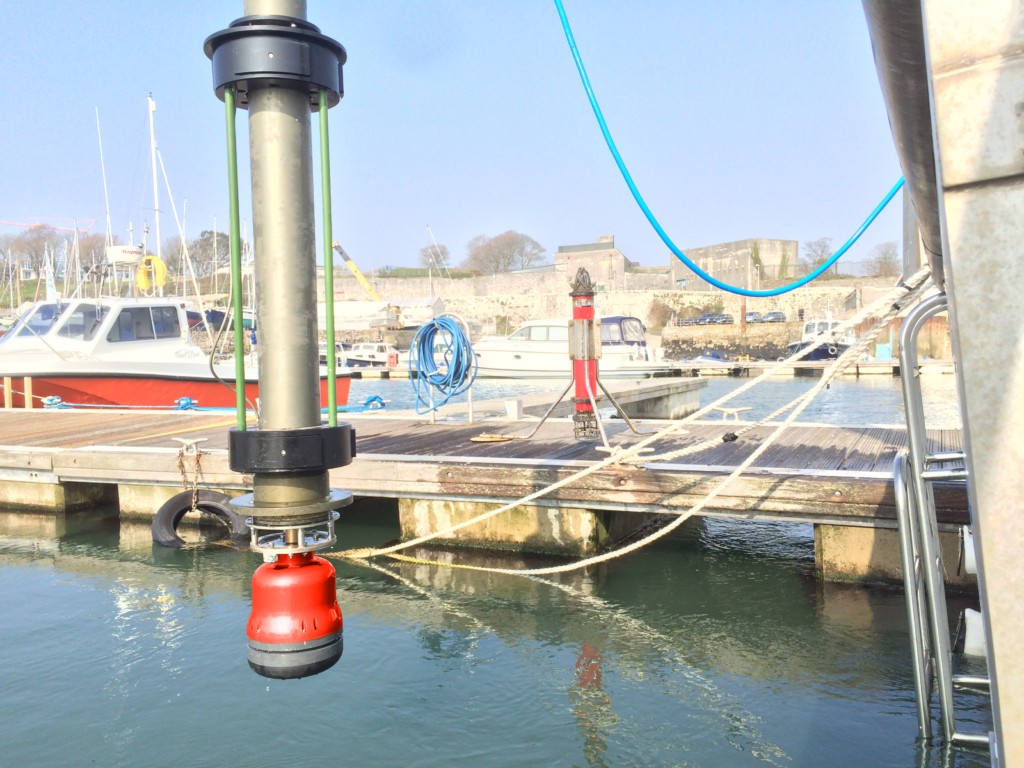
Specifications table

Feature Type 8325-1111 Type 8325-3311
Depth Rating 1,000 m 3,000 m
Operating Frequency MF (20–34 kHz) MF (20–34 kHz)
Transmit Source Level (re 1 µPa @ 1 m) 187 dB 187 dB
Battery Life 9.5 Months  9.5 Months
Operating Temperature -5 to 40°C -5 to 40°C
Storage Temperature -20 to 55°C -20 to 55°C
Dimensions (Length x Diameter) 385 x 63 mm 385 x 63 mm
Weight in Air/Water 1.0/0.3 kg 2.0/1.3 kg

Manuals and quick start guides

Did you know?

SST 6 is compatible with Mini-Ranger and Ranger 2 USBL positioning systems

Jump to

Overview

Engineered for precision and performance

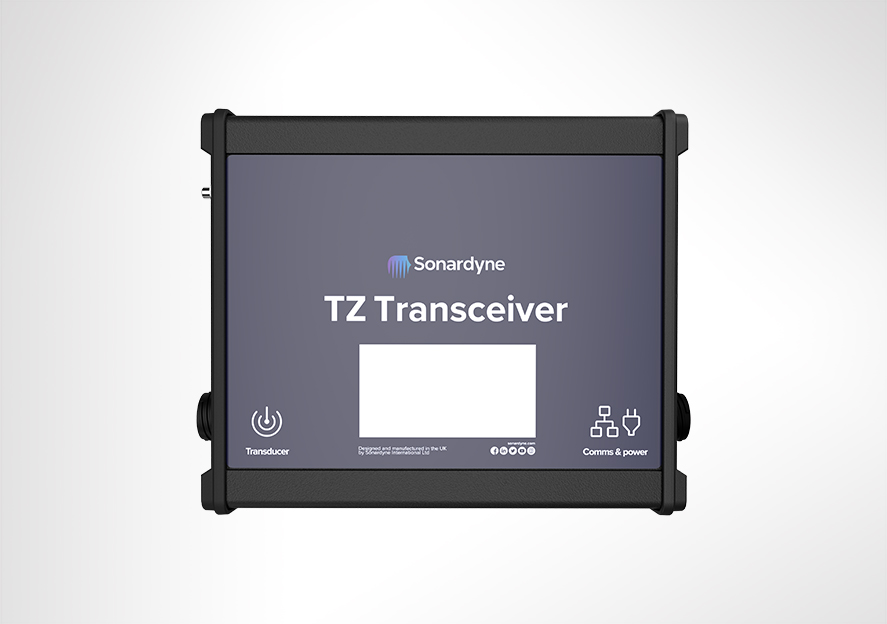
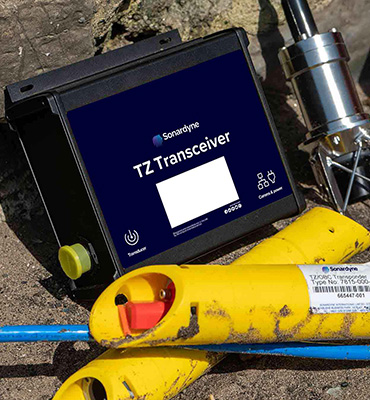
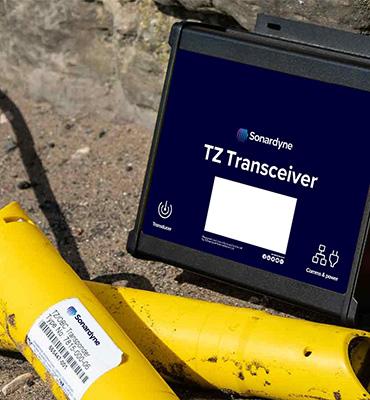
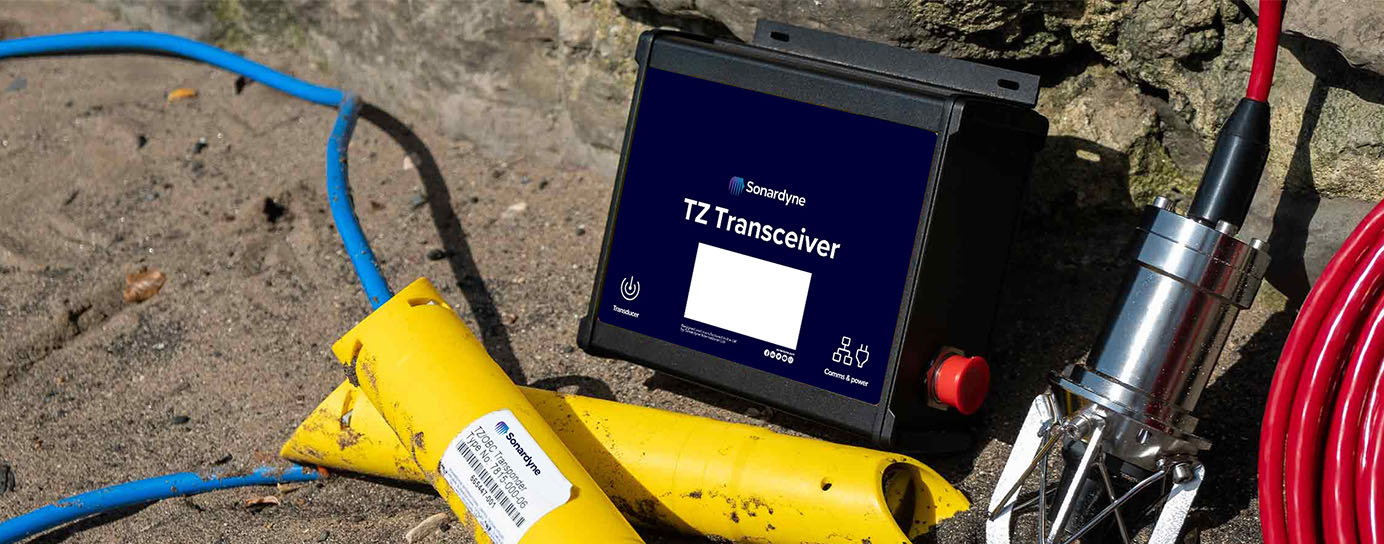
TZT is a vessel-based acoustic transceiver that’s used as part of our Transition Zone/Ocean Bottom Cable (TZ/OBC) acoustic positioning system. Use it with TZ/OBC or SST 6 transponders. TZT delivers reliable, high-speed acoustic communication and tracking, even in the harshest marine environment.
Overview

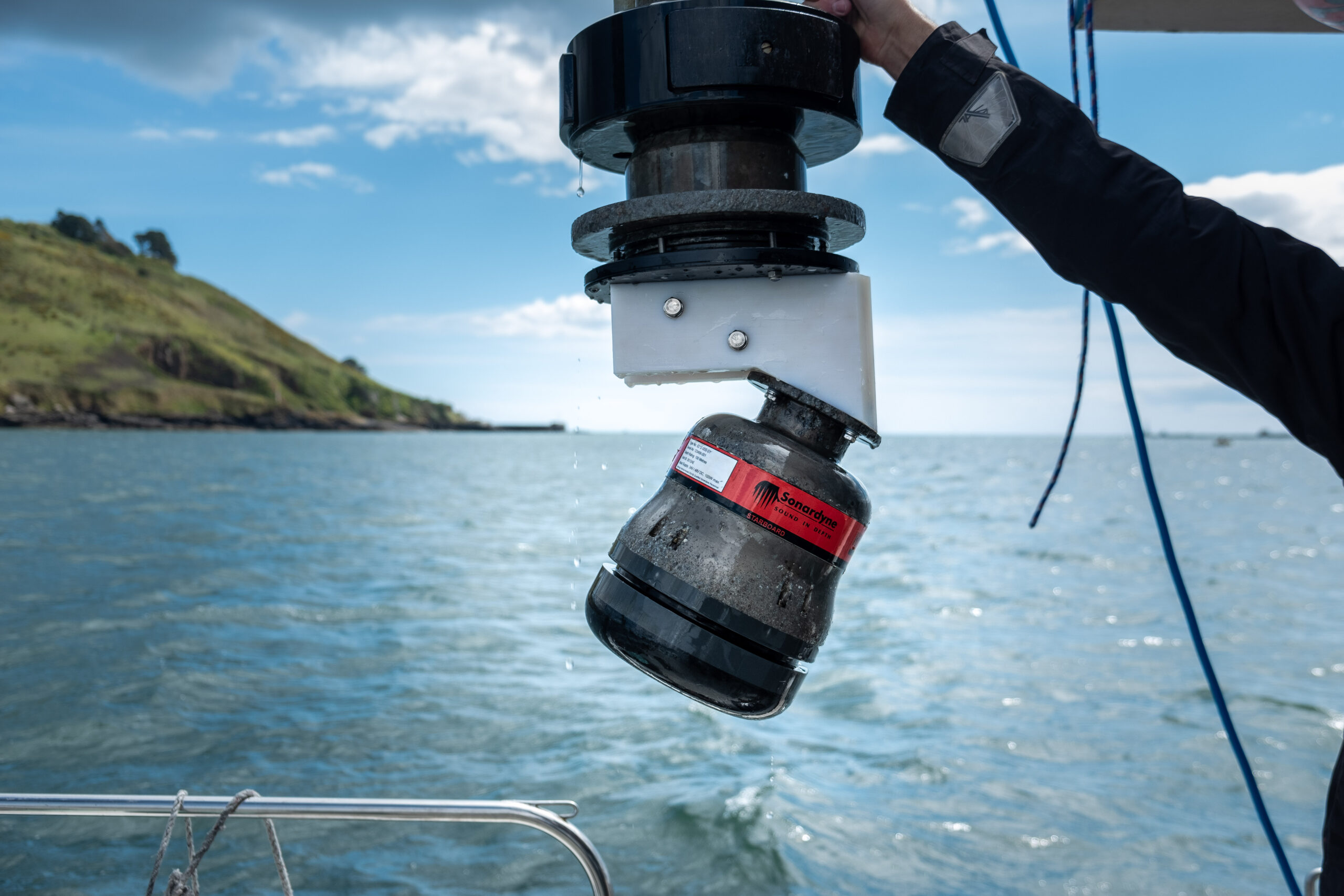
TZT is compact, simple to fit and easy to operate, making it the ideal choice for shallow-draft workboats, RHIBs and uncrewed surface vessels (USVs). Onboard, the splashproof (normally surface-mounted) transceiver electronics module is cable connected to your PC equipped with our HydroPos software (or third-party software) and remote acoustic transducer.

The remote transducer is normally attached to a rigid pole and deployed over the side of the craft you’re using. A GNSS receiver is typically attached to the top of the pole but, aside from that, there’s no need for any other ancillary equipment, such as a gyro or attitude and reference system, and the complexities that integrating them would involve.

At a glance

  • Accurately positions your Sonardyne MF or HF seismic node and ocean bottom cable-mounted transponders
  • Provides high-accuracy positioning right into the surf zone: <1 m water depth
  • Designed for small work boats, RHIBs and USVs working in parallel with your node laying vessel
  • Choice of frequencies depending on your transponder inventory: HF for Type 7815s or MF for SST 6s

On command from your PC, the TZ Transceiver acoustically interrogates up to nine TZ/OBC transponder or up to 95 SST 6 transponders at a time and the acoustic responses are used to generate range measurements to each of them.

By combining the many acoustic range measurements made to each transponder, with GNSS data input into HydroPos, it is possible to generate accurate positions of all transponders to better than 1 m absolute precision.

Mounting TZT onto a USV unlocks the opportunity to reduce the risk, cost and environmental impact of your surveys by reducing the number of crewed vessels required to support your survey.

Specifications table

Feature Type 8263-010-0021 Type 8263-010-0022
Operating Frequency HF (35–50 kHz) MF (20–34 kHz)
Transmit Source Level (dB re 1 µPa @ 1 m) >184–186 dB >184-187 dB
Receive Sensitivity (dB re 1 µPa) <90 dB <90 dB
Ranging Precision Better than 0.5 m Better than 15 mm
Addresses 401 1520
Power 28 V dc, maximum 2 A 28 V dc, maximum 2 A
Communications RS232/RS485 @ 9,600 to 115,200 baud, Ethernet RS232/RS485 @ 9,600 to 115,200 baud, Ethernet
Mechanical Construction Aluminium alloy Aluminium alloy
Operating Temperature -5 to +50°C -5 to +50°C
Storage Temperature -20 to +70°C -20 to +70°C
Dimensions (Length x Width x Height) 223 x 220 x 91 mm 223 x 220 x 91 mm
Weight 3 kg 3 kg
Feature Remote Transducer HF Remote Transducer MF
Operating Frequency HF (35–50 kHz) MF (20–34 kHz)
Depth Rating (Acoustic Transducer) 100 m 100 m
Cable Length 20 m 20 m
Mechanical Construction Stainless steel Stainless steel
Dimensions (Diameter x Length) 90 x 211 mm (without cable) 90 x 211 mm (without cable)
Weight in Air 3.7 kg (without cable) 3.7 kg (without cable)

Did you know?

TZT is suitable for USVs and seismic surveys

Jump to

Overview

Unparalleled reliability in the most challenging underwater environments.

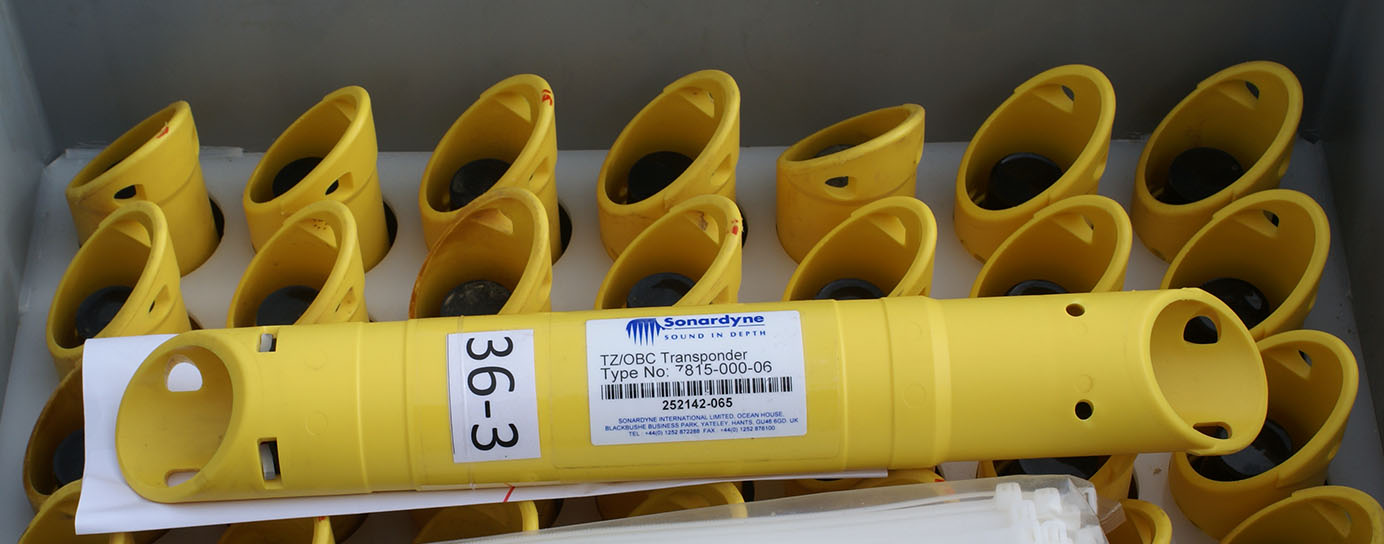
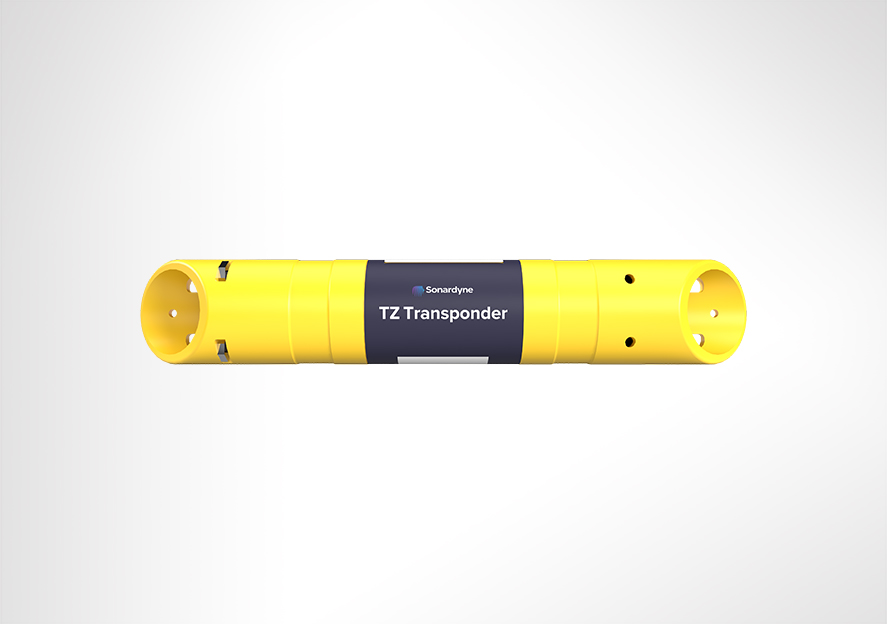
Designed to work with our transition zone acoustic positioning system, the seismic positioning beacon enables the positions of seismic hydrophone to be accurately and efficiently determined.

Overview

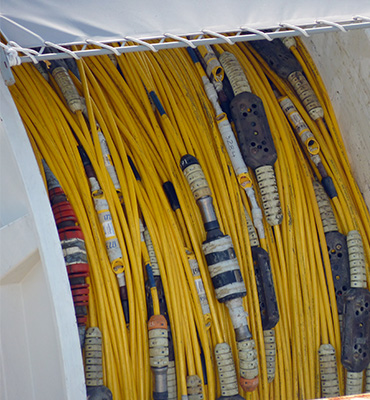
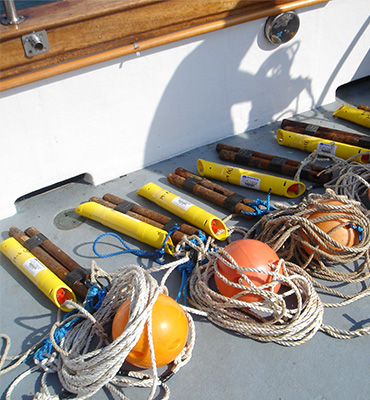
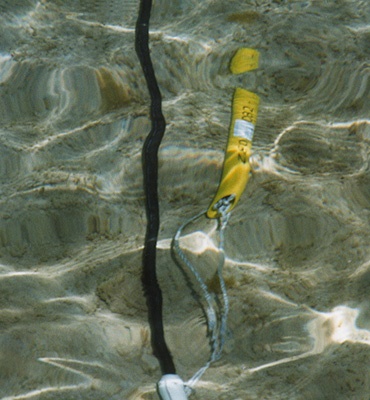
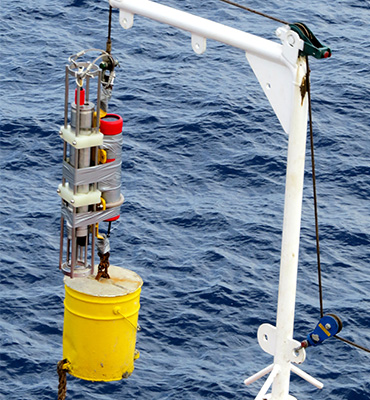
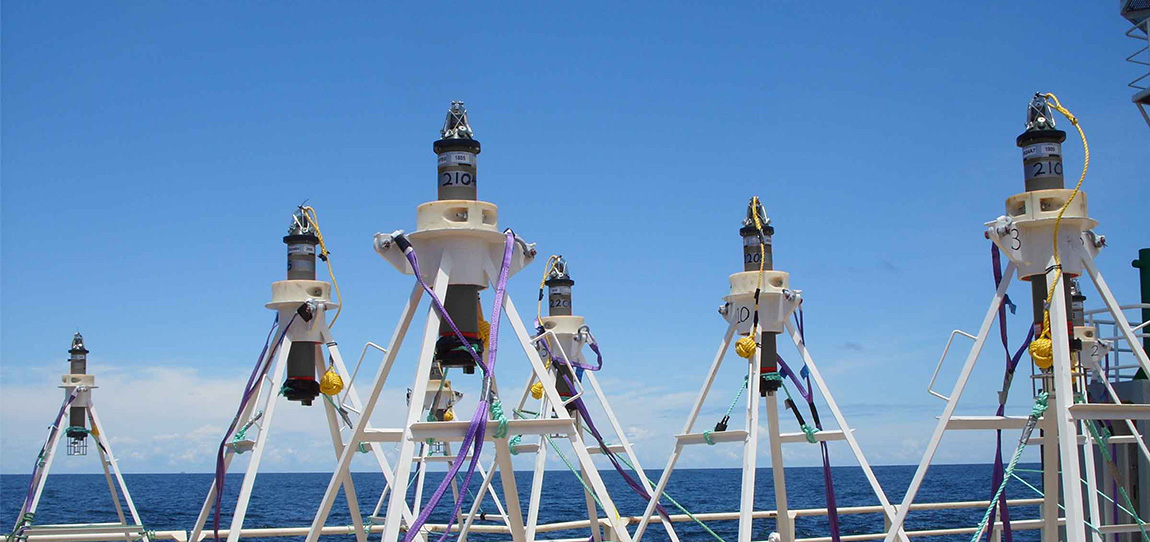
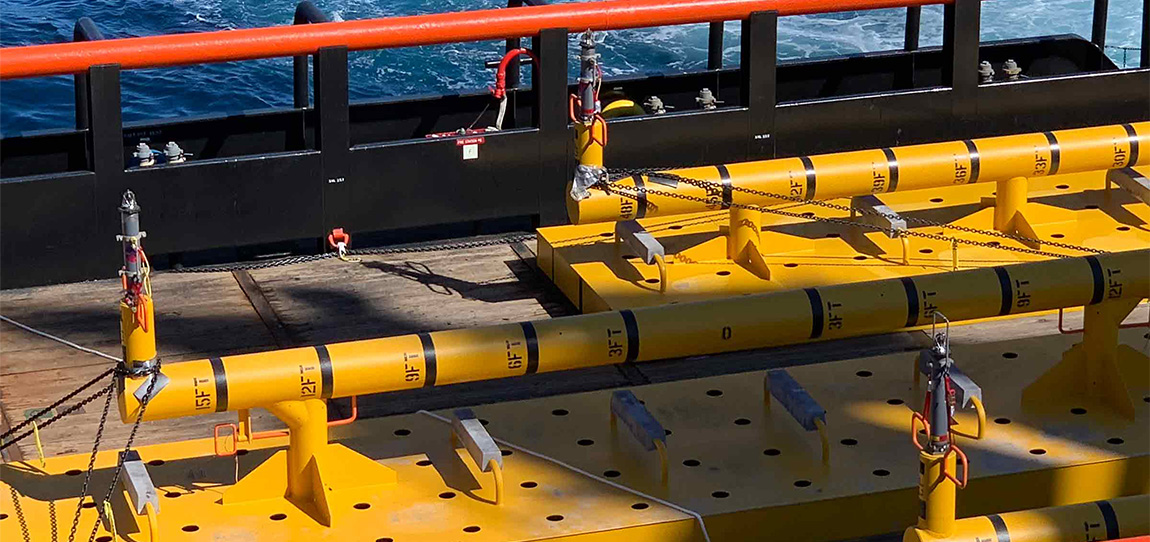
Prior to deployment from a cable lay boat, the transponders are attached to the seismic cable at each ground station, typically every 50 metres. Once the bottom cable is laid, the acoustic system measures the ranges from the surface transceiver to the transponders to enable their exact positions to be established. This positioning process can either be conducted while laying the cable or later while shooting.

The transponders are small and lightweight and have been proven to be able to withstand the demanding and varied operational environment of OBC and TZ surveys.

At a glance

  • Use it to position OBS cables in water depths up to 500 metres
  • Built to withstand rugged operational environments
  • Thousands of unique acoustic addresses
  • Up to 18 months’ listening life
  • Optional RFID tag for easy asset tracking

Standard features include a depth rating of 500 metres, a unique acoustic ‘address’ enabling thousands of units to be laid in a single deployment and automatic battery voltage monitoring to allow users to better plan their maintenance schedules.

In OBC operations using a ‘squirter’ cable deployment system, ‘carapaces’ are available that provide a fast and secure means of attaching transponders to the cable. The carapaces are manufactured from tough plastic that encapsulates the transponder and optional RFID asset tracking tag, clamping it securely to the cable whilst protecting it from the high cable deployment and recovery speeds.

The carapace design, which is now in use with many crews around the world, has been proven to be easy to fit and reduces long term maintenance when compared with traditional tie-wrap and tape methods. The low profile shape of the carapace also reduces the risk of snagging and as it is acoustically ‘quieter’ in the water, creating less noise interference down the cable.

Specifications table

Feature Type 8365-0001 Type 8365-0002
RFID Tag No Yes
Depth Rating 500 m 500 m
Operating Frequency HF (33–50 kHz) HF (33–50 kHz)
Transmit Source Level (dB re 1 µPa @ 1 m) 184–187 dB 184–187 dB
Receive Sensitivity (dB re 1 µPa) 105–115 dB 105–115 dB
Number of Unique Addresses 3609 (field programmable) 3609 (field programmable)
Battery Life (Alkaline) 18 months 18 months
Mechanical Construction Anodised aluminium alloy and plastic Anodised aluminium alloy and plastic
Operating Temperature -5 to +40°C -5 to +40°C
Storage Temperature -20 to +55°C -20 to +55°C
Dimensions (Length x Diameter) 433 x 63 mm 433 x 63 mm
Weight in Air/Water 1.1/0.2 kg 1.1/0.2 kg
Deck Unit Type 7967-000-02 (includes transducer and 10 m of cable) Type 7967-000-02 (includes transducer and 10 m of cable)

Did you know?

TZ transponder is part of our TZ OBC system

Jump to

Overview

Ultimate precision for underwater tracking

WMT is used with Ranger 2 USBL for tracking and communication tasks. It’s most commonly used with ROVs, AUVs and towfish applications where its high acoustic output power level means it’s perfect for long-range operation up to 7,000 m. It’s also suitable for AUVs, ROVs and towfish applications.

Overview

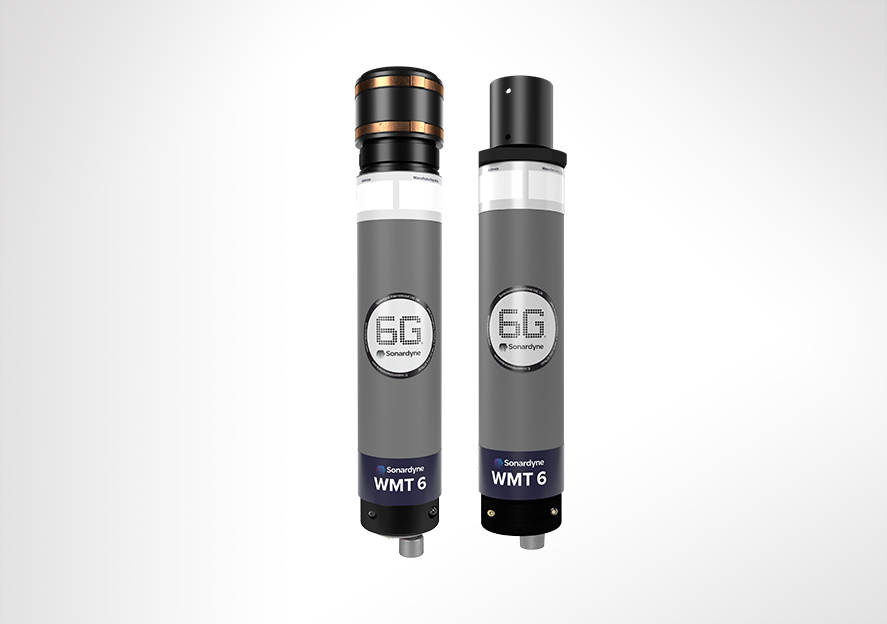
WMT is a 6G compatible, high acoustic output power USBL transponder available in two depth versions: 3,000 m and 7,000 m. The 7,000 m version has a higher acoustic output power level for improved long-range operation.

For ROV and towfish tracking, WMT supports responder trigger for faster position updates, an integrated rechargeable Li-Ion battery pack that is charged from the ROV’s power supply and full RS232 communications enabling channel set up, power and gain etc. to be changed from the surface.

At a glance

  • Use it with Ranger 2 for deep water, long layback tracking tasks
  • High power acoustic output and directional transducer
  • Responder mode for fast position updates
  • Full two-way Sonardyne Wideband 2 interrogation and reply
  • Li-Ion rechargeable battery pack
  • Optional remote transducer

An on/off switch (3,000 m only) helps to ensure the battery pack is not discharged when not in use. If an umbilical trigger is not available, then the full Wideband transponder mode provides excellent USBL performance in a small, lightweight package.

Remote omni or directional transducers are available for WMT. These make installation on a ROV easier as the remote transducer can be installed where there is good line-of-sight and is easily replaced if damaged. The main body of the transponder can then be installed within the ROV frame where it is well protected from damage.

Specifications table

Feature Type 8190-3111 Type 8190-3112 Type 8190-7212
Depth Rating 3,000 m 3,000 m 7,000 m
Operating Frequency MF (20–34 kHz) MF (20–34 kHz) MF (20–34 kHz)
Transducer Beam Shape Omni-directional Directional Directional
Source Level
(re 1 µPa @ 1 m)
High Power 187 dB 193 dB 199 dB
Low Power 181 dB 187 dB 193 dB
Tone Equivalent
Energy (TEE) WBv2+
High Power 193 dB 199 dB 205 dB
Low Power 187 dB 193 dB 199 dB
Range Precision Better than 15 mm Better than 15 mm Better than 15 mm
Depth Sensor ± 0.5% full scale ± 0.5% full scale ± 0.5% full scale
Communications Interface RS232 (9,600–115,200 baud) RS232 (9,600–115,200 baud) RS232 (9,600–115,200 baud)
External Supply Voltage 24 or 48 V dc (± 10%) 24 or 48 V dc (± 10%) 24 or 48 V dc (± 10%)
External Power Sleep ~650 mW ~650 mW ~650 mW
Wideband Listening ~1 W ~1 W ~1 W
Battery Charging 6 W 6 W 6 W
Peak
(During Transmission)
<50 W <50 W <50 W
External Power Switch Yes Yes No
Battery Life
(Li-ion 15 V)
Listening 30 days 30 days 30 days
Continuous 5 Seconds
Interrogation
Approx. 6 days at low power Approx. 6 days at low power Approx. 6 days at low power
Mechanical Construction Anodised aluminium alloy and plastics Anodised aluminium alloy and plastics Anodised aluminium alloy and plastics
Operating Temperature -5 to 40°C -5 to 40°C -5 to 40°C
Storage Temperature -20 to 55°C -20 to 55°C -20 to 55°C
Dimensions (Diameter x Length) 94 x 501 mm 94 x 513 mm 98 x 513 mm
Weights in Air/Water 5.1/2.2 kg 7.0/3.5 kg 7.0/3.5 kg
Options Remote, Cable Connected Transducer
(see separate datasheet)
Remote, Cable Connected Transducer
(see separate datasheet)
None

Manuals and quick start guides

Software and firmware

Did you know?

WMT is used with Ranger 2 USBL for tracking and communications

Jump to

Overview

Small, rugged, versatile.

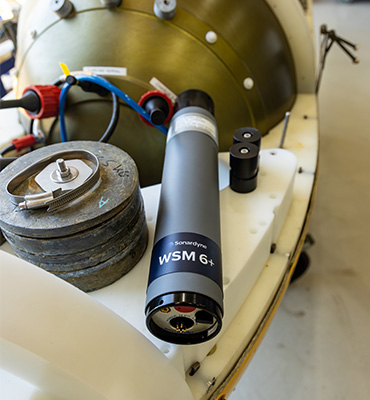
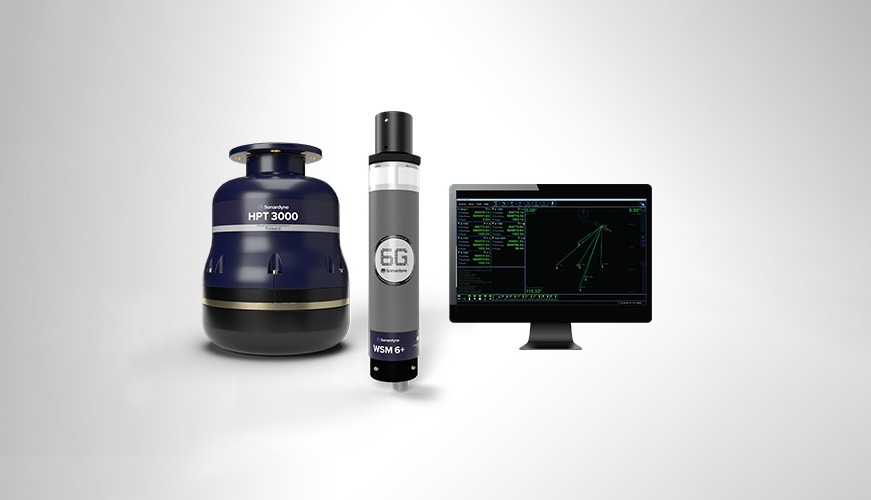
WSM 6+ is a popular choice of transponder for tracking a mobile underwater target such as a towfish, crane wire, ROV or manned submersible. 2-way wideband signals ensure reliable acoustic performance in all conditions. Suitable for a range of applications from environmental surveys to deep water nodal positioning as well as tracking and communications.

Overview

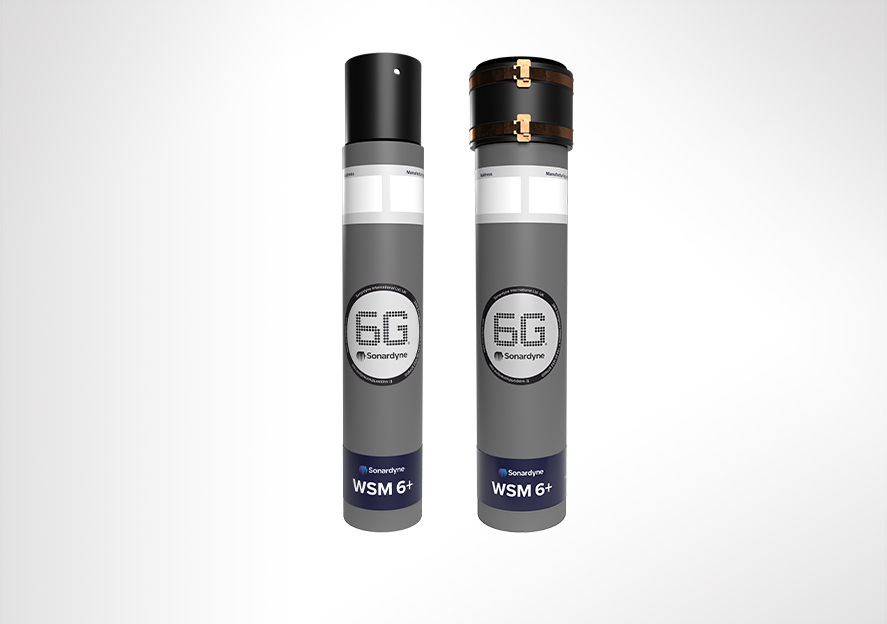
WSM 6+ is one our most popular USBL transponders, selected by customers for its small size, value and dependable performance in all environments, shallow or deep.

It’s the perfect choice for fitting to observation and work-class ROVs, towfish, submersibles and equipment being deployed onto the seabed for short durations.

WSM 6+ is compatible with all of our Ranger 2 USBL systems and we even include one with every Ranger 2 Standard – as standard.

The compact and rugged design is based on the field proven mechanics from previous generation designs and is available with omni-directional or directional transducers. The omni-directional versions are depth rated to 1,000 m and 4,000 m. The directional transducer is depth rated to 4,000 m.

At a glance

  • Rechargeable USBL transponder designed for tracking ROVs, towfish and equipment
  • Choice of 1,000 m and 4,000 m depth ratings
  • Compatible with our family of Ranger 2 USBL systems: Micro, Mini and Standard
  • Transponder or responder operating modes
  • Depth sensor for improved USBL positioning performance
  • External on/off switch for battery saving

All versions support transponder and responder operating mode if an external trigger from your platform is available. Responder mode provides significantly faster position updates than transponder mode.

WSM 6+ supports Wideband 2 acoustic signals and legacy Wideband 1 and HPR 400. The configuration is programmable using supplied software and a serial link or it can be configured acoustically via our back deck handheld test unit – iWand. This allows the WSM 6+ to be configured for use with all of the popular MF frequency acoustic navigation systems.

All WSM 6+ are also fitted with a depth sensor fitted as standard to aid USBL positioning accuracy and an external on/off switch to save battery power when not in use.

WSM 6+ variants are available with acoustically controlled output lines suitable for external motor drive, burnwire or contact closure releases.

Watch our youtube video to learn more

Specifications table

Feature Type 8370-1111 Type 8370-4112 Type 8370-4111
Depth rating 1,000 m 4,000 m 4,000 m
Operational frequency MF (20–34 kHz) MF (20–34 kHz) MF (20–34 kHz)
Transceiver beam shape Omni-Directional Directional Omni-Directional
Transmit source level (dB re. 1 µPa @ 1 m) (external power/battery) 187 dB/
184 dB
196 dB/
193 dB
187 dB/
184 dB
Tone Equivalent Energy (TEE) (external power) 193 dB 202 dB 202 dB
Receive Sensitivity (dB re 1 μPa) <85 dB <80 dB <80 dB
Power supply Rechargeable NiMH battery or 
ext. 24 V via ROV umbilical Rechargeable NiMH battery or ext. 24 V via ROV umbilical Rechargeable NiMH battery or ext. 24 V via ROV umbilical
Operating channels All Sonardyne Wideband 
HPR 400 Channels All Sonardyne Wideband HPR 400 Channels All Sonardyne Wideband HPR 400 Channels
Depth sensor ±0.5% Full Scale (100 Bar) ±0.5% Full Scale (400 Bar) ±0.5% Full Scale (400 Bar)
Operating life
(1 s update rate, max. power, Wideband 2 )
>6 days >3 days >6 days
Update rate (maximum) >2 Hz >2 Hz >2 Hz
Quiescent life (battery) >35 Days >35 Days >35 Days
Connector
(5-Way (standard)
Subconn MCBH5M Subconn MCBH5M Subconn MCBH5M
Operating temperature -5 to 40ºC -5 to 40ºC -5 to 40ºC
Storage temperature -20 to 55ºC -20 to 55ºC -20 to 55ºC
Mechanical construction Anodised aluminium alloy Anodised aluminium alloy Anodised aluminium alloy
Dimensions (length x diameter) 420 x 75 mm 429 x 96.5 mm 419.3 x 87.6 mm
Weight in air/water 3.2/1.3 Kg 5.5/3.2Kg 4.6/2.3Kg
Battery charger 8390-100-01 8390-100-01 8390-100-01

Did you know?

WSM 6+ is compatible with our Ranger 2 family of USBL systems: Micro, Mini and Standard

Jump to

Overview

Portable and calibration-free

Designed as part of our Mini-Ranger 2 system, HPT 3000 is a portable, calibration-free USBL transceiver designed for tracking underwater vehicles, divers and equipment to ranges of up to 4,000 m. Whether you’re measuring ocean currents, conducting environmental surveys or using ROVs, HPT 3000 and Mini-Ranger 2 could benefit your future operations.

Overview

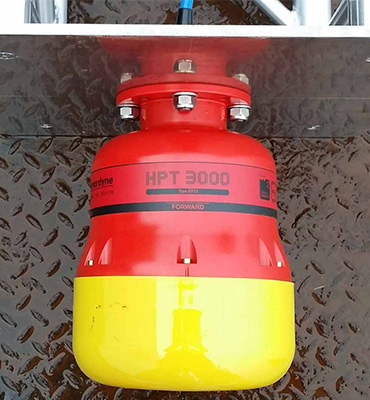
HPT 3000 is a high performance Wideband 2-enabled Ultra-Short BaseLine (USBL) tracking and telemetry transceiver compatible with our range of 6G transponders.

The transceiver’s acoustic performance is optimised for operations in coastal and near shore where high elevation tracking of targets is often required in low noise environments.

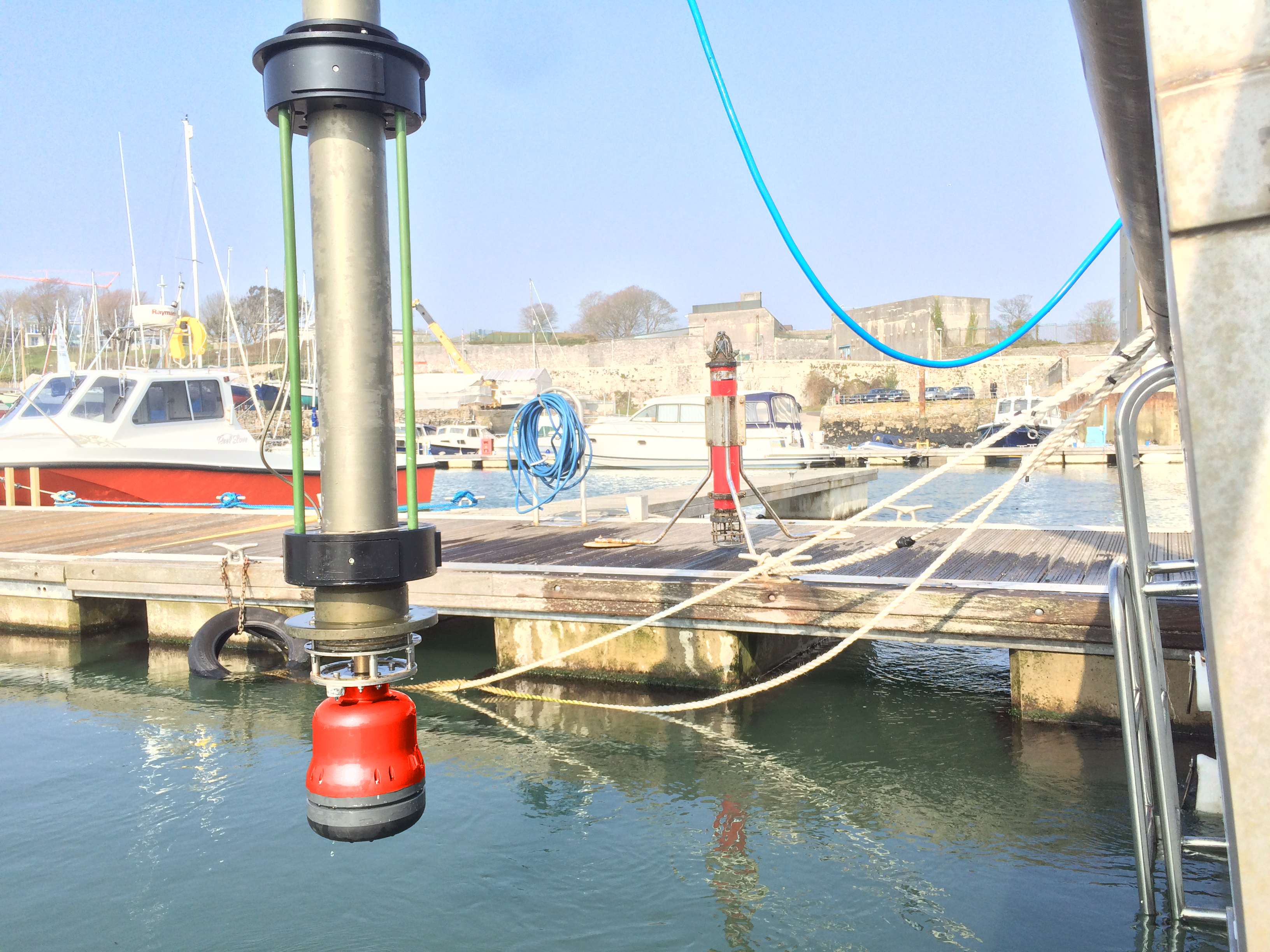
This unit is easy to install on a simple over-the-side pole arrangement enabling a wide range of vessels to take advantage of Mini-Ranger 2 including: anchored barges, small survey craft and uncrewed surface vessels.

HPT 3000 has an internal MTi-30 Xsens sensor which provides pitch, roll and heading data for search and salvage applications which are time critical requiring turn on and track functionality. Shallow water and pipelay from anchor barges also benefit from the internal sensor being calibration free.

The advanced multi-element processing enables transponders to be positioned more precisely, more quickly and more robustly due to improvements in signal processing algorithms. When used as part of a complete Mini-Ranger 2 USBL system, external heading and inertial navigation sensor, class leading performance is achieved.

At a glance

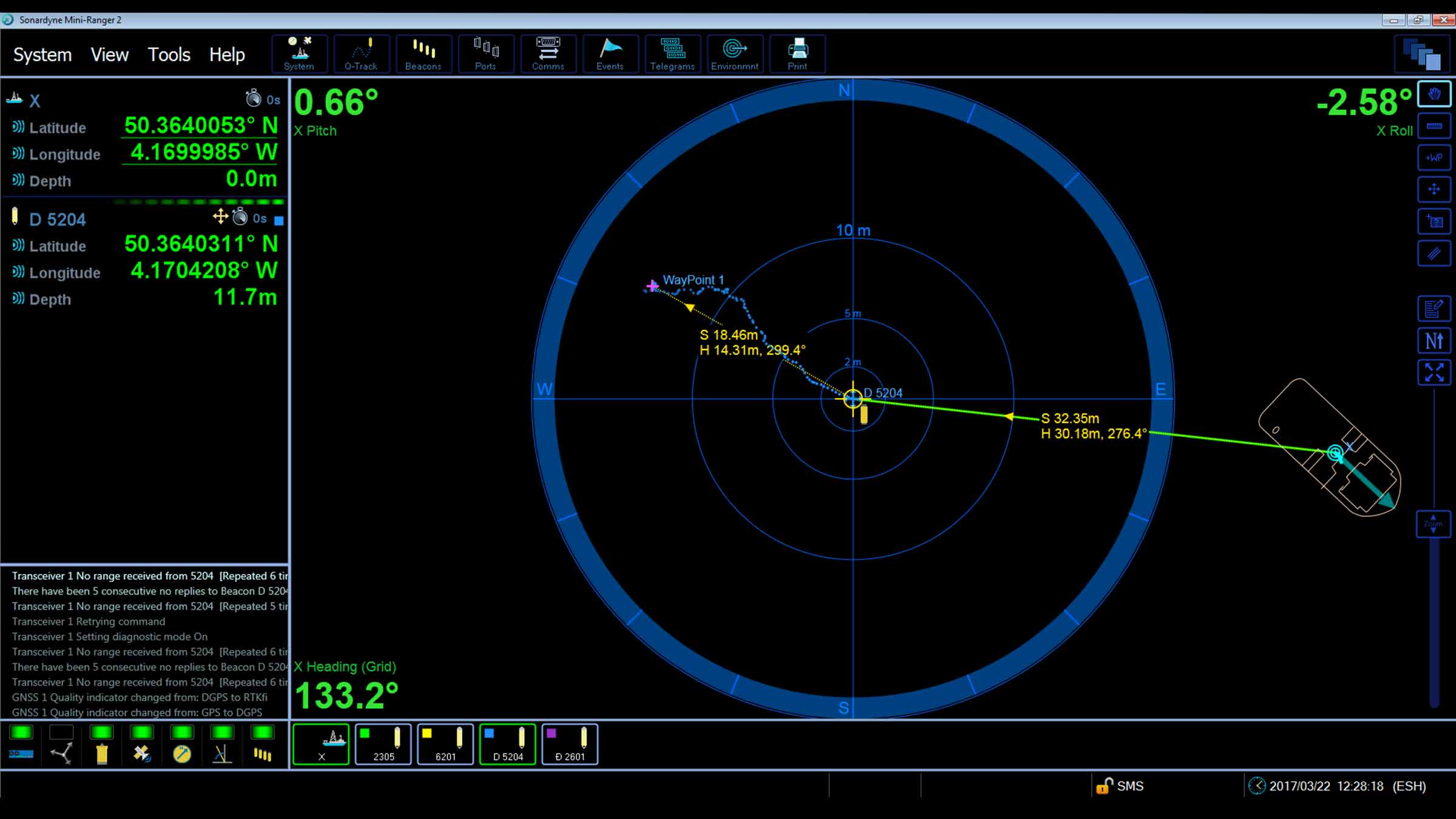
  • Use it with Mini-Ranger 2 USBL
  • Acoustically optimised for tracking targets in shallow water
  • Simple to install on all types of vessel including uncrewed
  • Ethernet comms for fast position updates
  • Excellent corrosion resistance

‘Discovery Mode’ enables users to automatically detect previously deployed transponders including their configured address and channel, making the system easier to use. The HPT 3000 is a highly capable acoustic USBL tracking transceiver. Its multiple simultaneous channels enable robust tracking of 10 targets.

Manufactured in Aluminium Bronze, the HPT 3000 is intended to be fitted temporarily or permanently to a vessel’s through-hull or over-the-side pole. The full hemispherical coverage optimises performance in shallow water environments boosting transmissions and receive sensitivity in the horizontal axis.

Power and communications are contained in a single cable and because communications transmit from the transceiver to control-room ESH, data rates of up to 100 Mps can be achieved. Ethernet-based communications also enable the unit to interface with your vessel’s existing network for rapid installation.

Mini-Ranger 2 USBL

Mini-Ranger 2 is our mid-level USBL target tracking system, perfect for nearshore operations, UXO surveys, search and recovery and structure inspections. With a 995 m operating range, extendable to 4,000 m, it can track up to ten underwater targets simultaneously, including divers, towed instruments, ROVs and AUVs.

Choose to add the Marine Robotics software pack and it will communicate with subsea robotic platforms, sharing positions and exchanging data.

A compact, easily installed system it’s your ideal choice for temporary installation on small survey vessels, as well as USVs.

For the full picture of what your Mini-Ranger 2 USBL is capable of, please visit its dedicated product page.

Specifications table

Feature Type 8212
Operational frequency MF (20–34 kHz)
Transceiver performance Operating range Restricted to 995 m with Mini Ranger 2 system (4000 m with extended range version)
Acoustic cover Full 180°
Range precision Better than 15 mm
Positioning repeatability external MRU All transceivers tested to better than 0.2% of slant range 1 Drms / 0.14% 1 Sigma
Positioning repeatability internal Xsens pitch and roll All transceivers tested to better than 1.3% of slant range 1 Drms / 0.9% 1 Sigma
Transmit source level (dB re 1 µPa @ 1 m) 194 dB
Tone Equivalent Energy (TEE) 200 dB (3 JA)
Electrical 48 V dc (±10%), typical 15 W, maximum 120 W
Communication Ethernet 100 Mbps
Operating temperature -5 to 40°C
Storage temperature -20 to 45°C
Mechanical construction Aluminium bronze
Dimensions (height x diameter) 310 x 234 mm
Weight in air/water 19.4/9.5 kg
Note: The absolute accuracy of the system is dependent upon the quality of external attitude and heading sensors, beacon source
level, vessel noise, water depth, mechanical rigidity of the transceiver deployment machine, SV knowledge and proper calibration of
the total system using CASIUS.

Did you know?

HPT 3000 is part of our Mini-Ranger 2 USBL system

Jump to

Overview

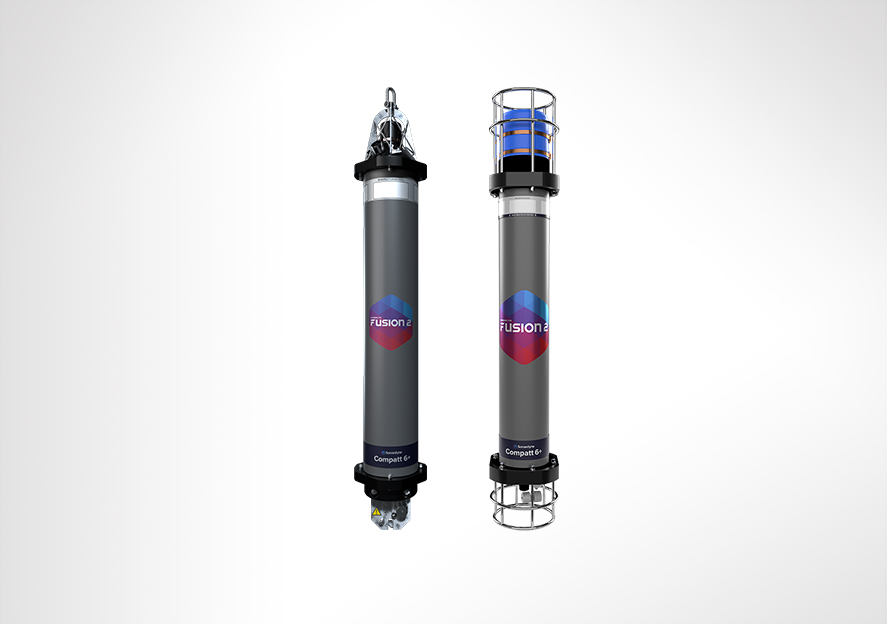
Compatt 6+ is our latest generation of intelligent transponder

Discover Compatt 6+: this advanced LBL transponder boasts unparalleled precision, featuring revolutionary Wideband 3 technology for a superior acoustic performance. Engineered for versatility with over 3,600 configurations available, it seamlessly integrates with your existing systems while enhancing your operational efficiency.

Overview

Compatt 6+ is used for high precision survey and construction operations in all water depths, including: spool piece metrology, pipeline touchdown monitoring, structure installation and dynamic positioning reference.

Compatt 6+ offers significant time saving with fast update rates (up to 1 Hz LBL tracking), all made possible using the Wideband 3 acoustic telemetry protocols. Support of Wideband 2 ranges maintains backwards compatibility. This makes any system operating with Compatt 6+ significantly easier to operate therefore de-risking operations, reducing vessel time and reducing training requirements for offshore personnel.

At a glance

  • Compatible with all 6G LBL, INS and USBL systems
  • Wideband 3 enabled
  • Versatile, flexible and cost-effective
  • Over 3,600 different configurations available
  • Choice of depth ratings to 7,000 m

Our Wideband advanced signal processing offers improved acoustic performance in challenging conditions, longer ranges, improved multipath rejection around structures and real-time range diagnostics for quality control. Wideband also reduces the interference to and from adjacent Sonardyne and other acoustic positioning systems.

The integrated communications and navigation technology allows the transponder to be used as a multi-purpose modem, autonomous data logger and navigation reference transponder.

Wideband 3

For the first time, sensor telemetry data (e.g. pressure, depth or temperature) is embedded within ranging data so no more waiting for sensor readings at vital moments.

Compatible

Compatt 6+ transponders are backwards compatible with your existing Compatt 6 inventories so you can mix and match in the field.

Upgradable

We can upgrade your existing Compatt 6 into plus units quickly and cost effectively meaning you can go on to realise the full benefits of Fusion 2.

Overview

Compatt 6+ is used for high precision survey and construction operations in all water depths, including: spool piece metrology, pipeline touchdown monitoring, structure installation and dynamic positioning reference.

Specifications table

Feature Type 8300-3111 Type 8300-3113 Type 8300-5213
Depth rating 3,000 m 3,000 m 5,000 m
Operating frequency MF (20–34 kHz) MF (20–34 kHz) MF (20–34 kHz)
Transducer beam shape Omni-directional Directional Directional
Transmit Source level (dB re 1 µPa @ 1 m) 187–196 dB
(4 levels)
190–202 dB
(4 levels)
190–202 dB
(4 levels)
Tone Equivalent Energy (TEE) 193–202 dB 196–208 dB 196–208 dB
Receive sensitivity (dB re 1 µPa) 90–120 dB
(7 levels)
80–120 dB
(7 levels)
80–120 dB
(7 levels)
Ranging precision Better than 15 mm Better than 15 mm Better than 15 mm
Number of unique Wideband 2 addresses >300 >300 >300
Battery life (listening) Alkaline 833 days 833 days 833 days
Lithium 1,390 days 1,390 days 1,390 days
External power supply 24 V 24 V 24 V
Safe working load (4:1) 250 kg 250 kg 250 kg
Operating temperature -5 to 40°C -5 to 40°C -5 to 40°C
Storage temperature -20 to 55°C -20 to 55°C -20 to 55°C
Dimensions (maximum)
(length x diameter)
With sensor guard 1,034 x 200 mm 1,018 x 200 mm 1,018 x 200 mm
Without sensor guard 1,034 x 178 mm n/a n/a
Weight in air/water 23.8/11.8 kg 27.0/14.0 kg 29.0/15.0 kg
Endcap sensors and options
Temperature (±0.1°C) Standard Standard Standard
Tilt switch (±30–45°) Standard Standard Standard
Strain gauge pressure sensor (±0.1%) Standard Standard Standard
High precision strain gauge (±0.01%)
Presens or Keller
Optional Optional Optional
Paroscientific digiQuartz pressure sensor
1,350 m, 2,000 m, 4,130 m, 6,800 m (±0.01%)
Optional Optional Optional
Inclinometer (tilt sensor)
range ±90°, accuracy: ±1°
Standard Standard Standard
High accuracy inclinometer
range: ±90°, accuracy: ±0.05° over 0 – ±15°;
±0.2° over 0 – ±45°
Optional Optional Optional
Sound velocity sensor
±0.02 m/s accuracy under calibration conditions Optional Optional Optional
Release mechanism Standard Standard Standard
Power for external sensors Standard Standard Standard
Gyro input Standard Standard Standard

Frequently asked questions

Sparse LBL (range-aiding) FAQs

What are the pros and cons of different positioning methods?  

Why is Sparse LBL array planning important and what are the key considerations? 

What is a Sparse LBL (range-aiding) set up?  

What is Sparse LBL (range-aiding) used for?  

What is LBL (Long BaseLine) underwater positioning? 

Compatt 6 and 6+ Deployment Tests

Frequency management is obsolete. Here’s why.

6G Terminal Lite Range Test

When to use a float, when to use a stand?

How can I get the best performance from my long layback tracking operations?

How can I deploy my Compatt 6+ using iWand?

How to correctly set a Compatt 6+ release mechanism

Does Compatt 6+ have modem capabilities?

How often do endcap sensors need calibrating to keep them in spec?

Is it possible to position Compatt 6+s independently within the same array and send each positioning out of Fusion to our navigation software?

Will Compatt 6+ work with Ranger 2 and Marksman?

I want to buy standard red Compatt 6, are they still available for sale?

Can Compatt 6+ be used in the same LBL array as standard Compatt 6?

What is the difference between Compatt 6 and Compatt 6+?

If I’m using Fusion 2, can I choose to use Wideband 2 or Wideband 3 telemetry?

Can ROVNav 6+ be used with standard Compatt 6s?

Will my ROVNav 6 work with Compatt 6+?

Do I need to upgrade to Compatt 6+ and ROVNav 6+?

How to QC a Sound Velocity (SV) in Fusion 2

How far can my Compatt 6+ be above the seabed?

How to replace a battery in Compatt 6 and 6+ family of transponders

How to plan my sparse LBL array (guidance note)

How do I calibrate my sparse LBL array?

How do I set up structure deflection monitoring (SDM) in Fusion 2?

Can I use Compatt 6+ Multiuser in Fusion 2?

How do I perform a SLAM calibration in Fusion 2?

How do I set up sound speed collection and pressure to depth conversion in Fusion 2?

Manuals and quick start guides

Did you know?

Compatt 6+ uses Wideband 3 technology

Jump to

Overview

Lightweight, portable and easy-to-use

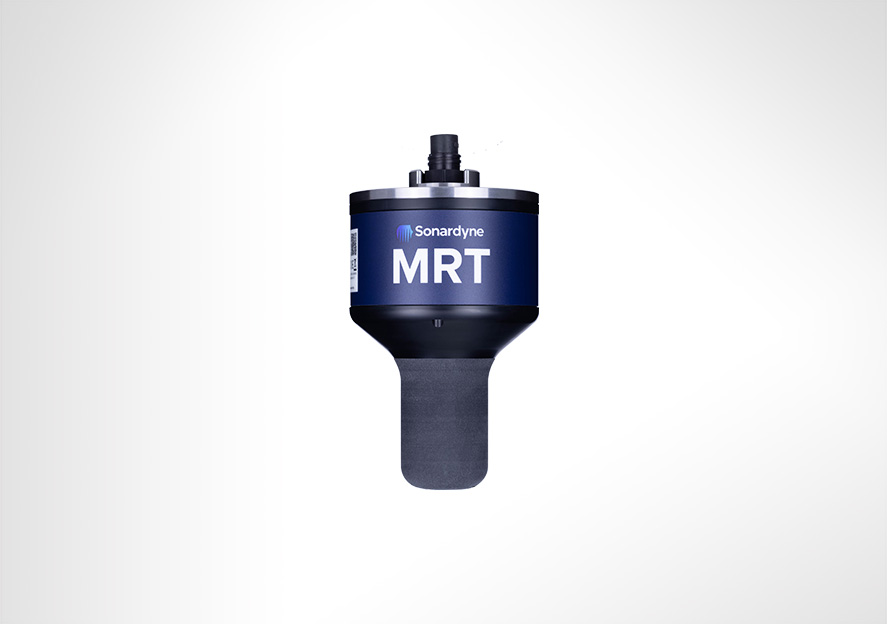
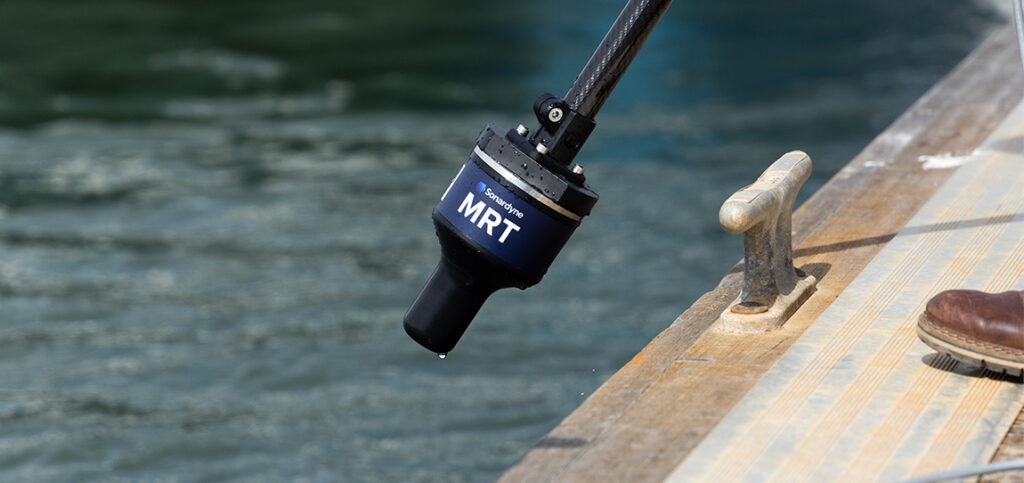
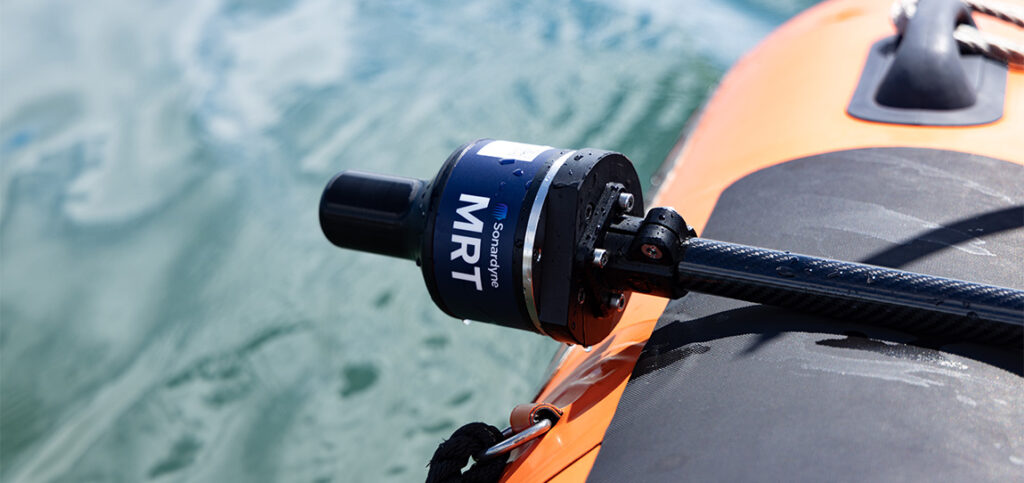
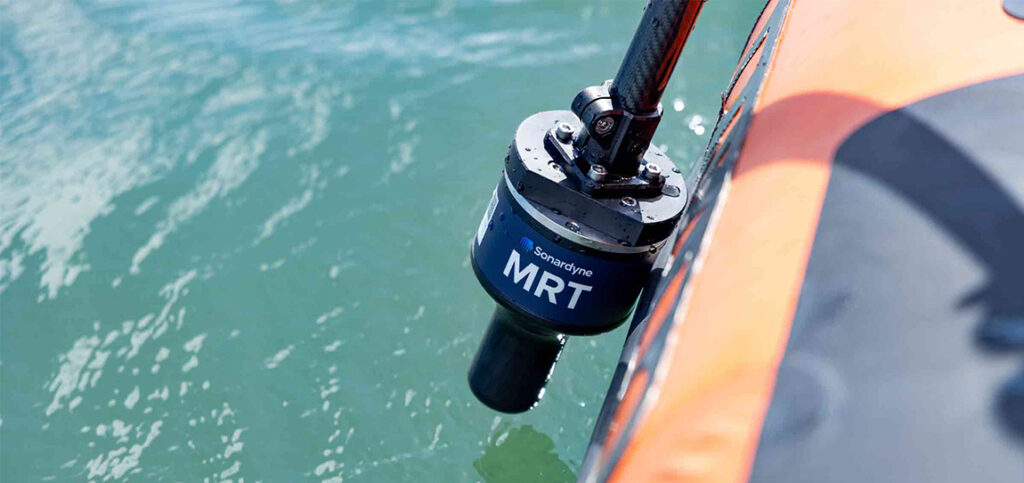
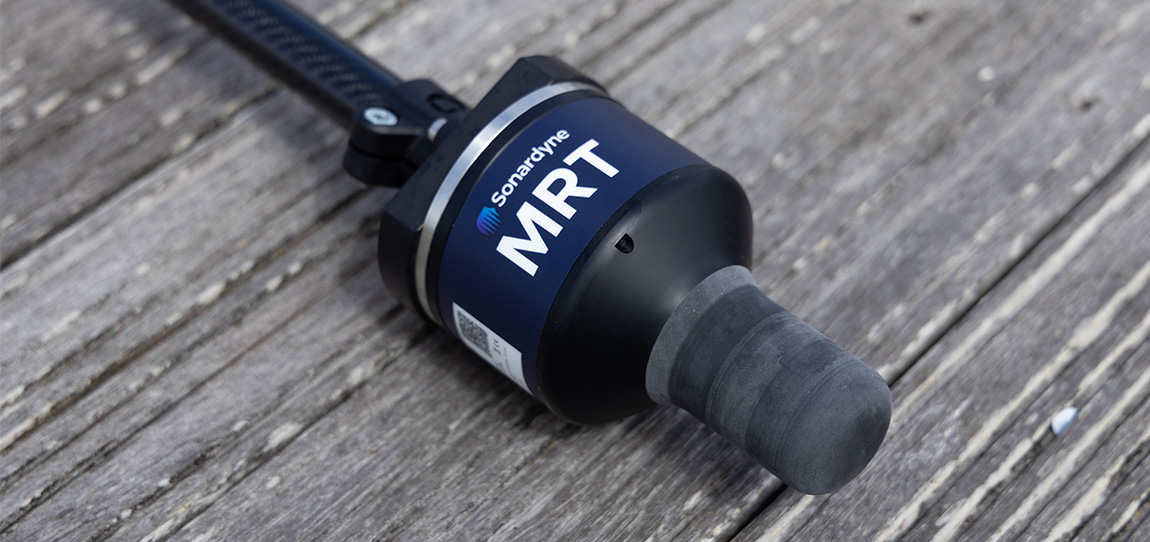
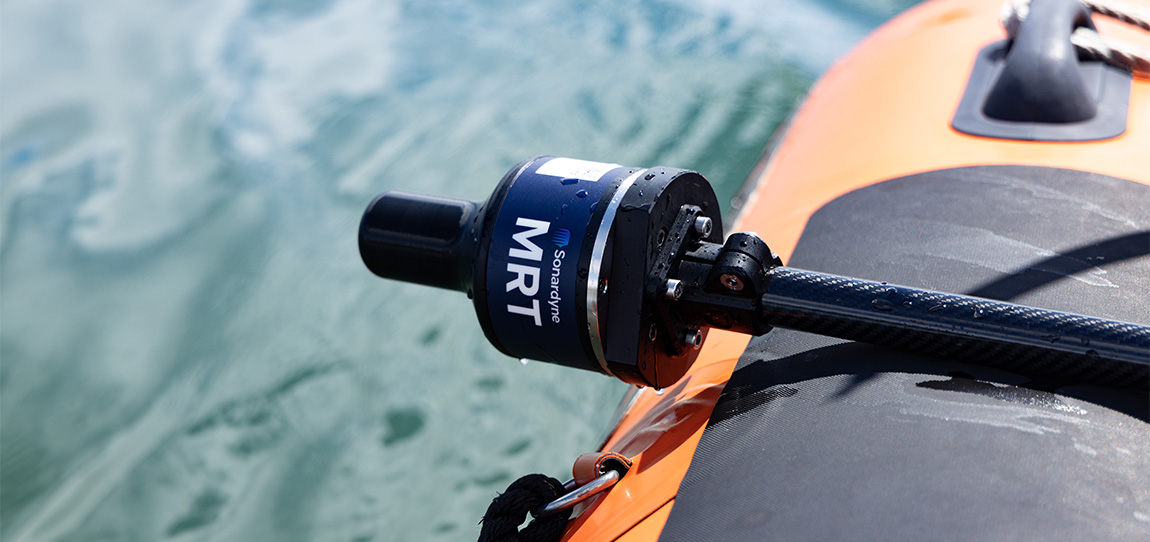
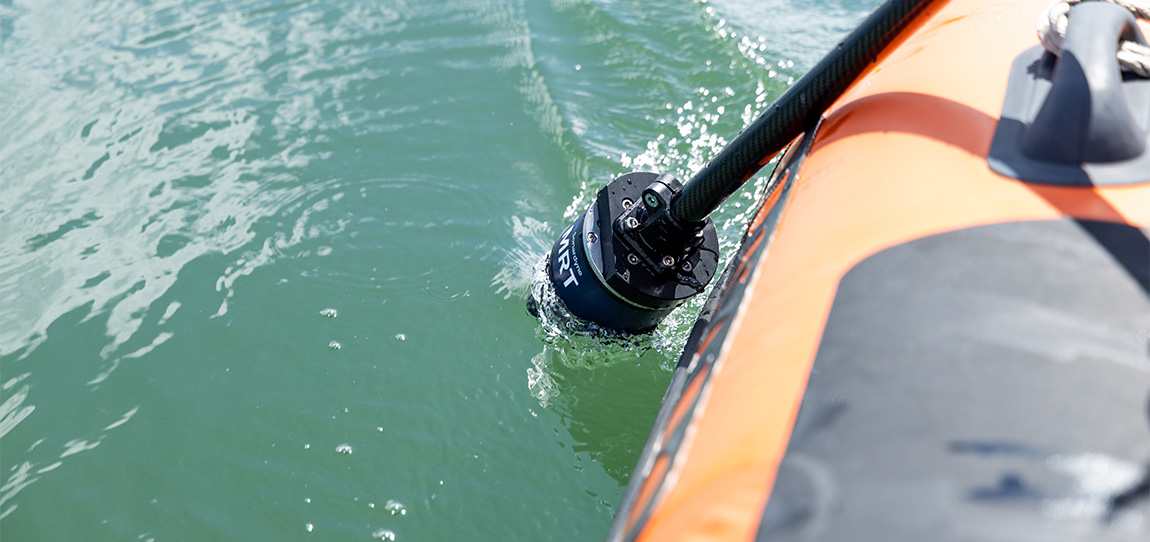
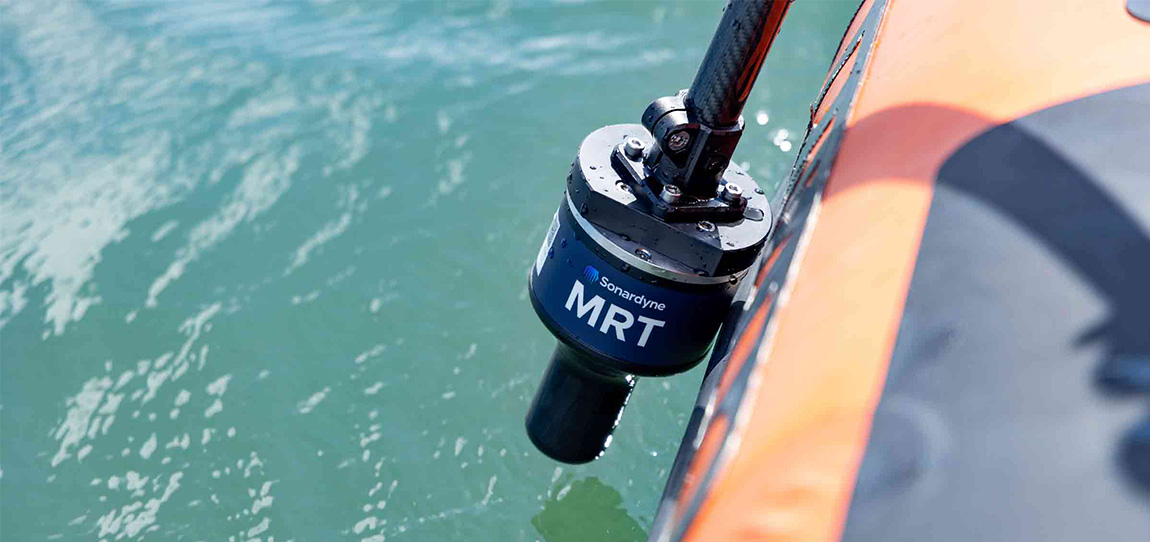
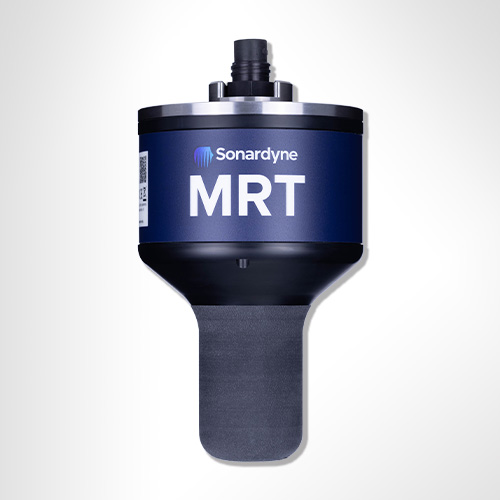
Micro-Ranger Transceiver (MRT) forms part of our Micro-Ranger 2 USBL system developed to track divers and small underwater drones in lakes, rivers and coastal waters. MRT is one of the smallest USBL transceivers on the market providing you with complete flexibility with where you use, how you deploy it and what you track with it.

Overview

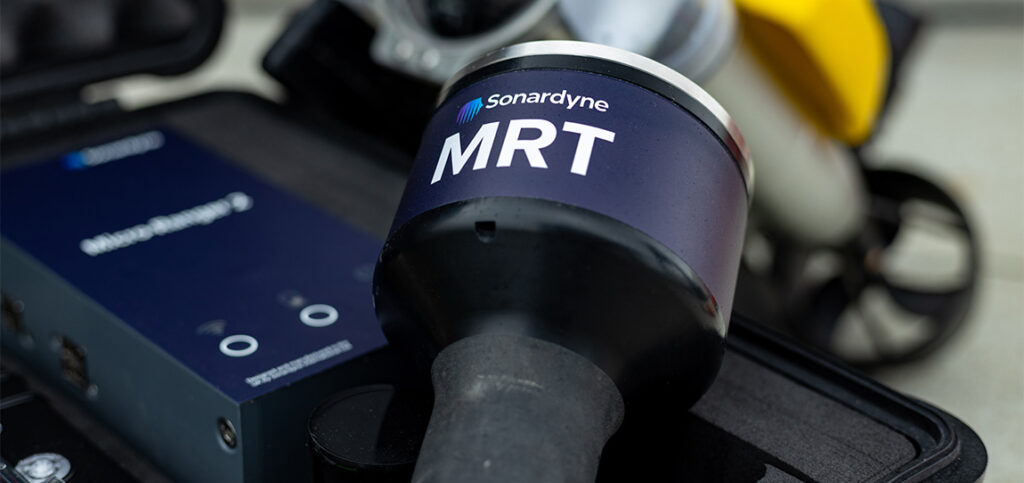
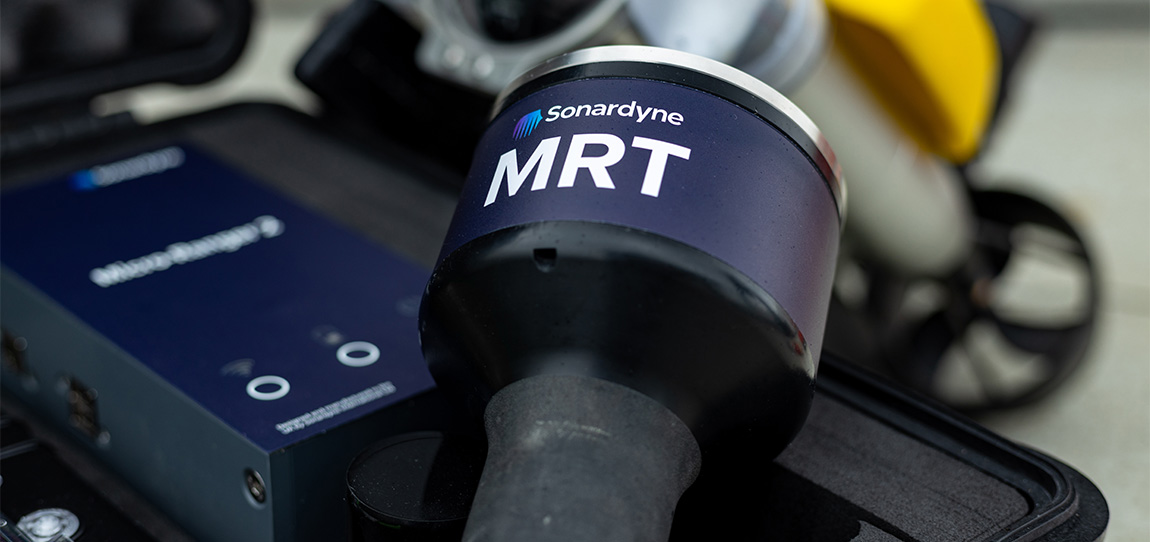
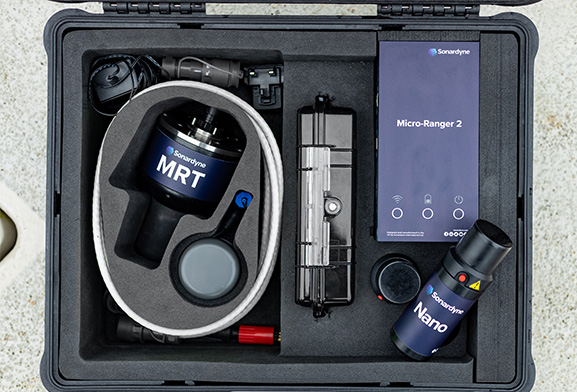
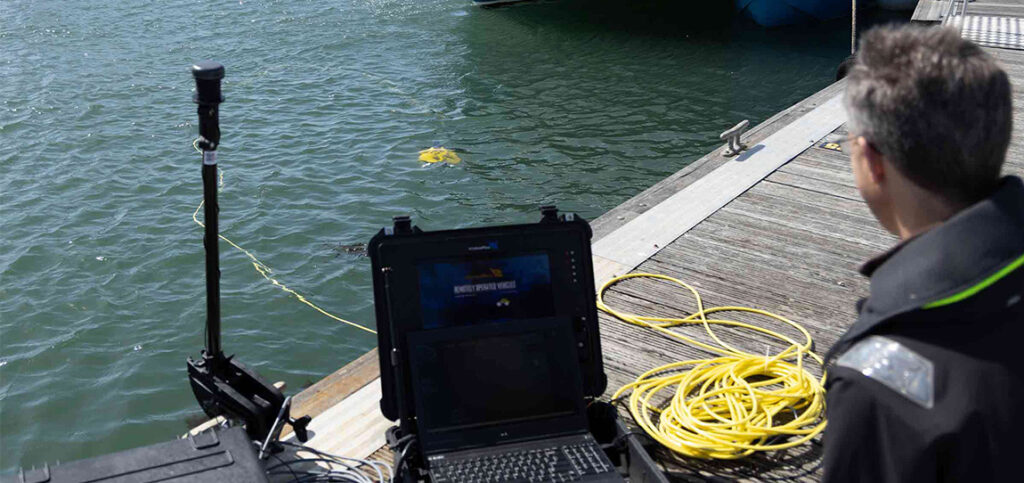
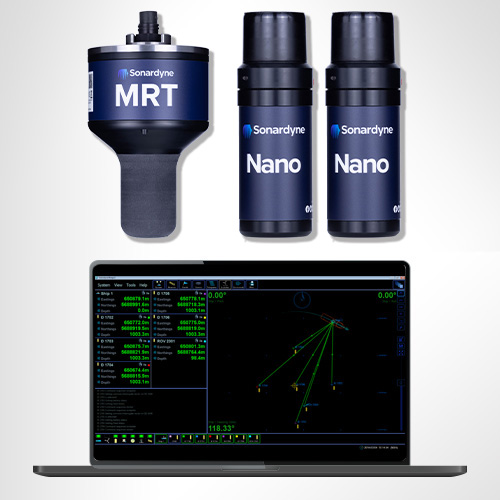
MRT is supplied as part of our Micro-Ranger 2 USBL system, a complete one-box underwater diver, ROV, AUV and equipment tracking solution. Everything you need, including two transponders, is supplied in a battery-powered IP-67 rated carry case for portable, go-anywhere marine operations.

MRT is supplied with a moulded 10 m underwater cable that is connected up to your Micro-Ranger 2 command case. The cable provides both power and comms to the MRT.

At a glance

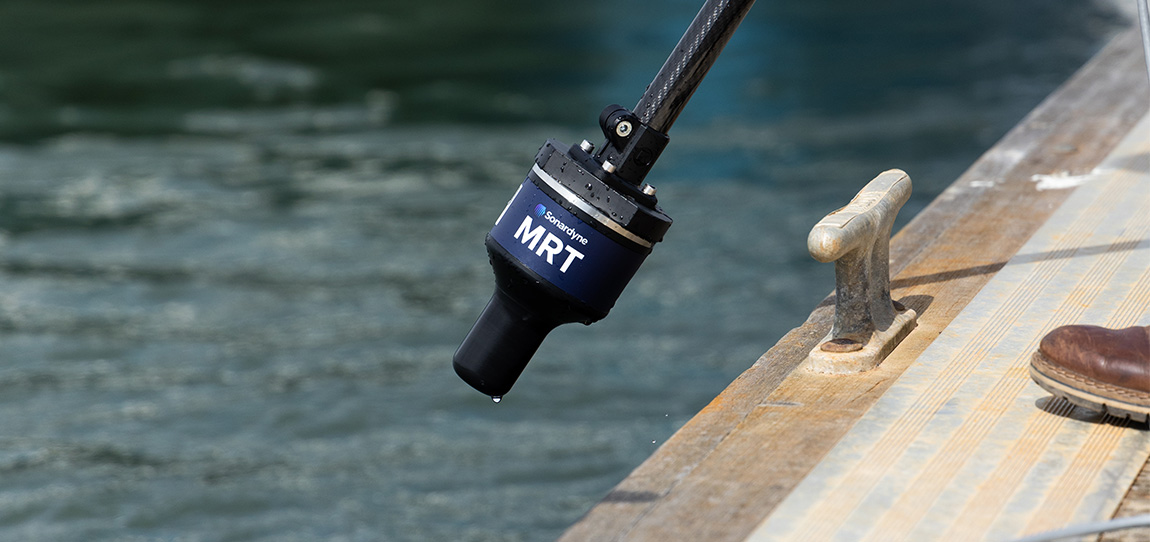
  • Easy to deploy off a pontoon or RHIB
  • Optimised for high elevation tracking in shallow water
  • Internal magnetic compass for instantaneous and calibration free motion compensation
  • Built in health checks including array and electronics diagnostics
  • Supplied with 10 m of deck cable

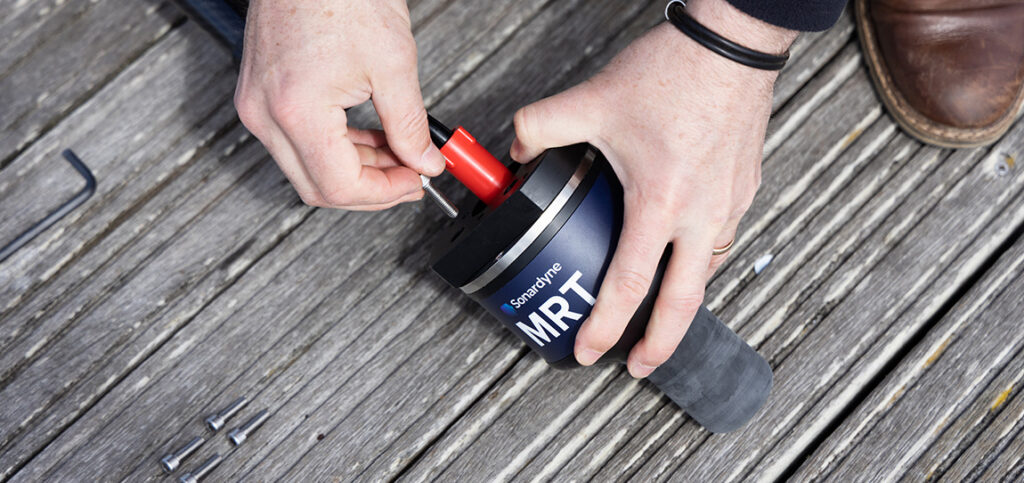
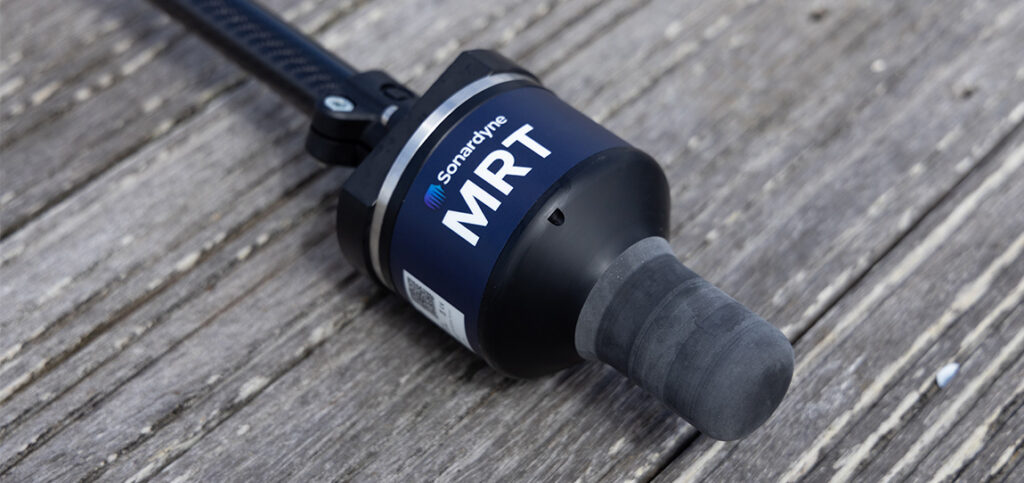
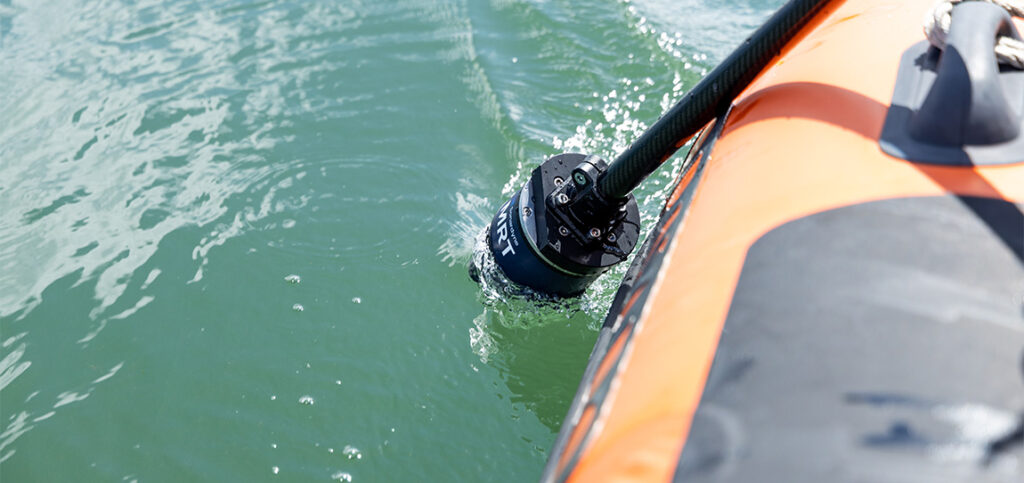
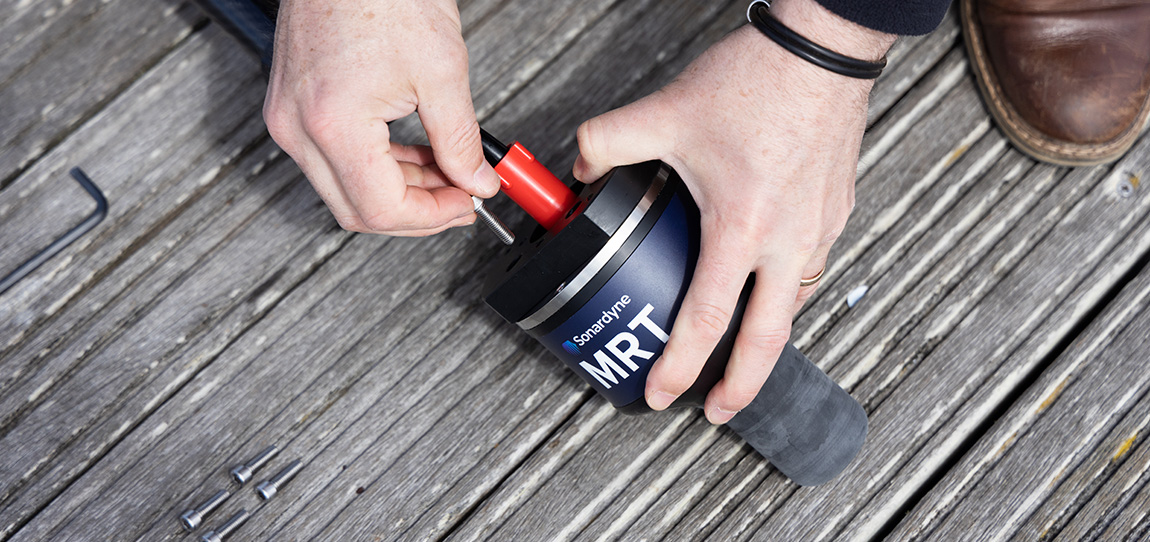
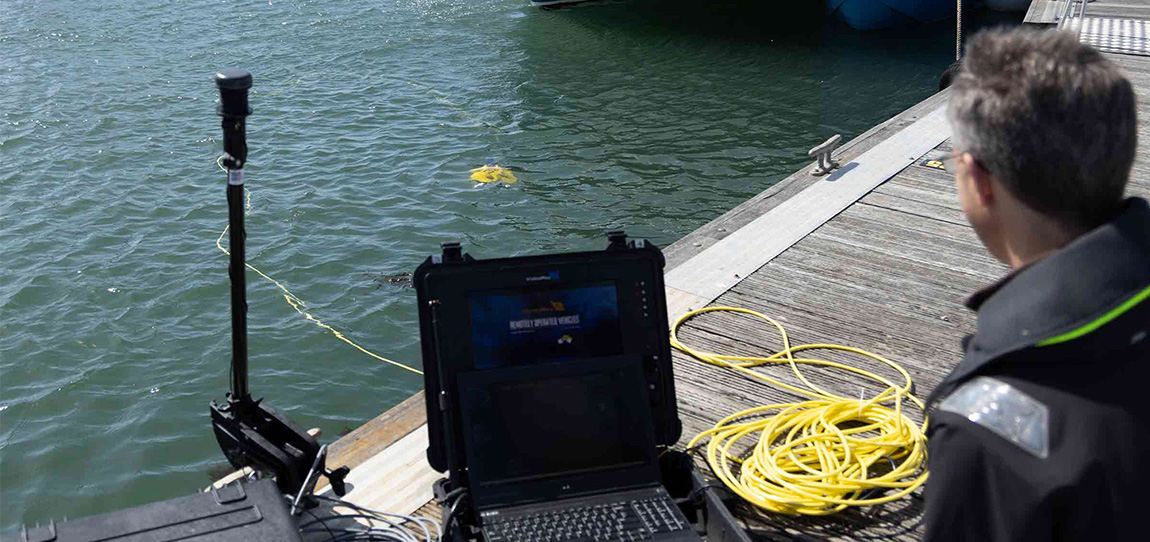
Deployment is as simple as it gets. Off a pontoon, over the side of your RHIB or even fixed to a USV. It can be suspended using its cable or on a simple pole arrangement. We even offer a lightweight carbon fibre pole with fixation clamp and a top bracket to mount the system’s included GNSS antenna.

MRT uses an integral AHRS sensor which provides pitch, roll and heading data that automatically compensates for the dynamic motion of the vessel, removing the need for an external sensor and pre-use calibration. It’s multi-element processing enables transponders to be accurately positioned at ranges of 995 metres.

Specifications table

Feature Type 8243
Operational Frequency MF (20–34 kHz)
Operating Range Up to 995 m
Depth Rating 25 m
Acoustic Coverage Greater than 200°
Range Accuracy Better than 15 mm
Angular Accuracy ±3°
Transmit Source Level (dB re 1 µPa @ 1 m) 184 dB
Electrical 48 V dc (±10%) typical 1.5 W, maximum 25.5 W
Communication Ethernet 100 Mbps
Operating Temperature -5 to 40°C
Storage Temperature -20 to 55°C
Mechanical Construction Stainless steel 316, PVC and polyurethane
Dimensions (Height x Diameter) 177 x 106 mm (excluding connector)
Weight in Air/Water 1.84/0.99 kg

Did you know?

MRT is part of Micro-Ranger 2 USBL with an operating range of up to 995 m

Jump to

Overview

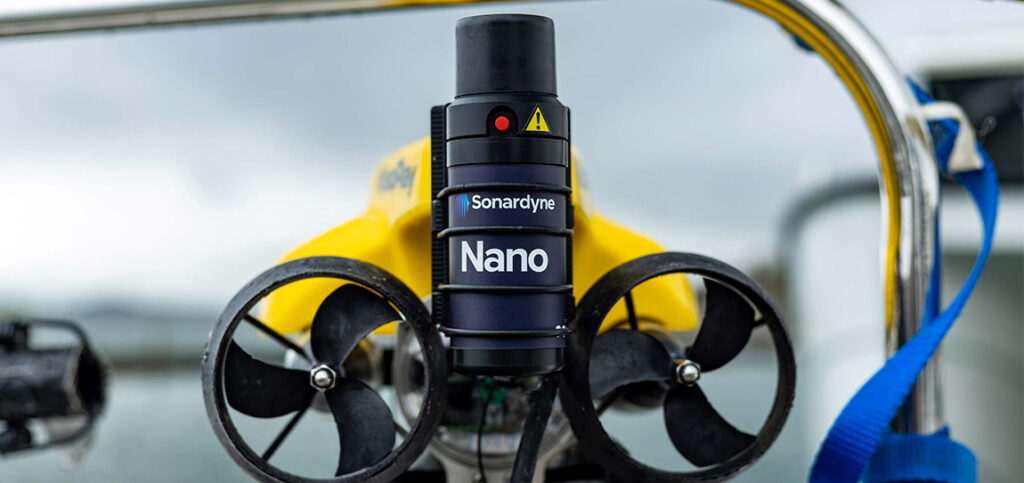
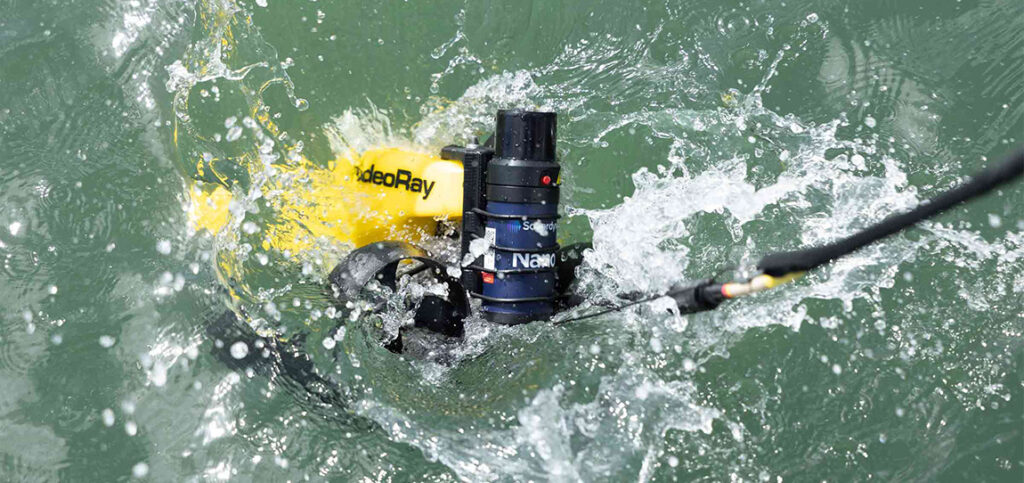
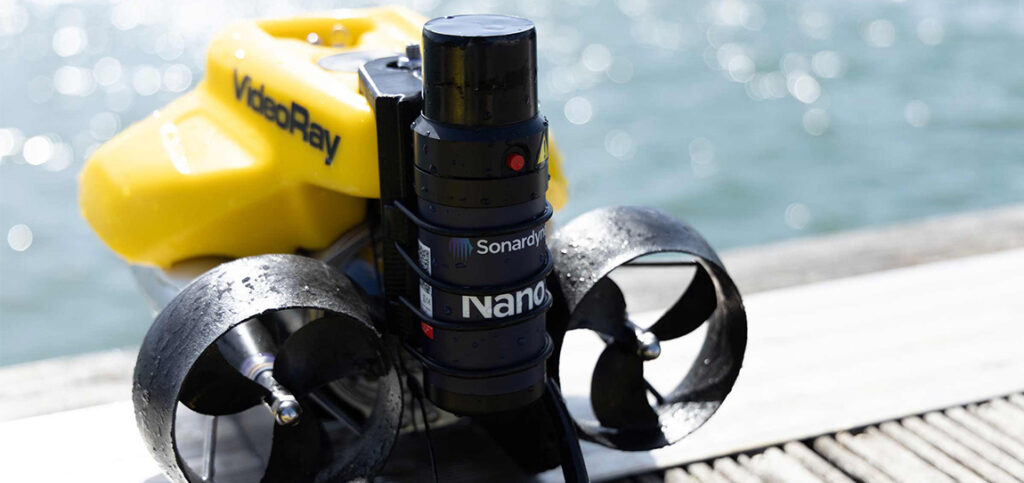
Nano. Our smallest ever USBL transponder.

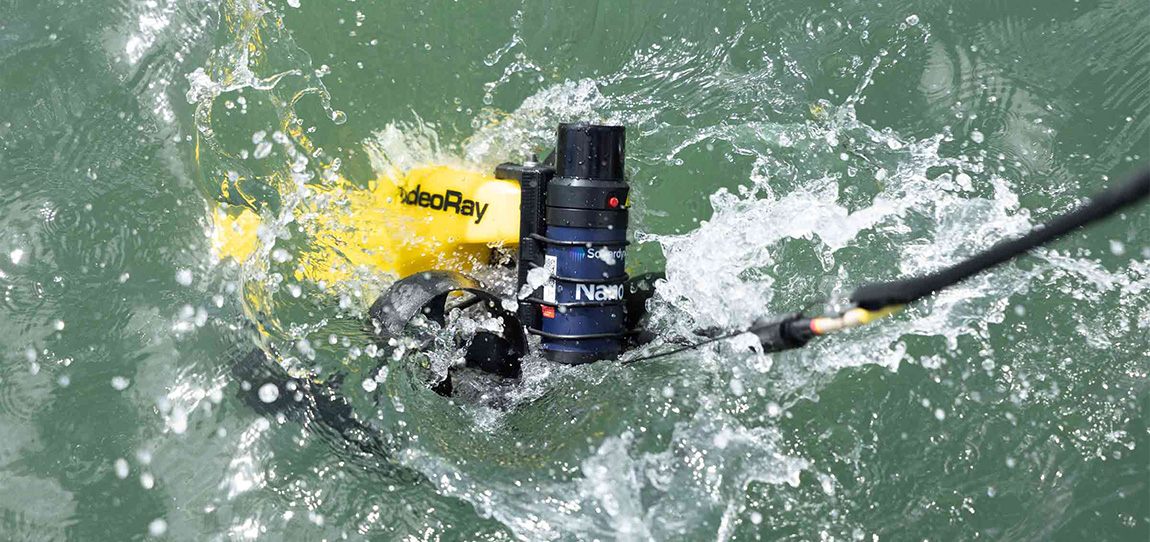
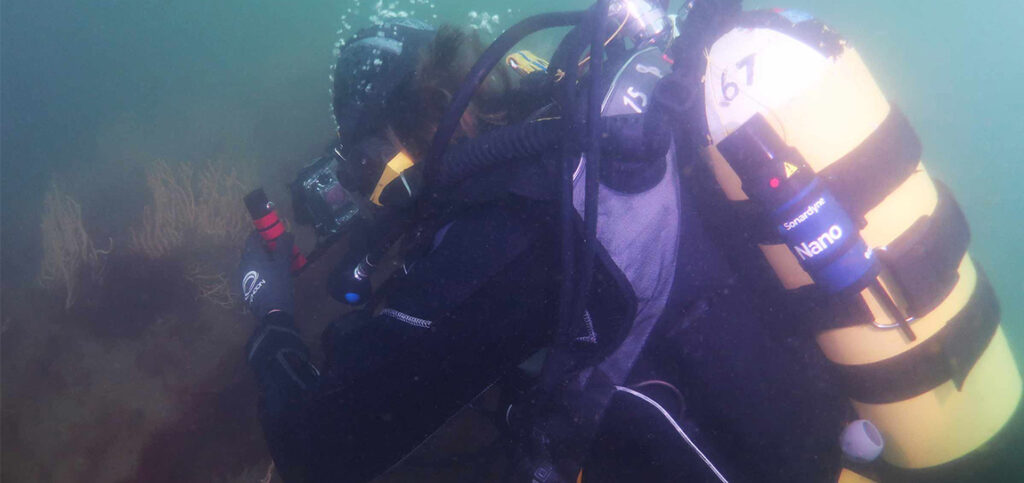
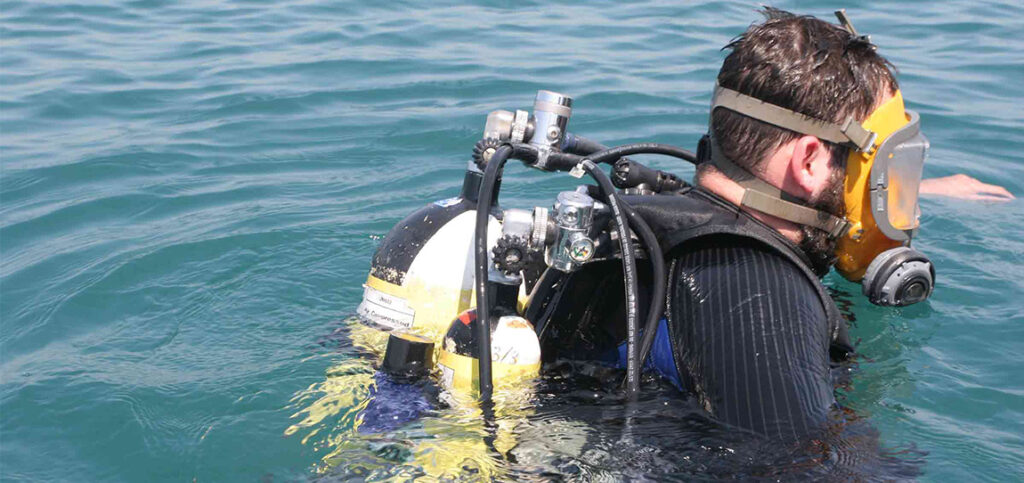
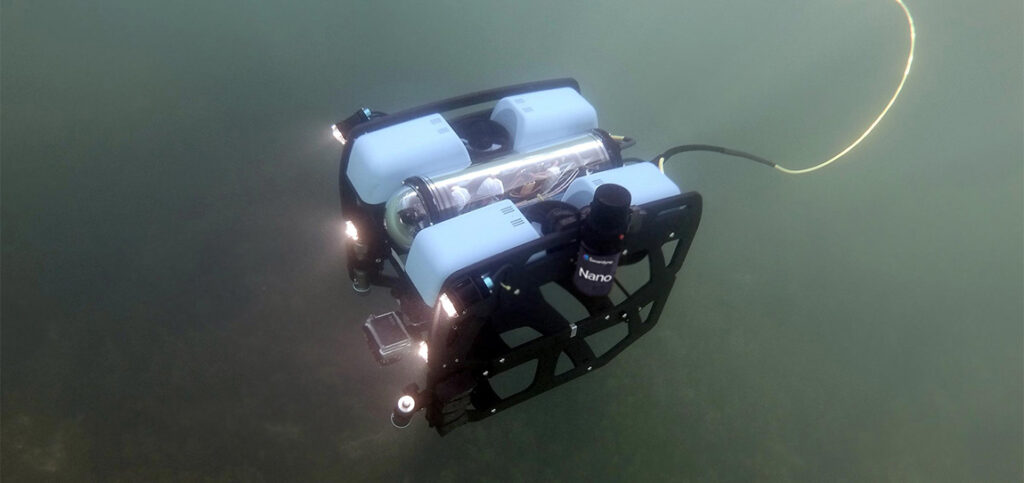
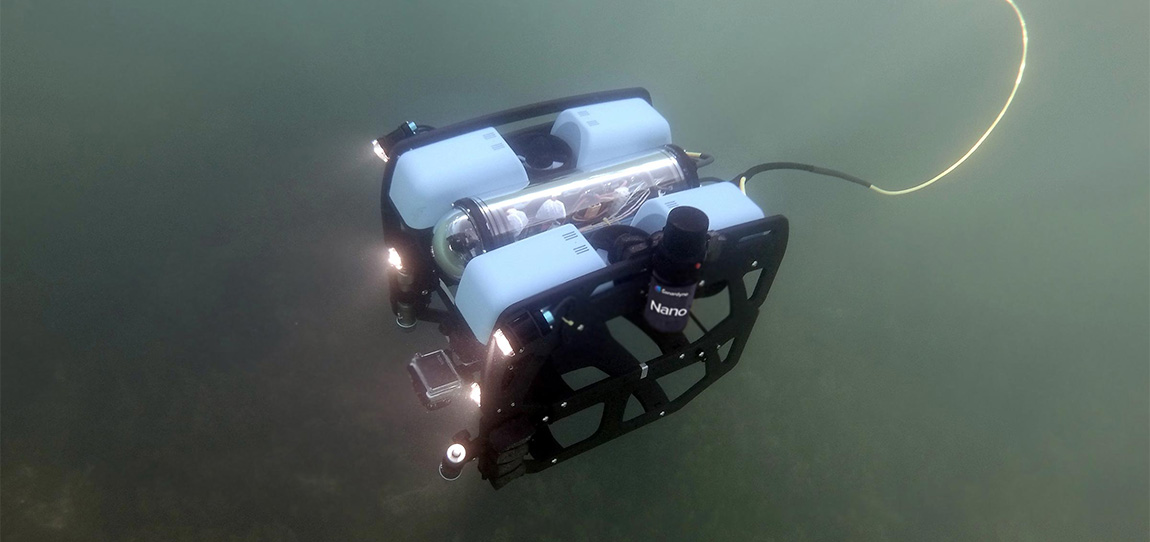
Dive into underwater exploration with Nano. Nano transponder is our smallest ever USBL transponder capable of being used within our Ranger 2 USBL family. Suitable for AUV, ROV and diver operations, as well as custom integration with our OEM model. Whether you’re conducting environmental surveys, engaging in coastal science or military operations, Nano’s unmatched reliability and performance keeps you connected and in control beneath the waves.

Overview

Nano operates in the Medium Frequency (MF) band, so it’s compatible with our family of Ranger 2 USBL topside systems; Micro, Mini and Standard.

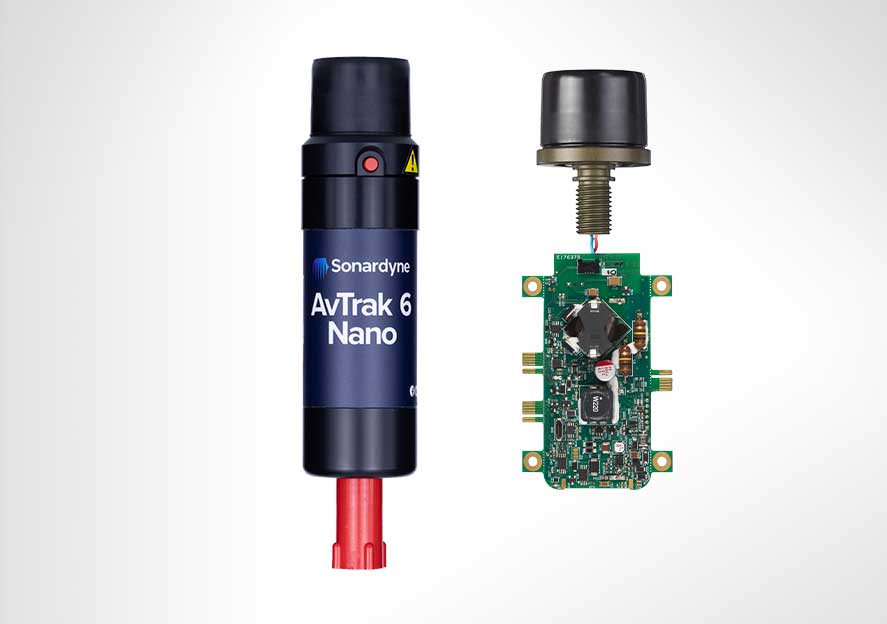
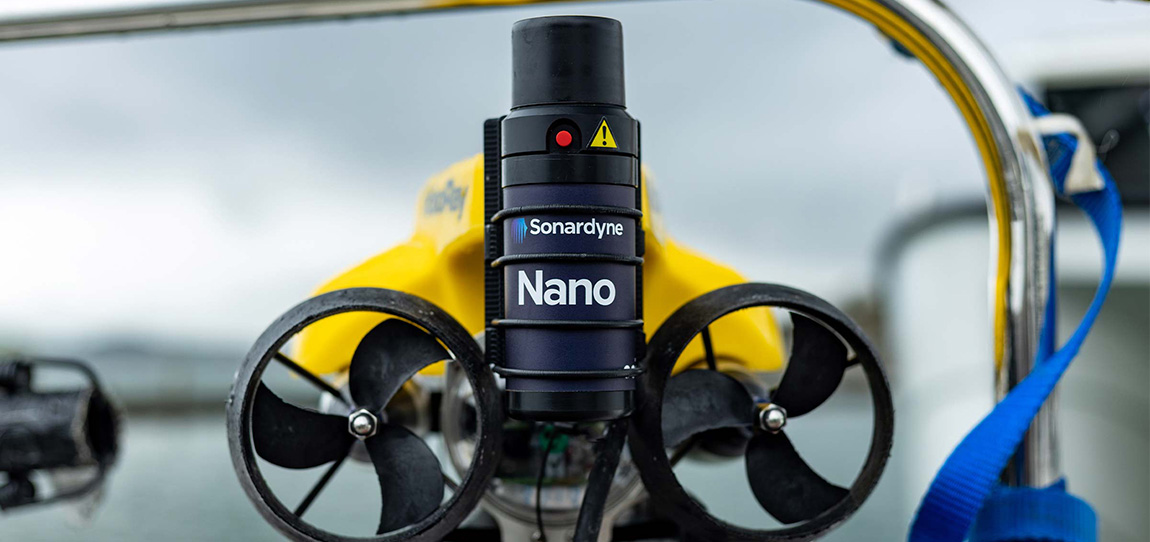
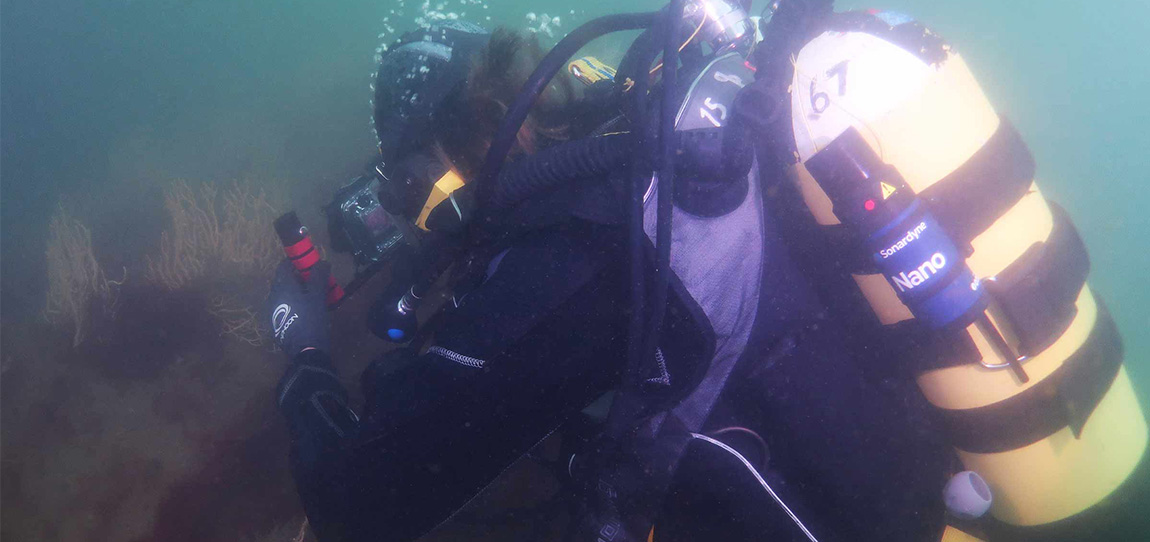
Measuring in around 160 mm in length, 55mm in diameter and weighing in at under 200 grams in water – depending on the exact version you’re using – Nano is small enough to fit on the smallest of vehicles and light enough for a diver to barely know they’re carrying one.

Nano’s built using the same signal technology platform you’ll find in our award-winning 6G product line – Wideband 2. So you can expect reliable acoustic communications in all operating environments, accurate position fixes and a continuous stream of location updates.

At a glance

  • 2nd generation design, extended battery life and 500 m depth rating
  • NFC, connector and OEM housing options
  • NFC version is just 160 mm long by 55 mm in diameter. USBL transponders don’t get much smaller than this
  • Depth rated to 500 m
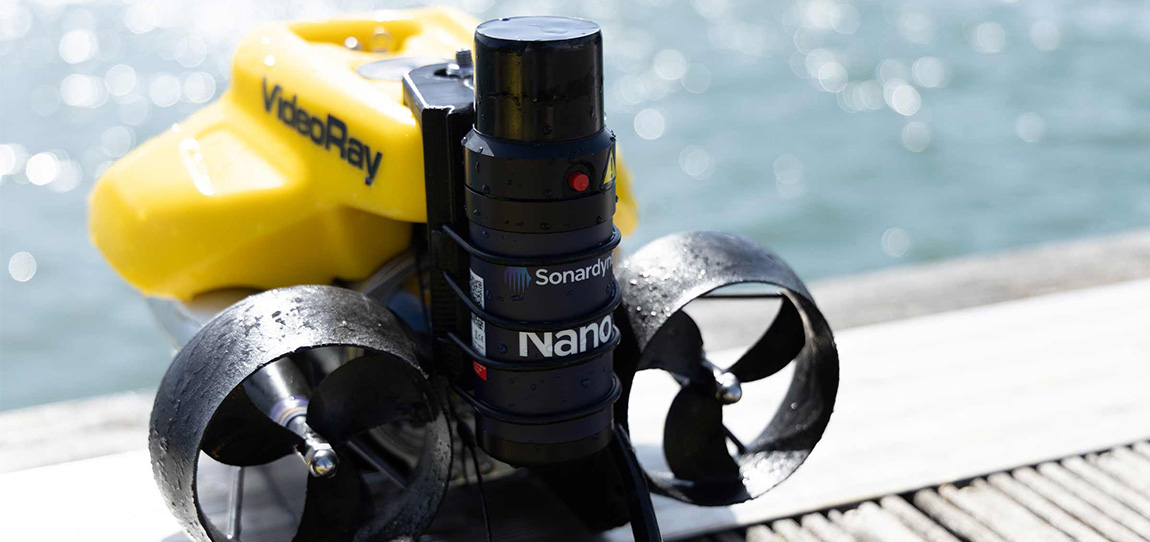
  • Easy to fit to divers, ROVs, equipment and AUVs

Nano features a 90-day quiescent battery life, ideal for long-term deployments and recovering lost assets. Nano’s battery lasts up to 12 hours, even when being actively tracked with one second position update rate.

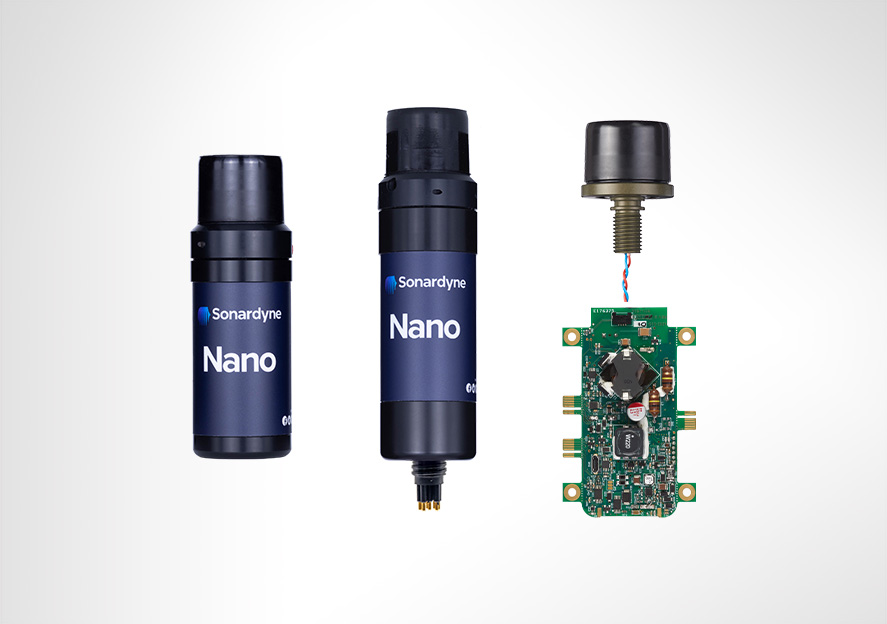
The NFC Nano features a unique connector-less design that is recharged and programmed via the Nano Docking Station. The NFC technology allows full configuration of the Nano whilst maintaining its rugged “strap on and go” form factor.

The cabled Nano features an industry standard Subconn connector allowing the Nano to be permanently powered, and can also be used in Responder mode.

When purchasing a Micro-Ranger 2 USBL system, we include two Nanos as standard. You’re able to choose between the NFC or connector version at no additional cost.

For vehicle programs and integrators, the Nano OEM when paired with an OEM transducer provides all the functionality of the housed transponders, in a form factor that can be mounted in any system.

Nano has an inbuilt depth sensor and is a 500 m depth rated unit.

Performance

500 m depth rated
995 m slant range
12 hours battery life (at 1 second update rates)
90-day listening life

6G

Our 6th generation (6G) technology provides faster, secure and robust data communications from seabed to surface. This gives you speedier updates on the location of your assets and access to your vital data.

Wideband

Our wideband technology enables digital high-throughput data, range resolution and accuracy with low latency. Teamed with our 6G it gives you fast, reliable, accurate data over greater distances.

Design

160mm x 55mm, 149 grams weight in water (NFC version)
192mm x 55m, 162 grams weight in water (connector version)
Credit card sized OEM version available
Polymer housing construction. Lightweight and robust. ROHS compliant.

Specifications table

Feature Type 8262 Nano NFC Type 8262 Cabled Type 8262 Nano OEM
Operating Range 995 m 995 m 2,000 m
Depth Rating 500 m 500 m n/a
Transducer Depth Rating n/a n/a 3,000 m
Operating Frequency MF (20–34 kHz) MF (20–34 kHz) MF (20–34 kHz)
Transducer Beam Shape Omni-directional ±130º Omni-directional ±130º Omni-directional ±130º
Source Level (re 1 µPa @ 1 m) 184/175 dB 184/175 dB 175 dB
Range Precision Better than 15 mm Better than 15 mm Better than 15 mm
Communication Interface USB in dock RS232, 3V3 TTL RS232 (2,400–115,200 baud), 3V3 TTL
Depth Sensor 50 bar abs +/-0.7% FS 50 bar abs +/-0.7% FS 50 bar abs +/-0.7% FS
Power Supply USB dock 12–28 V dc 12–28 V dc
Power Consumption Wideband Listening (Battery) n/a 5 mW 5 mW
Wideband Listening (Ext. Power) n/a 20 mW (including trickle charge) 20 mW (including trickle charge)
Battery Charging n/a 60 mW to 2.5 W (depending on battery charge state) 60 mW to 2.5 W (depending on battery charge state)
Peak (During Transmission) n/a <30 W SMS, <20 W Modem <30 W SMS, <20 W Modem
Battery Life Quiescent Listening >90 days >90 days >90 days
1 Sec Ping Rate >12 hours >12 hours >12 hours
Battery Charge Time 12 Hours 12 Hours 12 Hours
External Connections n/a Subconn MCIL8M Molex Microfit
Mechanical Construction Polymer Polymer n/a
Transducer Wire Length n/a n/a 150 mm (6”)
Operating Temperature -10 to 45°C -10 to 45°C -10 to 45°C
Storage Temperature -20 to 55°C -20 to 55°C -20 to 55°C
Dimensions Length x Diameter 160 x 55 mm 192 x 55 mm n/a
Transducer (Length x Diameter) n/a n/a 72 x 49 mm
PCB Board Assembly (Length x Width x Height) n/a n/a 95 x 43 x 42.5 mm
Hole Centres (M2 clearance – Length x Width) n/a n/a 71.5 x 35 mm
Weight in Air/Water 486/149 g 584/162 g n/a
Weight (OEM) PCB in Air n/a n/a 138 g PCB + 12 g cable
Transducer in Air/Water (Estimated) n/a n/a 200/150 g

Did you know?

Nano can be used as part of Micro-Ranger 2 USBL