Sonardyne
Support Centre
Jump to

Overview

Saves you time. Saves you weight. Saves you payload.

The SPRINT-Nav family is the only all-in-one, subsea navigation solution you’ll ever need for your marine robotic and autonomous vehicle operations. With over a decade’s experience of aiding your missions, SPRINT-Nav delivers class-leading underwater navigational performance. Its accuracy is unparalleled and can be as little as 0.01% variance of its path on a typical survey (depending on the model).

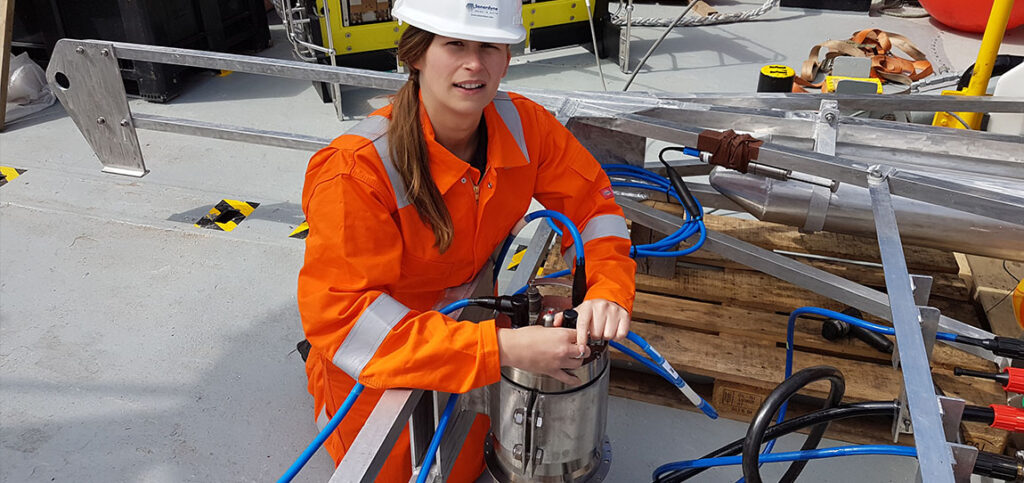
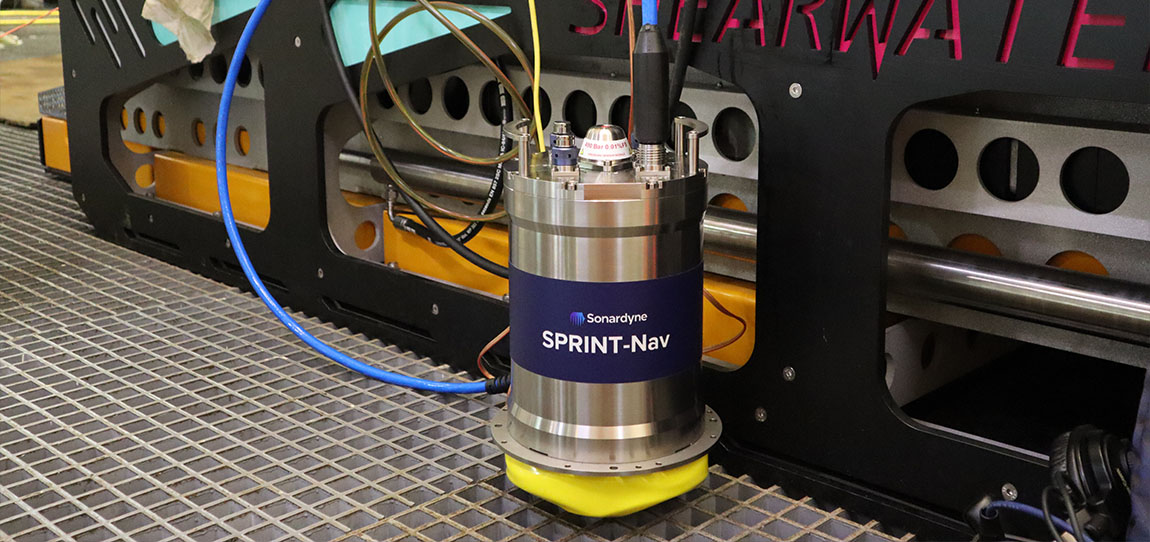
SPRINT-Nav combines our SPRINT inertial sensor, Syrinx DVL and high accuracy intelligent pressure sensor in a single, compact housing, replacing the need for a separate DVL, pressure sensor and INS/AHRS. We call this hybrid navigation.

Navigate your marine environment with the confidence only SPRINT-Nav can provide.

Pinpoint location precision. Enhance your operations by adding valuable location detail enabling you to identify exactly where your data is drawn from or to pinpoint the location of assets, obstacles and pipelines.

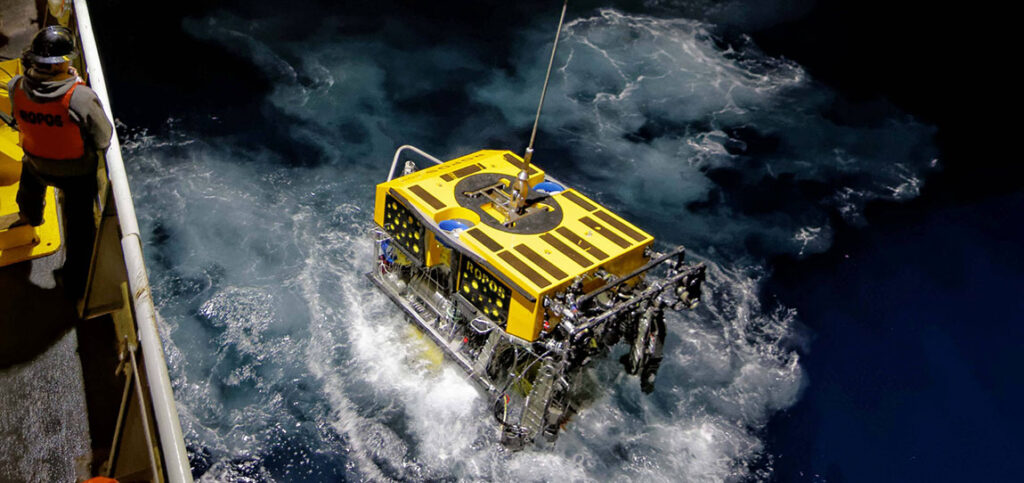
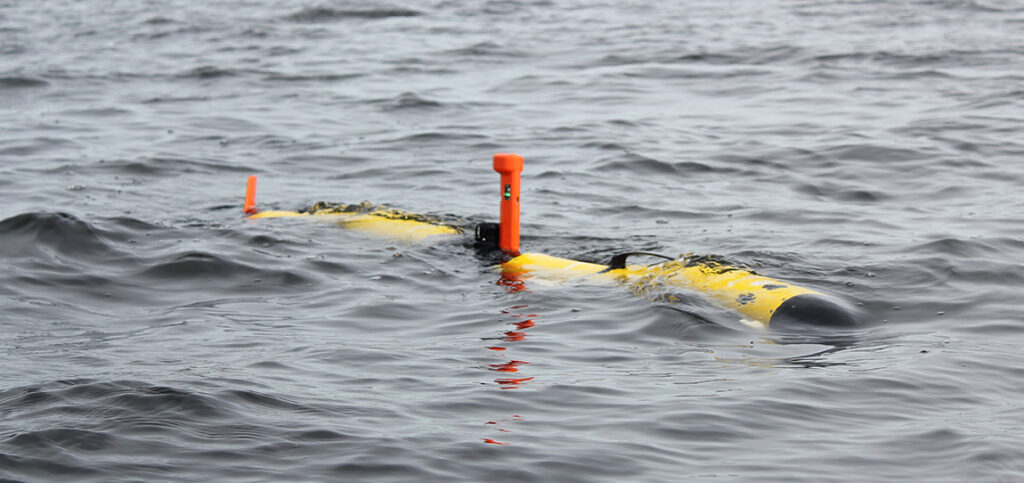
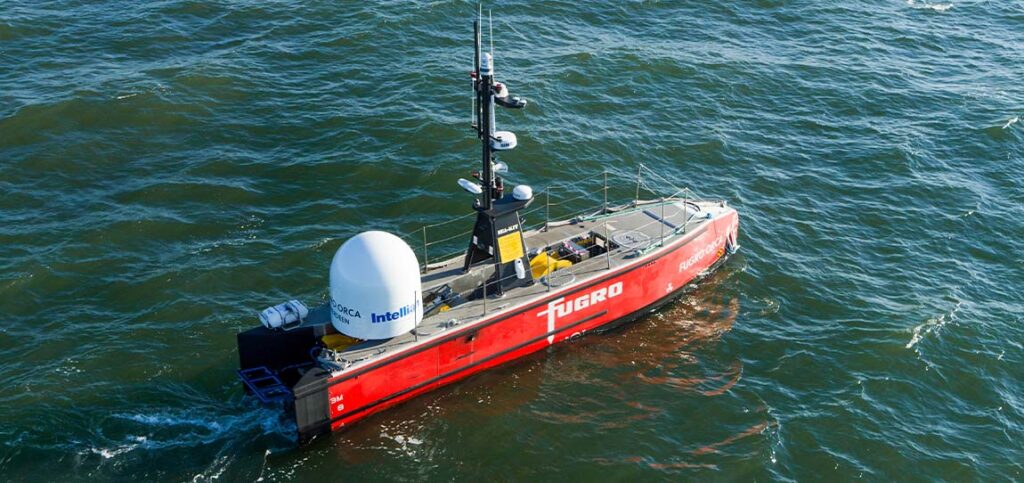
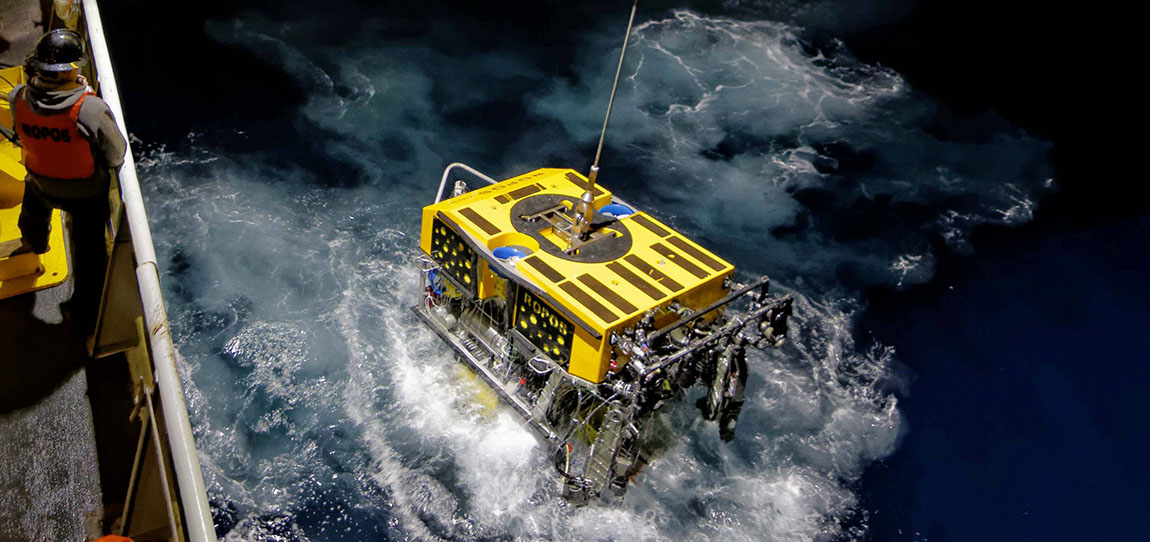
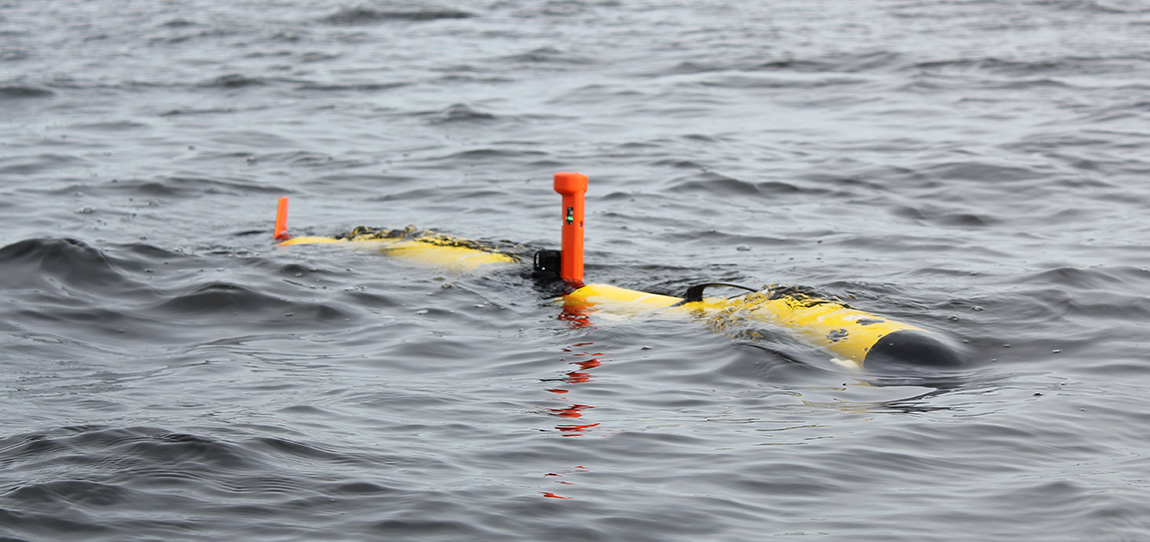
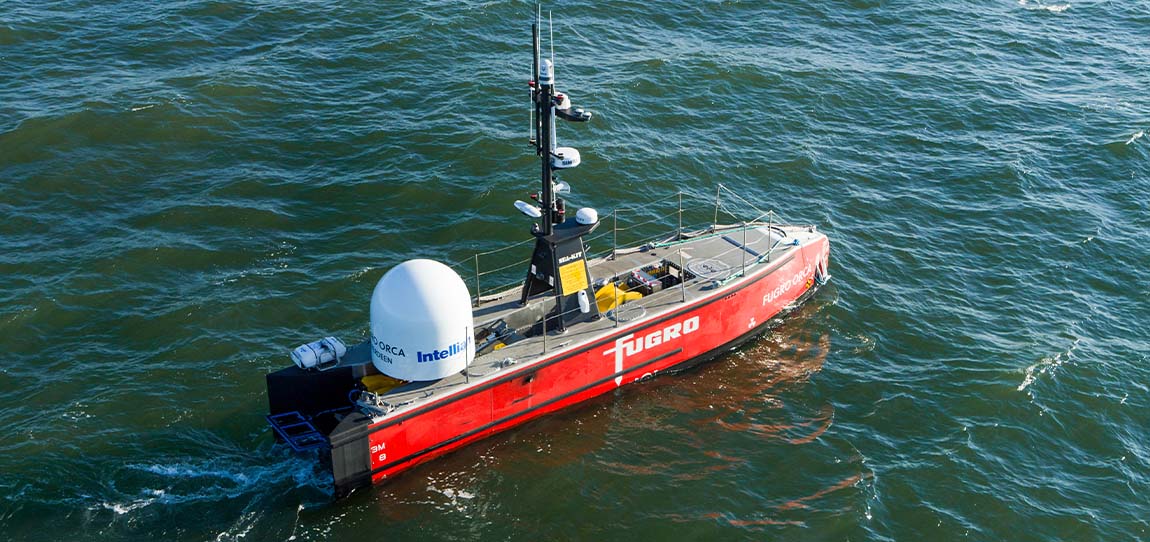
Guide, control and navigate your USVs, ROVs and AUVs faster, safely and more efficiently with SPRINT-Nav. Operate your vehicles and vessels with the confidence of knowing exactly where they are and what they’re doing.

No calibration needed. Straight out of the box SPRINT-Nav is ready to go, saving you precious time on your operations.

Reduced in size – but not in performance, SPRINT-Nav U is the industry’s smallest all-in-one hybrid acoustic-inertial subsea navigator. It provides the perfect instrument for you to control your smaller robotic platforms.

Navigating – to hold station, SPRINT-Nav DP provides a reliable dynamic positioning reference in shallow water for your surface vessel to remain in one place without the need for a GNSS signal.

Engineered for all autonomous vehicles no matter what size or purpose, there is a SPRINT-Nav for your operations.

Why should you invest?

By choosing SPRINT-Nav you are choosing an all-in-one acoustic-inertial navigation sensor, replacing the need for a separate DVL, pressure sensor and INS/AHRS. Saving you the time, cost, cabling and integration challenges associated with using different sensors from different vendors.

At a glance

  • Unique to Sonardyne
  • Performance levels to suit your operations
  • Tightly integrates raw acoustic, Doppler and inertial data
  • Titanium housed for deep ROV missions
  • Outputs altitude, depth, orientation and velocity
  • Configure and control using a Web UI
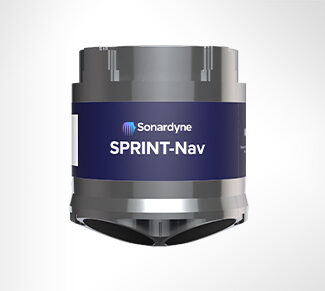
SPRINT-Nav. Your all-in-one guidance and navigation system.

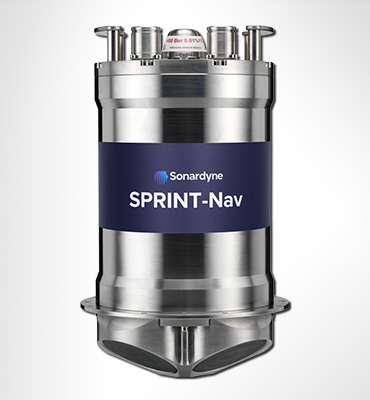
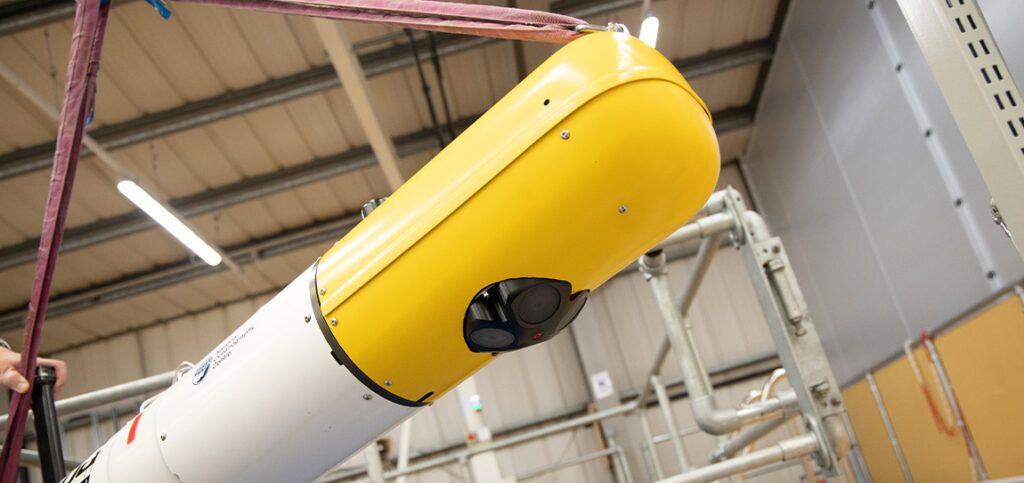
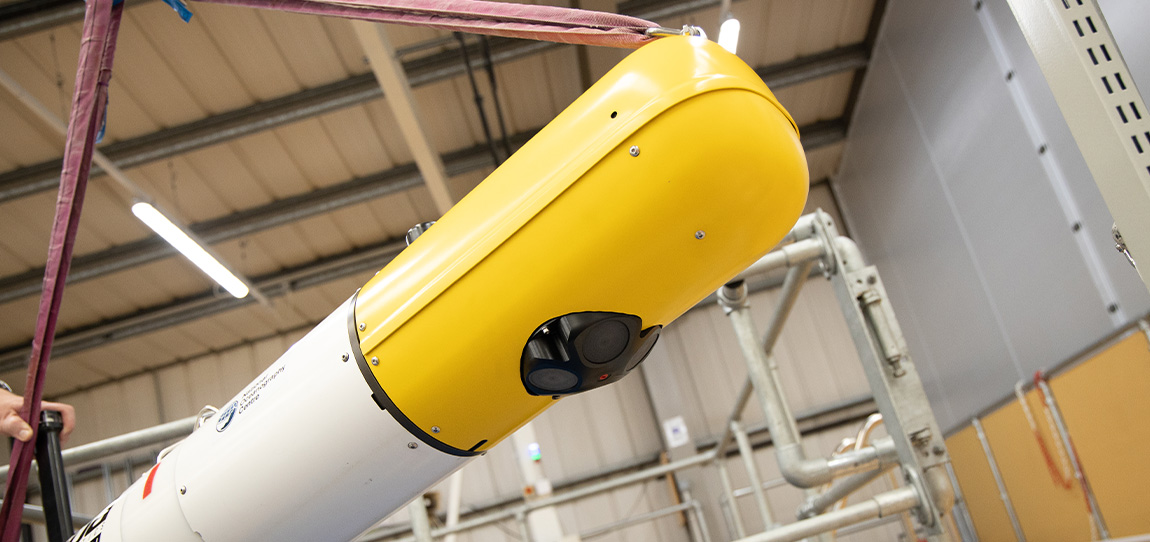
SPRINT-Nav is an all-in-one hybrid acoustic – inertial navigation instrument for autonomous underwater and surface vehicles. It combines our SPRINT INS, Syrinx DVL and high accuracy intelligent pressure sensor in a single compact titanium housing.

Available in four different performance levels; 300, 500, 700 and X, and two different depth ratings; 4,000 and 6,000 m, it offers two DVL frequencies; 600 kHz and a high-altitude 400 kHz option.

For the full picture of what your SPRINT-Nav is capable of, please visit its dedicated product page.

SPRINT-Nav Mini packs a powerful punch for your underwater robotic applications.

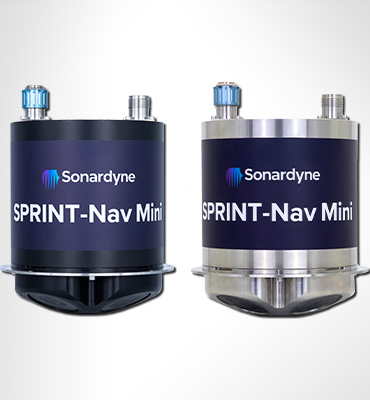
Measuring just 213 mm in height (only fractionally taller than some competing DVL-only instruments), 148 mm in diameter and weighing in at approximately 3.6 kg in air for the 300 m rated unit – or 7.1 kg for the 4,000 m depth version. This inertial navigation technology really packs a punch.

SPRINT-Nav Mini is powered by the same navigation algorithm you’ll find inside SPRINT-Nav. It combines the strengths of all its sensors to provide robust, precise and accurate outputs. Two depth ratings are available; a 300 m and a 4,000 m. There is also a side-connector option depth rated for 300 m and measuring only 183 mm in height makes it ideal for tight spaces on small platforms.

For the full picture of what your SPRINT-Nav Mini is capable of, please visit its dedicated product page.

SPRINT-Nav U – game changing new capabilities for small robotic operations

Measuring just 135 mm in height and 114 mm in diameter and weighing a mere 600 grams in water, SPRINT-Nav U is the world’s new smallest hybrid acoustic-inertial navigator.

Its small form factor packs the full, trusted, SPRINT-Nav capability into a space traditionally filled by just a DVL on a small robotic platform. With fast alignment, one unit, one connector, one cable and all the true-north seeking capabilities found across the SPRINT-Nav family, SPRINT-Nav U is a game changer for your small vehicle operations.

To find out how shrinking our SPRINT-Nav has expanded the opportunities for your small robotic platforms, please visit the dedicated SPRINT-Nav U product page.

SPRINT-Nav DP ensures ultimate positional accuracy.

Developed in response to the increasing demand for shallow water dynamic positioning (DP) operations, SPRINT-Nav DP provides you with accurate and reliable surface vessel station keeping references without the need for a Global Navigation Satellite System (GNSS) signal.
Ideal for coastal or nearshore operations where GNSS signals may be blocked or distorted, SPRINT-Nav DP is perfect for work around offshore wind farms and coastal surveys etc ensuring your vessel remains stationary safely and accurately.

For the full picture of what your SPRINT-Nav DP is capable of, please visit its dedicated product page.

Compact

Low power and small, it’s the ideal size for installing on all size ROVs as well as USVs undertaking data harvesting missions in shallow water and around offshore structures which often block GNSS signals.

Cost-effective

Because it’s cheaper than the four separate sensors it replaces (AHRS, DVL, INS and pressure sensor), it’s a cost-effective solution for your research platforms where budgets need to stretch as far as possible.

Specialist applications

SPRINT-Nav X is the highest-grade model in our SPRINT-Nav family designed for very specialist applications such as long endurance missions using XLUUVs.

Survey

Supports dual ROV and Survey use and standalone ROV guidance. Also provides mid-water station keeping with vendor independent USBL aiding.

Jump to

Overview

Add capability to your Wave Glider

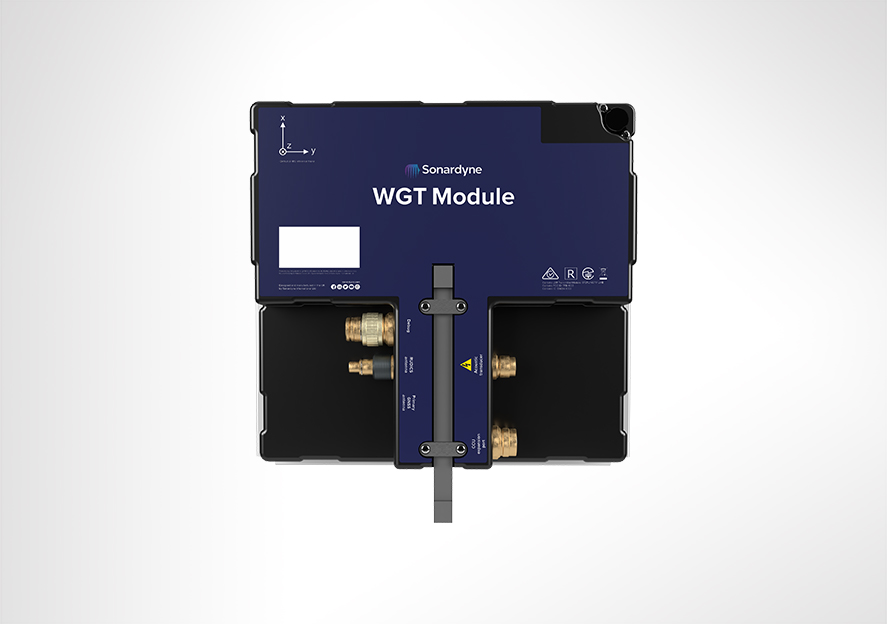
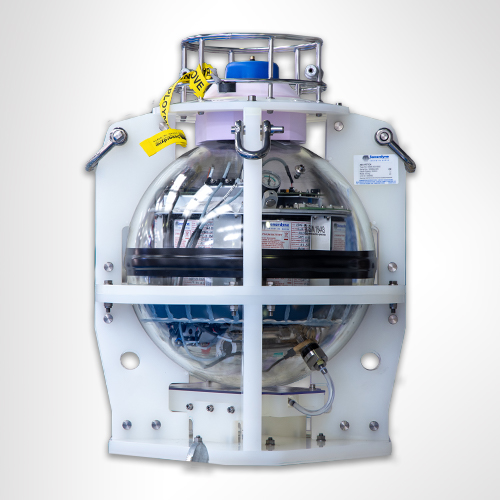
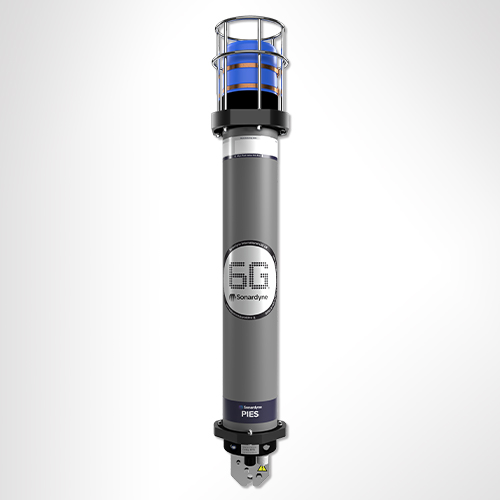
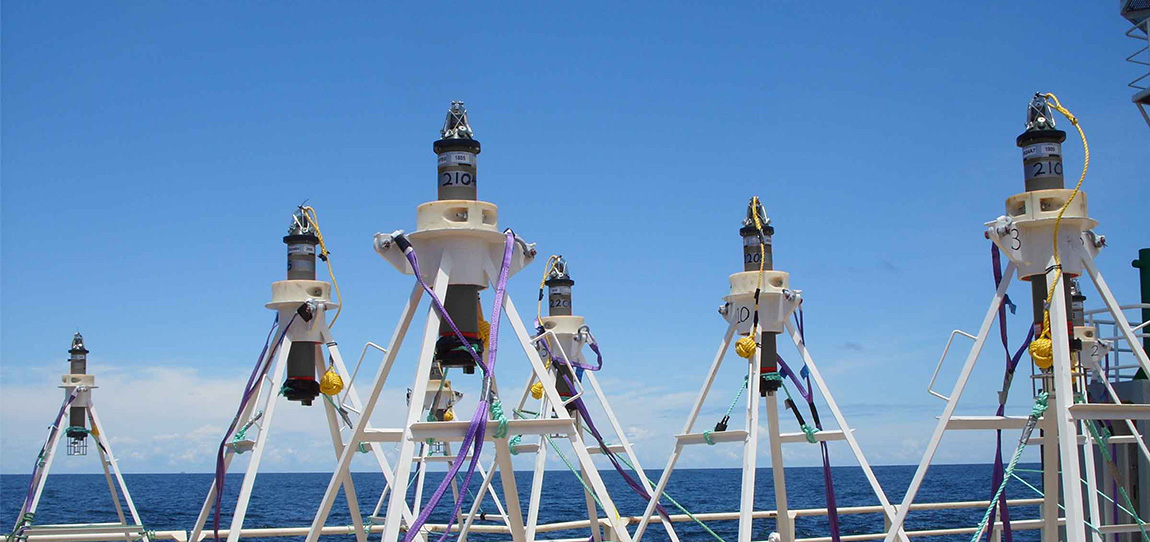
Wave Glider Transceiver (WGT) is an acoustic transceiver designed to integrate within a Liquid Robotics Wave Glider ASV. It enables wireless data harvesting operations to be conducted with a wide range of our instruments including AMT, Fetch and PIES.

Overview

The WGT functionality enables Wave Glider to acoustically collect data from large arrays of seabed instruments in a highly cost-effective manner without the need to deploy a traditional surface ship to perform this operation. Instead, Wave Glider is controlled remotely from a shore station via Iridium satellite communications.

The WGT is capable to be used with directional transducer options for operating in both Medium Frequency (MF) (20-34 kHz) and Lower Medium Frequency (LMF) (12-20 kHz) bands to suit different seabed instruments and is fully Sonardyne Wideband® 2 compatible.

The WGT is tightly integrated into the Wave Glider vehicle communications and power systems thereby providing many of the standard acoustic commands and features associated with Sonardyne 6G® products.

Data is passed by Wave Glider to the Iridium satellite system for onwards transmission to the user in near real time.

At a glance

  • Custom engineered for a Wave Glider standard aft payload space
  • Provides subsea-surface-shore gateway link for Sonardyne long endurance sensors
  • Enables direct remote data collection on demand, monitoring and control from shore based Wave Glider operations centre
  • Integrated acoustic modem with data rates from 100 to 9,000 bps

Specifications table

Feature Type 8297-010-05 (WGT Module) Type 8297-010-04 (GPS-A Module)
Operating frequency MF (20–34 kHz) MF (20-34 kHz)
Transducer beam shape Directional Directional
Transmit source level (dB re 1 µPa @ 1 m) 190–202 dB (4 levels) 190–202 dB (4 levels)
Tone equivalent energy (TEE) 196–208 dB 196–208 dB
Receive sensitivity (dB re 1 µPa) 90–120 dB (7 levels) 90–120 dB (7 levels)
Acoustic modem data rates 100-9,000 bps (6 levels) 100-9,000 bps (6 levels)
Dimensions (length x width x height) 412 x 389 x 205 mm 412 x 389 x 205 mm (standard Liquid Robotics 3 MPU)
Weight in air/water 10.4/-15 kg 10.4/-15 kg
Operating temperature -10 to 45°C -10 to 45°C
Storage temperature -20 to 55°C -20 to 55°C
Internal backup battery for acoustic modem Rechargeable Li-ion (2.2 Ah) Rechargeable Li-ion (2.2 Ah)
Satellite communications Iridium RUDICS (2,400 bps) Iridium RUDICS (2,400 bps)
GNSS receiver Survey grade L1 & L2 receiver:
Novatel OEM7720 series (GNSS derived heading)
AHRS device XSENS MTi-300 and/or EPSON G320 SPAN INS
Ranging clock GPS derived 4 MHz pulse conditioned to 8 MHz
Communication and logging: Communications Wi-Fi, RS232 transceiver, RJ45 Ethernet, dedicated power and comms for GNSS and HRP, single RS232 expansion port with 5 V power pass through
Communication and logging: Internal logging 128 GB dual redundant internal memory;
RINEX GNSS logging;
SPAN INS logging
System components WGT Module Wave Glider Payload;
4 m Remote Transducer;
Wave Glider Transducer Compatible Skeg
GPS-A Module Wave Glider Payload;
4 m Remote Transducer;
Wave Glider Transducer Compatible Skeg

Jump to

Overview

The perfect choice for DP reference

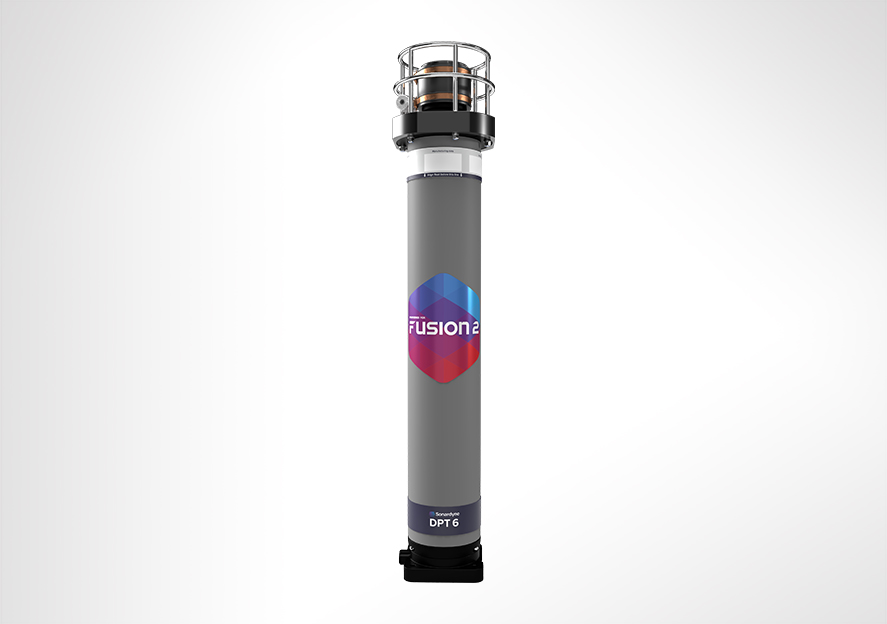
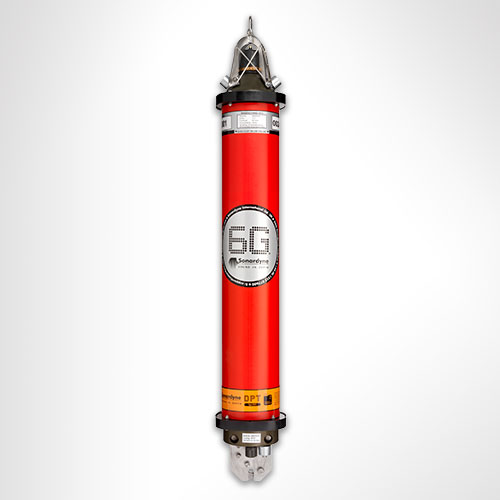
DPT 6 is designed to be used as a seabed reference transponder by USBL acoustic positioning systems, installed on many Dynamically Positioned (DP) vessels.

Overview

Dynamic Positioning Transponder 6 (DPT 6) supports Wideband 2 acoustic ranging and telemetry providing high accuracy positioning, robust performance in noisy and multi-path conditions and easy set-up and use.

With hundreds of channels, less interference to and from other acoustic systems and multi-user capability, Wideband 2 enables easier SIMOPS vessel capability. These features of the DPT 6 help de-risk subsea operations and save vessel time and cost.

At a glance

  • Compatible with HPR systems
  • Up to 7,000 m depth rating
  • Advanced multi-user/multi-vessel capability
  • Robust acoustic performance in noisy conditions
  • Real-time diagnostics available on ranges to enable quality control

The DPT 6 is the standard length version and is based on the field proven mechanics of the previous version but with improvements to the end cap closure mechanisms. The design offers the perfect balance between size, acoustic output and battery life. Several depth ratings are available (3,000 m, 5,000 m and 7,000 m) all hard anodised aluminium alloy with protective polyurethane sleeve. Midi (shorter) and maxi (long endurance) options are also available. The DPT is fitted as standard with a highly reliable release mechanism to enable the unit to be deployed in a flotation collar and recovered to the surface without ROV intervention.

The DPT 6 is a midi-sized unit for deep water towfish tracking. Depth rated to 7,000 m, the unit is fitted with a high power super directional transducer. The DPTi 6 is fitted with internal inclinometers to accurately monitor riser angles (see separate datasheet). The unit can also be used with an external inclinometer unit to monitor BOP and flex joint angles.

Specifications table

Feature Type 8301-3111 Type 8301-3113 Type 8301-5213 Type 8301-7213
Depth Rating 3,000 m 3,000 m 5,000 m 7,000 m
Operating Frequency MF (20–34 kHz) MF (20–34 kHz) MF (20–34 kHz) MF (20–34 kHz)
Transducer Beam Shape Omni-directional Directional Directional Directional
Transmit Source Level (dB re 1 µPa @ 1 m) 187–196 dB
(4 levels)
190–202 dB
(4 levels)
190–202 dB
(4 levels)
190–202 dB
(4 levels)
Tone Equivalent Energy (TEE) 193–202 dB 196–208 dB 196–208 dB 196–208 dB
Receive Sensitivity (dB re 1 µPa) 90–120 dB
(7 levels)
80–120 dB
(7 levels)
80–120 dB
(7 levels)
80–120 dB
(7 levels)
Ranging Precision Better than 15 mm Better than 15 mm Better than 15 mm Better than 15 mm
Number of Unique Addresses Wideband 1 & 2 >500 >500 >500 >500
Battery Life (Listening) Alkaline 833 days 833 days 833 days 833 days
Lithium 1,390 days 1,390 days 1,390 days 1,390 days
Safe Working Load (4:1) (Release Mechanism) 250 kg 250 kg 250 kg 250 kg
Dimensions (Maximum)
(Length x Diameter)
With Sensor Guard 1,034 x 200 mm 1,018 x 200 mm 1,018 x 200 mm 1,018 x 200 mm
Without Sensor Guard 1,034 x 178 mm n/a n/a n/a
Weight in Air/Water 23.8/11.8 kg 27.0/14.0 kg 29.0/15.0 kg 33.3/18.8 kg
Endcap Sensors and Options
Temperature (±0.1°C) Standard Standard Standard Standard
Tilt Switch (±30–45°) Standard Standard Standard Standard
Strain Gauge Pressure Sensor (±0.1%) Standard Standard Standard Standard
High Precision Strain Gauge (±0.01%)
Presens or Keller
Optional Optional Optional Optional
Paroscientific DigiQuartz Pressure Sensor
1,350 m, 2,000 m, 4,130 m, 6800 m (±0.01%)
Optional Optional Optional Optional
Inclinometer (Tilt Sensor)
Range ±90°, Accuracy: ±1°
Standard Standard Standard Standard
High Accuracy Inclinometer
Range: ±90°, Accuracy: ±0.05° over 0 – ±15°;
±0.2° over 0 – ±45°
Optional Optional Optional Optional
Sound Velocity Sensor
±0.02 m/s Accuracy Under Calibration Conditions
Optional Optional Optional Optional
Release Mechanism Standard Standard Standard Standard
Jump to

Overview

Built for LBL and data harvesting

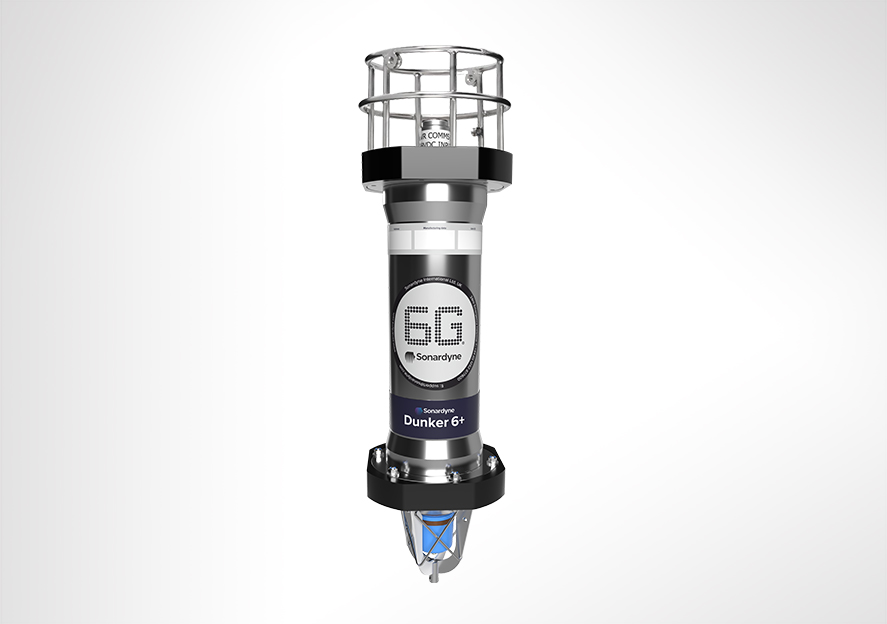
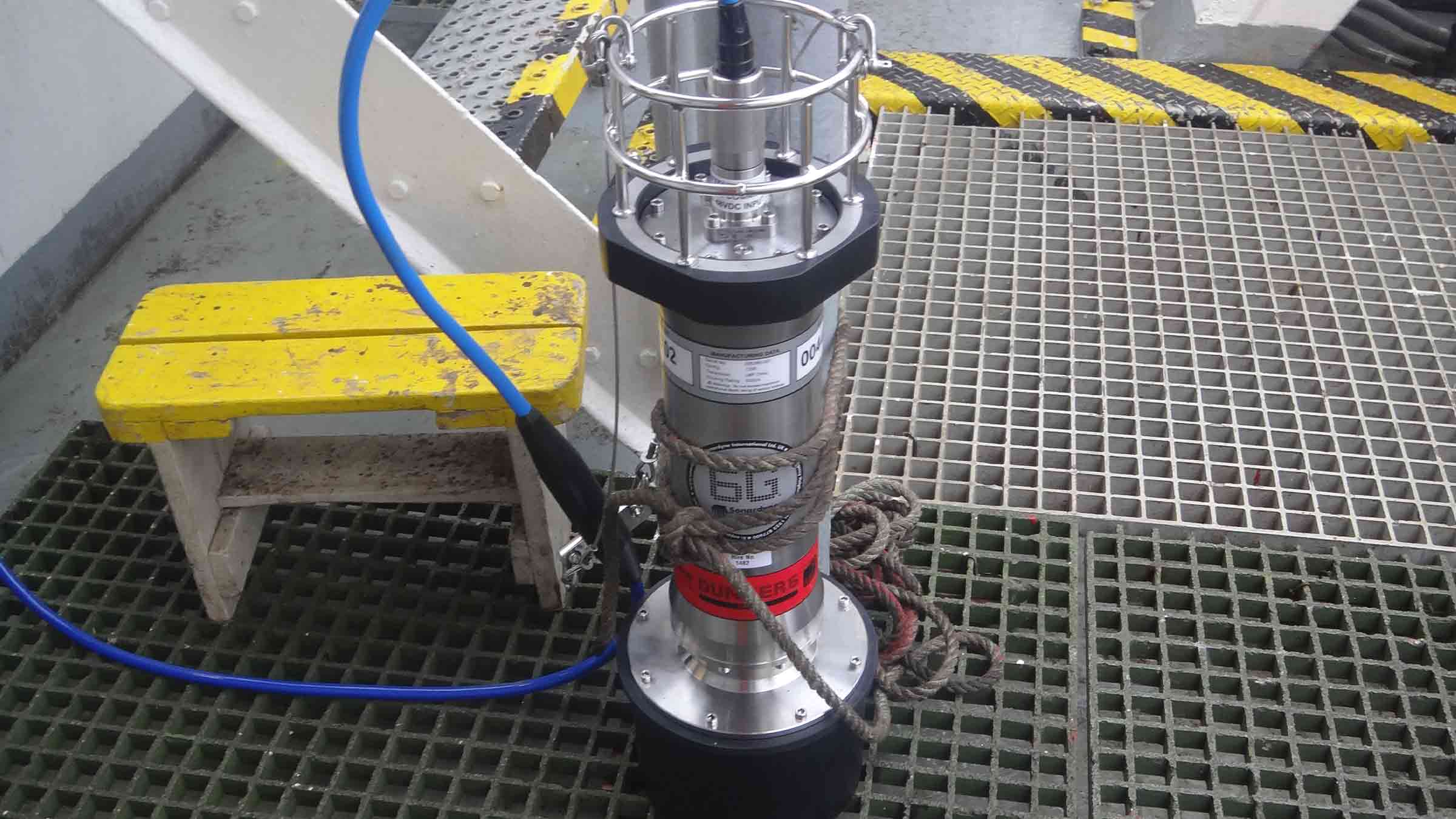
Dunker 6+ is an LBL and telemetry transceiver specifically designed for vessel deployment. The super duplex stainless steel housing with shock and vibration isolated electronics makes for an extremely rugged dunking system.

Overview

Its high power output and Wideband 3 signal processing offers improved operating range and acoustic performance in challenging conditions such as when deployed from noisy vessels or in multi-path environments.

The internal Lithium-ion rechargeable battery pack minimises the supply current for long dunker cables. It also enables relocation of the dunker if the cable is cut.

The robust AGP connector on the Dunker 6+ is identical to the ROVNav 6+ and HPT USBL for compatibility and to reduce spares.

At a glance

  • Perfect for commanding LBL transponders
  • Use it to recover data from Fetch and AMTs
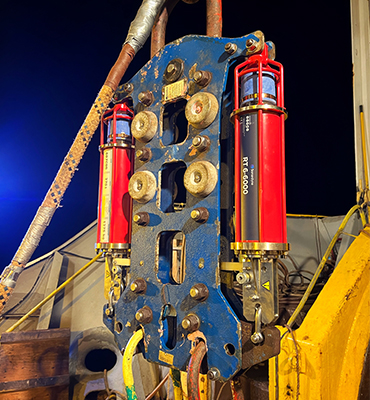
  • Capability to operate as topside for RT 6 acoustic releases
  • Deploy it over-the-side of your vessel
  • Rugged mechanics and connectors
  • Shock mounted internal electronics

Dunker 6+ LBL and telemetry transceiver is fully compatible with our modem and sensor logging instruments such as AMT and Fetch , allowing it to be used to retrieve data or configure logging regimes. It can also be used to release the RT 6 range of acoustic releases.

The Dunker 6+ system consists of 100 m of cable on a stainless steel cable drum with brake and locking mechanism. The 10 m deck cable between the 48 V Surface Interface Unit (SIU) and the cable drum allows the drum to be conveniently located. The connection to the cable drum is via an easily replaceable 8-way SubConn.

Optionally, an RT 6 topside kit with 30 m of cable is available in a carrying case without a cable drum.

Specifications table

Feature Dunker 6 Type
8309-1351 / Dunker 6+ Omni-directional
Dunker 6 Type
8309-1353 / Dunker 6+ Directional
Dunker 6 Type
8309-1355
Dunker 6 Type
8309-1356
Depth rating 1,000 m 1,000 m 1,000 m 1,000 m
Operating frequency MF (20–34 kHz) MF (20–34 kHz) LMF (14–19 kHz) LMF (14–19 kHz)
Transducer beam shape Omni-directional Directional Omni-directional Directional
Transmit source level
(dB re 1 µPa @ 1 m)
187–196 dB
(4 levels)
190–202 dB
(4 levels)
187–196 dB
(4 levels)
187–202 dB
(4 levels)
Tone Equivalent Energy (TEE) 193–202 dB 196–208 dB 193–202 dB 193–208 dB
Receiver sensitivity
(dB re 1 µPa)
90–120 dB
(7 levels)
80–120 dB
(7 levels)
90–120 dB
(7 levels)
80–120 dB
(7 levels)
Range precision Better than 15 mm Better than 15 mm Better than
15 mm
Better than
15 mm
Serial communications
(software programmable)
Primary port: RS485 (half-duplex) or RS232
Secondary port: RS485 (half-duplex) or RS232 or SYNC IN
Primary port: RS485 (half-duplex) or RS232
Secondary port: RS485 (half-duplex) or RS232 or SYNC IN
Primary port: RS485 (half-duplex) or RS232
Secondary port: RS485 (half-duplex) or RS232 or SYNC IN
Primary port: RS485 (half-duplex) or RS232
Secondary port: RS485 (half-duplex) or RS232 or SYNC IN
Operating voltage 24 or 48 V dc (±10%) 24 or 48 V dc (±10%) 24 or 48 V dc (±10%) 24 or 48 V dc (±10%)
External power Active (listening) <3 W typical
(max 6 W when charging)
<3 W typical
(max 6 W when charging)
<3 W typical (max 6 W when charging) <3 W typical (max 6 W when charging)
Peak (during transmission <80 W <80 W <80 W <80 W
Battery life Li-ion (listening) 3 days 3 days 3 days 3 days
Connector type AGP
(8-way female)
AGP
(8-way female)
AGP
(8-way female)
AGP
(8-way female)
Mechanical construction Super-duplex stainless steel Super-duplex stainless steel Super-duplex stainless steel Super-duplex stainless steel
Dimensions
(length x diameter)
692 x 200 mm 660 x 200 mm 586 x 200 mm 641 x 230 mm
Weight in air/water 24/16 kg 26/17 kg 20/14 kg 28/17 kg
System kit
Dunker 6, SIU,
100 m cable drum etc.
602-0047
(8309-1351)
602-0053
(8309-1353)
n/a 602-0072
Dunker 6+, SIU,
40 m cable drum etc.
602-0135
(Dunker 6+
Omni-directional)
602-0198
(Dunker 6+ Directional)
n/a n/a

Software and firmware

Software and control hardware

Manuals and quick start guides

Did you know?

Dunker 6+ can be used to recover data from Fetch and AMTs

Jump to

Overview

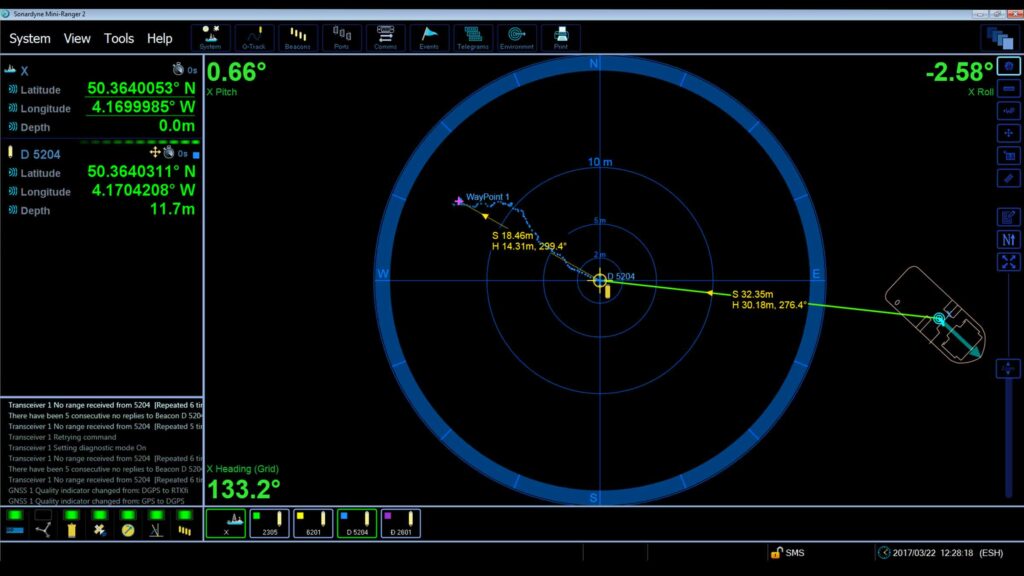
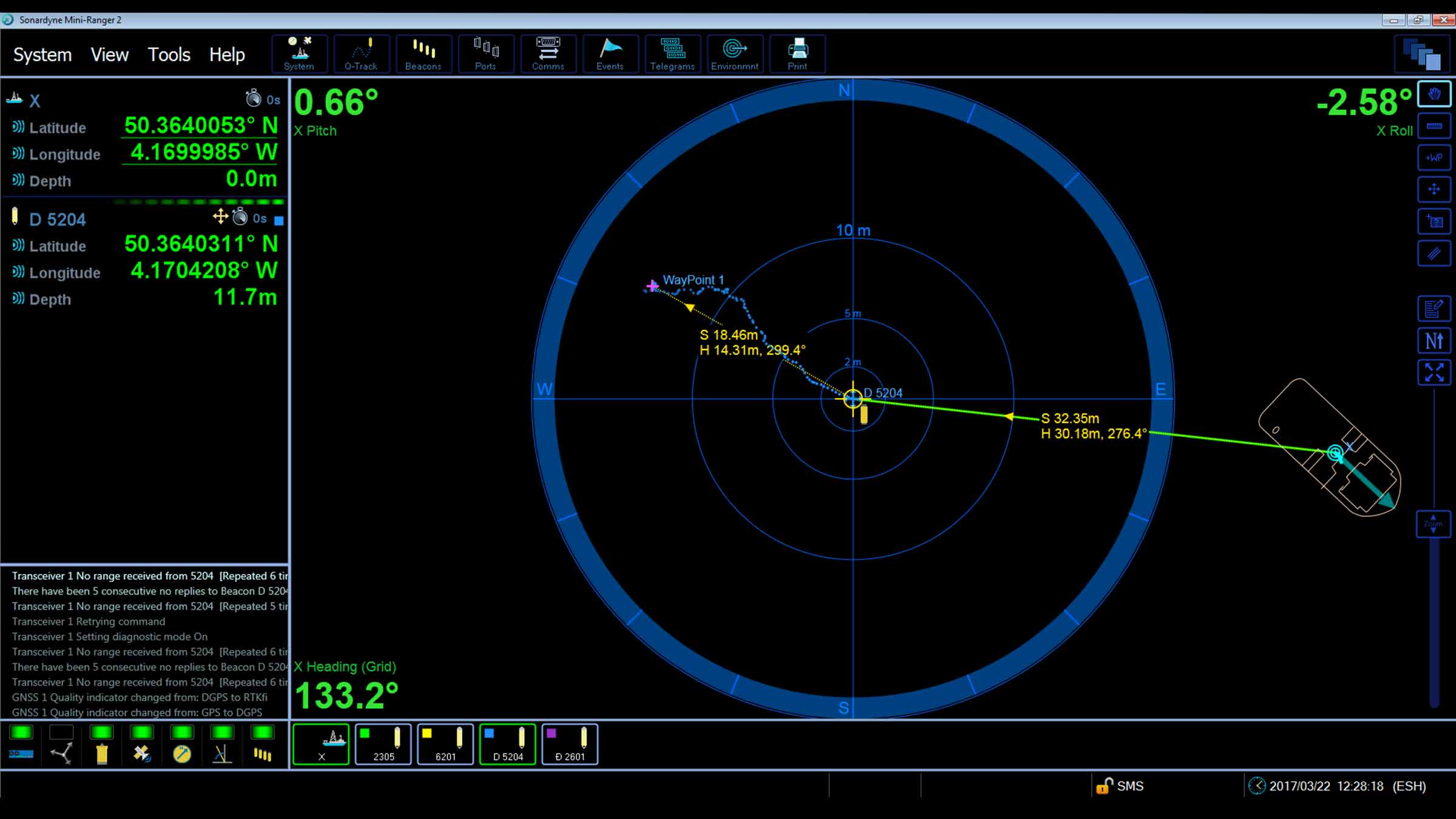
Power, comms and timing for Mini-Ranger 2

The Ethernet Serial Hub (ESH) is designed for small survey vessel operations using Mini-Ranger 2 USBL to track multiple subsea targets. Engineered for vessels, ESH is suitable for environmental surveys, coastal science and sensor tracking as well as site surveys and characterisation.

Overview

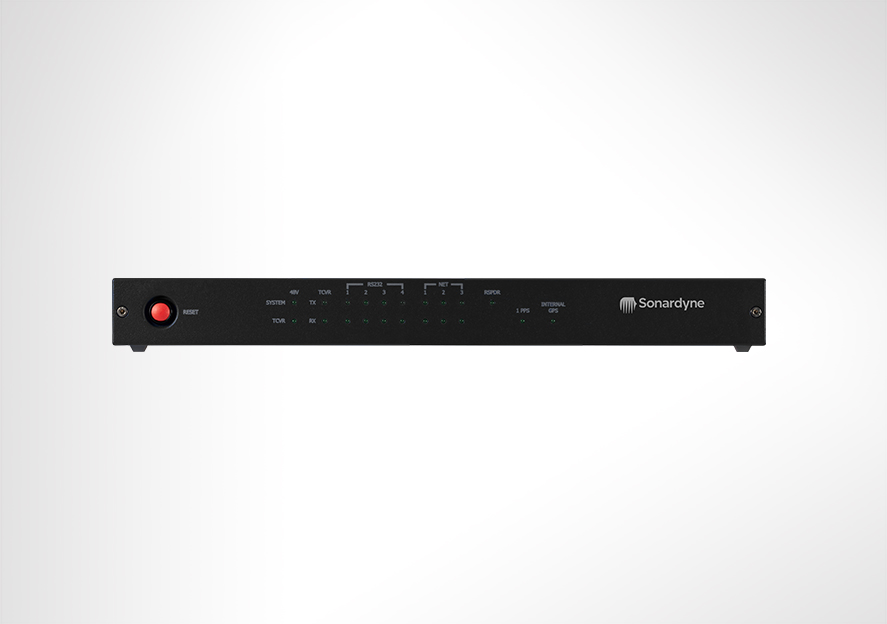
The ESH is the network interface between the in-water acoustic instrument, GPS and the PC that runs the positioning software.

In addition to accurately time-stamping incoming data from external devices such as gyro, VRU and GPS it provides power and communications for acoustic transceivers.

The ESH includes a time source that can be linked to an internal or external GPS PPS input, allowing the Ranger 2 system to accurately time-stamp incoming data from external devices such as gyro, VRU and GNSS to UTC.

Wi-Fi connectivity allows connection to a PC using a Wi-Fi adapter.

At a glance

  • Topside control unit for Mini-Ranger 2 USBL installations
  • Provides power and comms to HPT 2000/3000 transceiver
  • Integral GNSS with SBAS
  • 4 serial ports RS232
  • Wi-Fi connectivity

Specifications table

Feature Type 8211
Storage Internal 32 GB eMMC
Ports and Connectors 4 x RS232 ports (DB 9)
3 x RJ45 10/100 Ethernet sockets
1 x BNC jack 1PPS input
1 x BNC jack responder output 12 V, 100 mA
1 x SMA jack GNSS input (RF coaxial)
1 x Reversed polarity-SMA jack (Wi-Fi)
1 x 48 V transceiver connector (Amphenol)
1 x IEC socket 115/230 V ac, 1 A, 60/50 Hz
Power Supply Auto-sensing ac input voltage: 115–230 V, 60/50 Hz
Maximum current: 1 A
Average operating current: 0.16 A @ 230 V (without transceiver)
Environmental Specifications Operating -5 to 40°C (23 to 104°F)
Storage -20 to 55°C (-4 to 131°F)
Relative humidity 20–80% (non-condensing)
Vibration – Frequency 5 to 13.2 Hz – 1.0 mm peak displacement
Vibration – Frequency 13.2 to 100 Hz – 0.7 g acceleration
Vibration – DNVGL-CG-0339 class A
Safety Complies with EN61010-1
EMC Complies with immunity & emission requirements of EN60945
Dimensions (Length x Width x Height)
1U Rack Mounting (without feet)
430 x 295 x 44.4 mm (16.9 x 11.6 x 1.75”)
Weight 3.3 kg (7.3 lbs)

Did you know?

ESH can be used as a topside control unit for Mini-Ranger 2 installations

Jump to

Overview

Engineered for shallow water seismic surveys

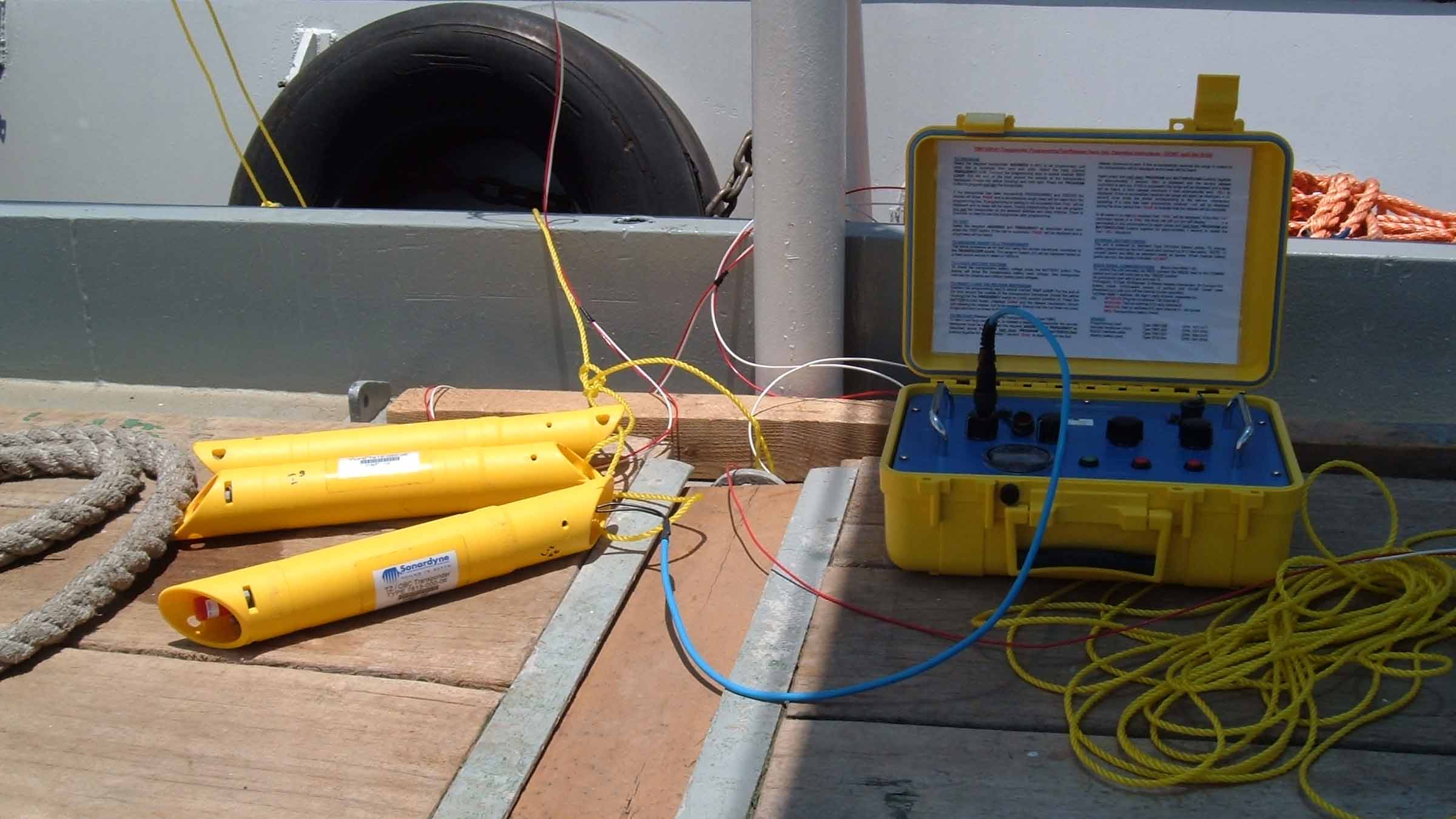
HPT 2000 is a high frequency (HF) USBL transceiver that’s used as part of a Mini Ranger 2 system to position Sonardyne TZ/OBC transponders deployed during shallow water seismic cables. The design is optimised for high elevation tracking.

Overview

HPT 2000 offers significant advantages for survey operations in coastal and near shore regions where simultaneous positioning of transponders attached to transition zone/ocean bottom seismic cables at high elevation tracking is required in low noise environments.

The advanced multi-element processing enables transponders to be positioned more precisely, more quickly and more robustly due to improvements in signal processing algorithms. When used as part of a complete Mini-Ranger 2 USBL system, heading and inertial navigation sensor, class leading performance is achieved.

At a glance

  • Use it with Mini-Ranger 2 USBL
  • Optimised for high elevation tracking in shallow water
  • Easy to deploy on temporary over-the-side set up
  • Ethernet comms for fast position updates
  • Excellent corrosion resistance

The integral MTi-30 Xsens sensor provides pitch, roll and heading data that automatically compensates for the dynamic motion of the vessel, removing the need for an external sensor and pre-use calibration.

Manufactured in Aluminium Bronze, HPT 2000 is intended to be fitted temporarily or permanently to a vessel’s through-hull or over-the-side pole.

The full hemispherical coverage optimises performance in shallow water environments boosting transmissions and receive sensitivity in the horizontal axis.

Ethernet connectivity enables the system to function over existing ship network wiring for rapid installation.

Specifications table

Feature Type 8221
Operational frequency HF (33–50 kHz)
Transceiver performance Operating range 500 m
Acoustic coverage Full 180°
Range precision Better than 15 mm
Positioning repeatability external MRU All transceivers tested to better than 0.2% of slant range 1 Drms / 0.14% 1 Sigma
Positioning repeatability internal Xsens pitch and roll All transceivers tested to better than 1.3% of slant range 1 Drms / 0.9% 1 Sigma
source level (dB re 1 µPa @ 1 m) 194 dB
Electrical 48 V dc (±10%), typical 15 W, maximum 120 W
Communication Ethernet 100 Mbps
Operating temperature -5 to 40°C
Storage temperature -20 to 45°C
Mechanical construction Aluminium bronze
Dimensions (height x diameter) 310 x 234 mm
Weight in air/water 19.4/9.5 kg
Note: The absolute accuracy of the system is dependent upon the quality of external attitude and heading sensors, beacon source
level, vessel noise, water depth, mechanical rigidity of the transceiver deployment machine, SV knowledge and proper calibration of
the total system using CASIUS.

Did you know?

HPT 2000 can be used as part of our Mini-Ranger 2 USBL system

Jump to

Overview

Track anything, to any range

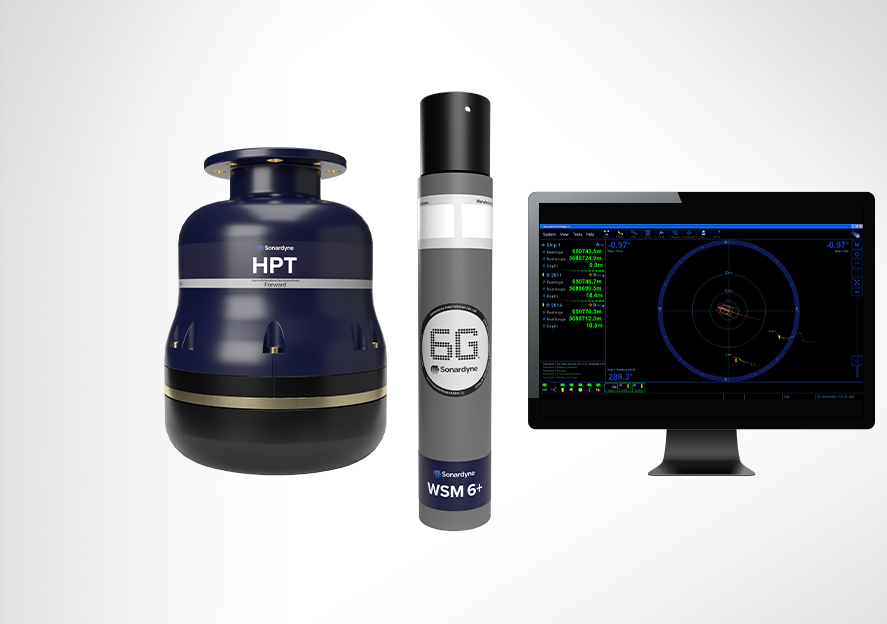
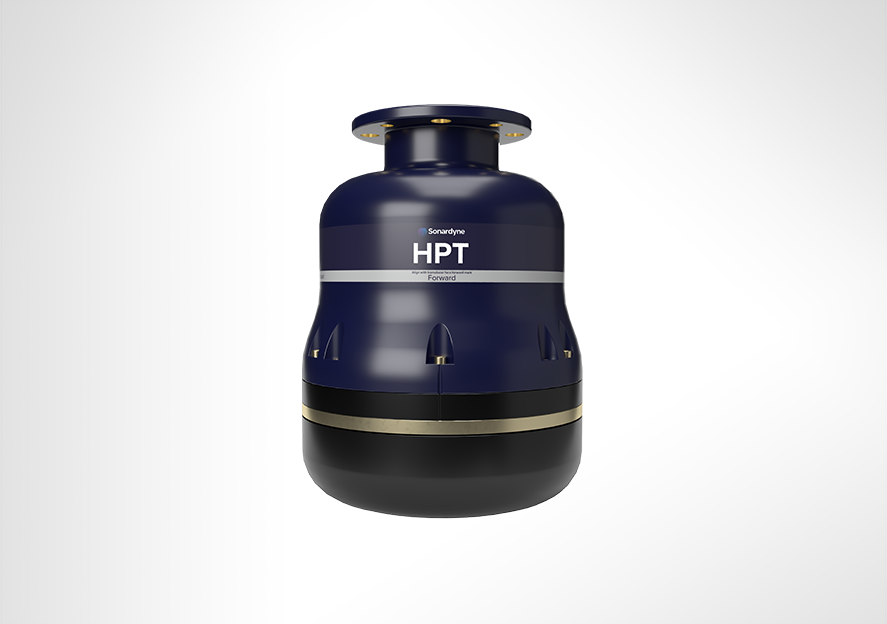
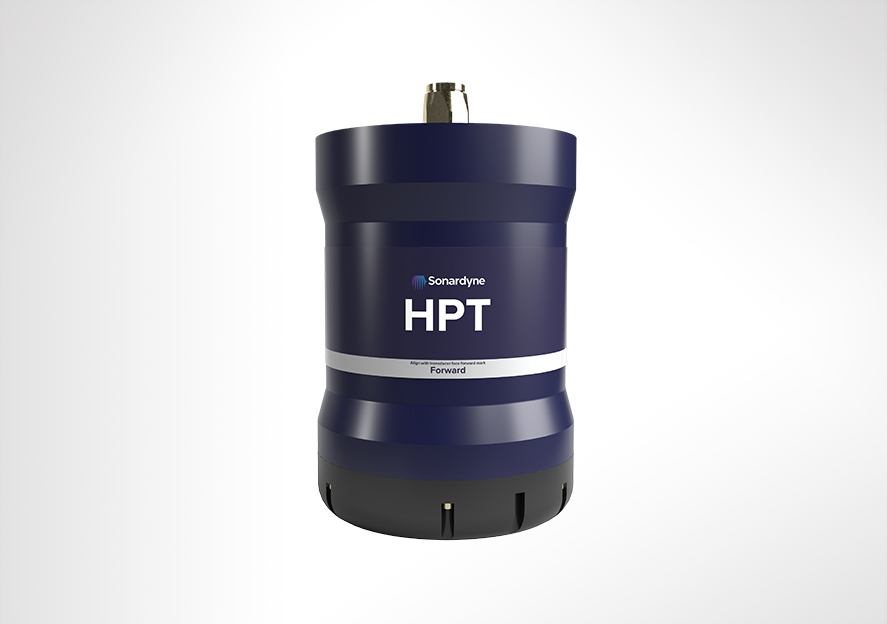
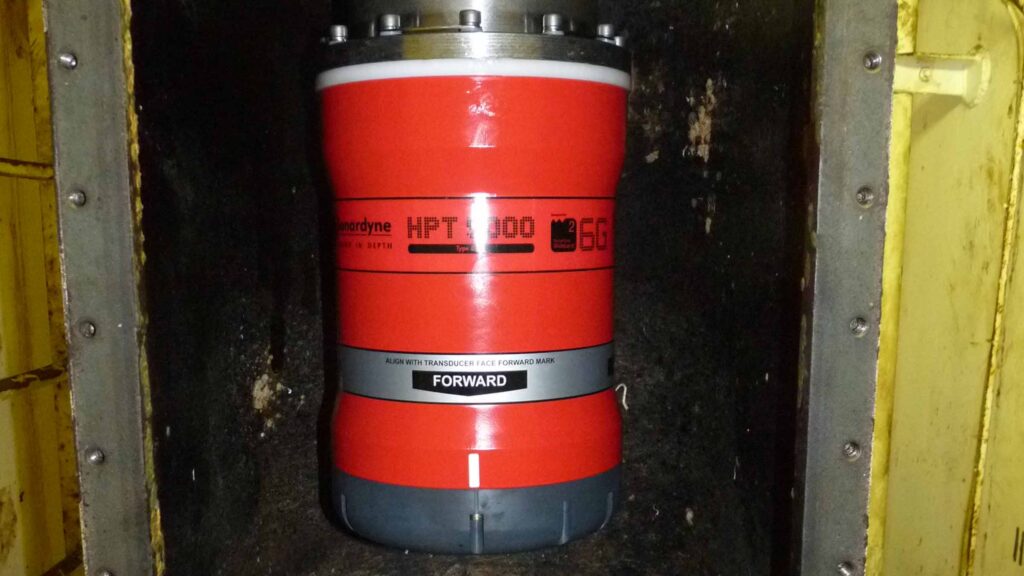
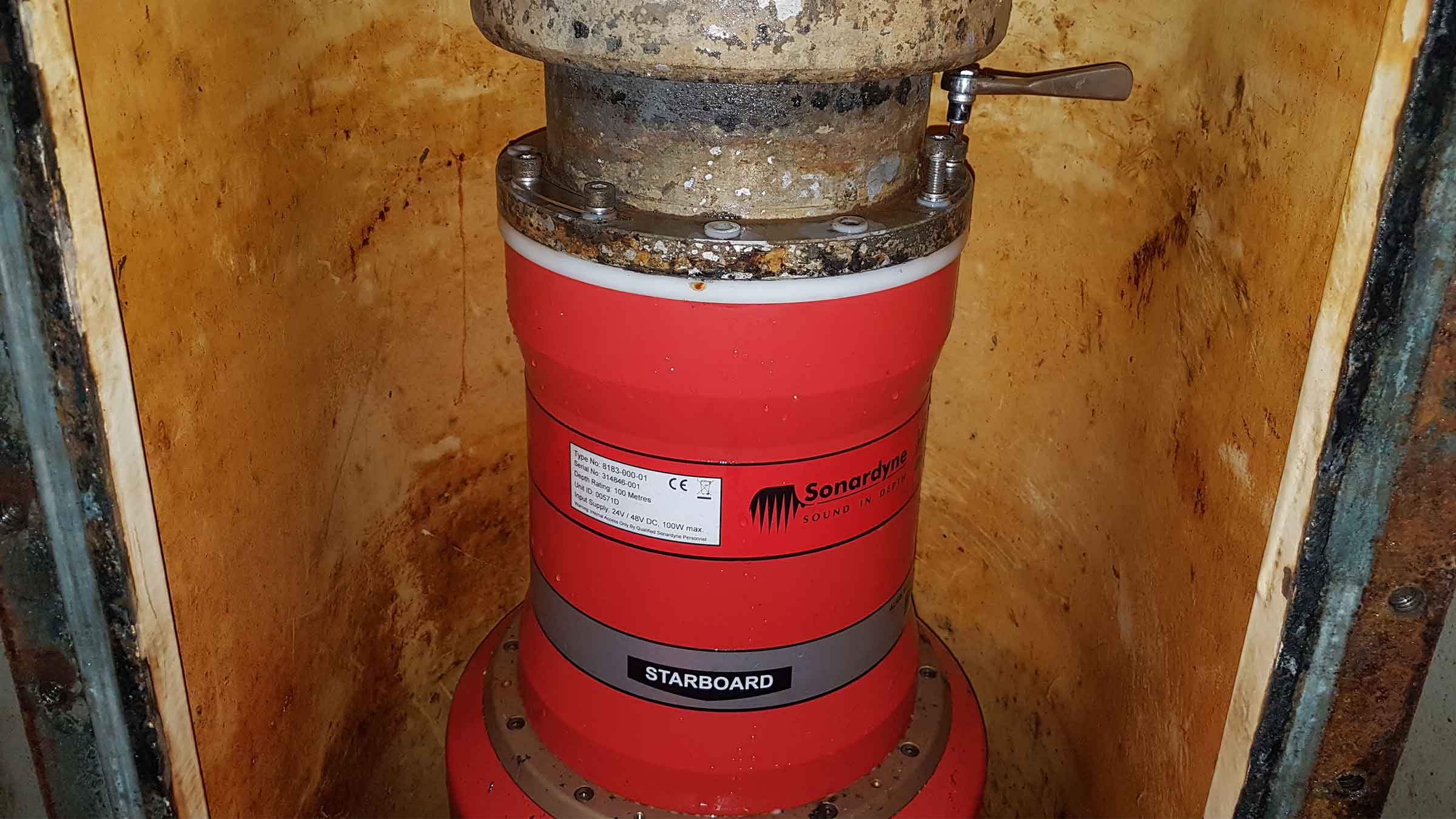
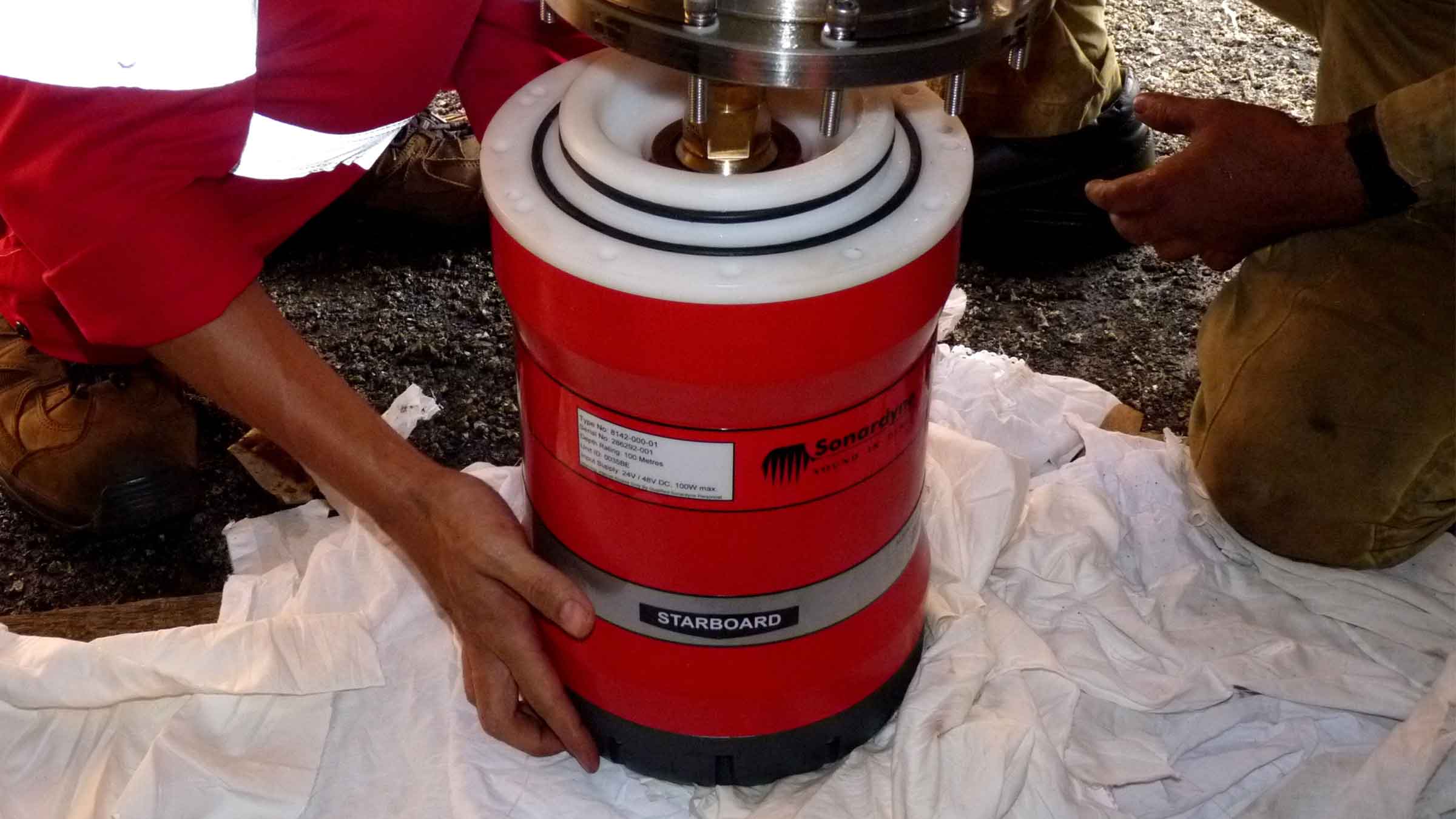
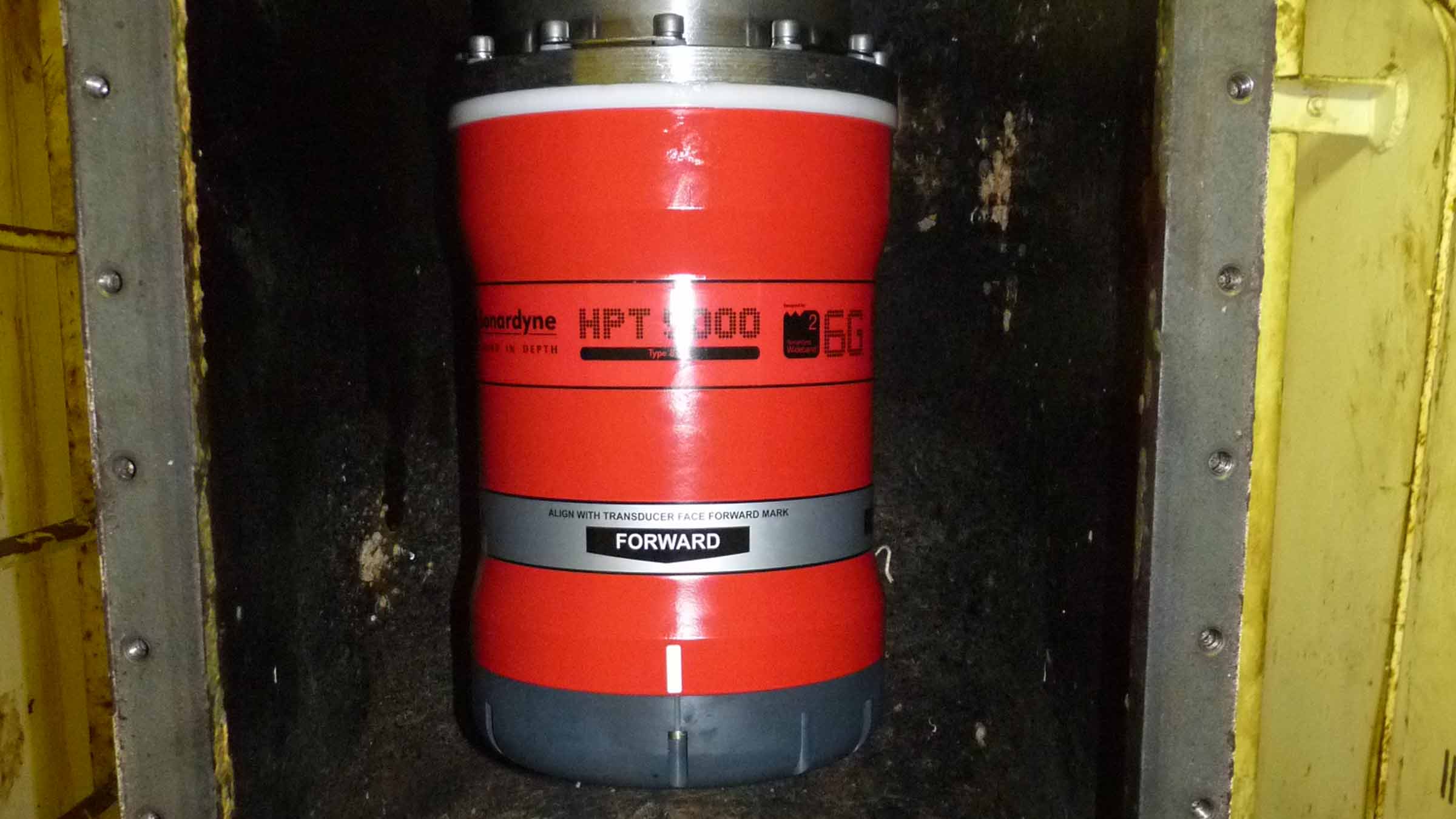
HPT 5000/7000s are acoustic and telemetry transceivers designed for use with Ranger 2 USBL and Marksman LUSBL systems. HPT 5000 enables targets to offer wide range of water depths to be tracked. HPT 7000 is optimised for noisy DP drilling and construction vessels and in deep water. Suitable for a wide range of applications from pipeline positioning and riser monitoring to subsea structure installation as well as tracking and communications.

Overview

When it comes to USBL and LUSBL transceivers, one model does not fit all situations and vessels. For Ranger 2 and Marksman installations, our High Performance Transceiver (HPT) is available two primary configurations.

HPT 5000
HPT 5000 offers full hemispherical acoustic coverage so it’s a popular choice for tracking multiple targets  (ROVs, AUVs, towfish, seafloor sensors) over a wide range of depths and elevations. The unit is also suitable for dynamic positioning reference on survey, research and offshore support vessels.

HPT 7000
HPT 7000 is engineered for ultra-deepwater operations, tracking targets far below (rather than to the side) of a vessel, and also high vessel noise operating environments, as those typically encountered on DP drilling and construction where aeration from thrusters is liable to cause signal interference.

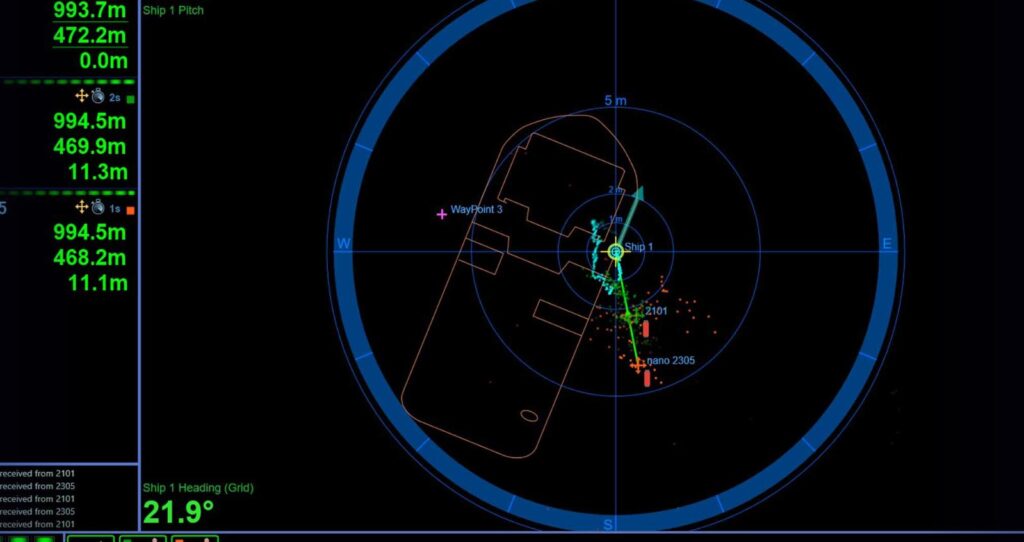
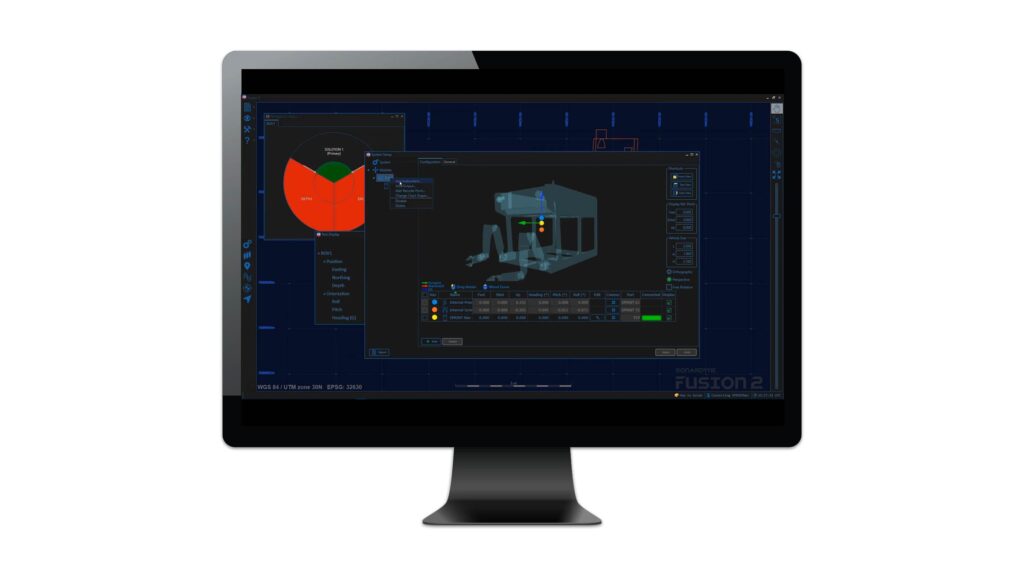
Both models of transceiver fully support 6G LBL operations using Fusion 2 LBL software. They are also highly capable acoustic communications modems, able to interrogate, command and recover data payloads from deployed Sonardyne instruments including AMTs and Fetch. Supporting telemetry rates of up to 9,000 bps minimises the time a vessel has to wait on location to recover data, as well as supporting LBL operations.

HPT 5000/7000s are also available in Gyro USBL configurations offering calibration-free installation and use.

At a glance

  • Use with Ranger 2 USBL and Marksman LUSBL systems
  • Can also be used to communicate and harvest data from Sonardyne sensors
  • Hemispherical (HPT 5000) or directional (HPT 7000) arrays to suit your vessel and application
  • Can be deployed other-the-side, through-tube or through-hull
  • Suitable for new-build vessels or USBL/LUBL upgrade for your existing vessel

All HPTs are built on our 6G technology platform with multi-element processing to enable transponders to be positioned more precisely, more quickly and more robustly due to improvements in signal processing algorithms and array design.

Functionality such as ‘Discovery Mode’ enables vessels equipped with Ranger 2 and Marksman to enter an offshore area and automatically detect previously deployed transponders (including their configured address and channel), making simultaneous operations using shared seabed arrays possible.

Manufactured in aluminium-bronze, HPTs are intended to be fitted temporarily or permanently to a vessel’s through-hull or over-the-side pole. HPT 5000s (including Gyro USBL 5000s) have also been fitted to large USVs for uncrewed missions controlled from over-the-horizon.

For specialist applications, inverted USBL, LMF frequency and extreme depth range HPT transceivers are also available. Please get in contact to discuss your requirements.

Specifications table

Note: The absolute accuracy of the system is dependent upon the quality of external attitude and heading sensors, beacon source
level, vessel noise, water depth, mechanical rigidity of the transceiver deployment machine, SV knowledge and proper calibration of
the total system using CASIUS.

Feature Type 8142-001 Type 8142-002 
(deepwater optimised unit)
Operational frequency MF (20–34 kHz) MF (20–34 kHz)
Transceiver
performance
Operating range Up to 7,000 m Up to 7,000 m
Acoustic coverage Up to ± 90° Up to ± 90º Optimised for deep water
(depending on frequency of operation)
Range precision Better than 15 mm Better than 15 mm
Positioning repeatability All transceivers tested to better than 0.1% of slant range 1 Drms All transceivers tested to better than 0.07% of slant range 1 Drms
Transmit source level (dB re 1 µPa @ 1 m) 200 dB 200 dB
Tone Equivalent Energy (TEE) 206 dB (13 JA) 206 dB (13 JA)
Electrical 48 V dc (±10%),
Typical 15 W, Max
120 W
48 V dc (±10%),
Typical 15 W, Max 120 W
Communication RS485, baud rate switchable,
ethernet 100 Mbps
RS485, baud rate switchable,
ethernet 100 Mbps
Operating temperature -5 to 40°C -5 to 40°C
Storage temperature -20 to 45°C -20 to 45°C
Mechanical construction Aluminium bronze Aluminium bronze
Dimensions (length x diameter) 322 x 225 mm 391 x 310 mm
Weight in air/water 26.7/15.3 kg 46.9/29.0 kg
Options Tilted array adaptor Tilted array adaptor

Did you know?

Both HPT 5000 and 7000 are available in Gyro USBL configurations

Jump to

Overview

The power driving our software

Marine Computer is our most powerful computer yet, designed to effortlessly run all of your Sonardyne software applications and those from third parties. Use it in a survey shack, install it in the bridge or rack mount it. Marine Computer works wherever you need it to.

Overview

Using a superfast processor to handle intensive workloads, Marine Computer is designed and configured to provide you with the best possible experience when using our suite of navigation, positioning and imaging software products, leaving you to concentrate on the job in hand.

However, you don’t have to be using Sonardyne software to use one. If you’re in the market for a robust and easily configured computer to run third-party software applications onboard your ship, survey boat or unmanned craft, Marine Computer is the perfect choice.

That’s because it’s certified to EN60945 and DNVGL-CG-0339 standards which means it meets regulatory requirements to be used on ships’ bridges and is able to withstand harsh operating environments and where constant high temperatures are present.

At a glance

  • Choice of desktop or 2U rack mount configurations
  • Fanless and temperature tolerant design withstands harsh marine operating environments
  • Certified to EN 60945 and DNVGL-CG-0339 – use it on your bridge
  • Intel Tiger Lake Core CPU runs intensive applications with ease
  • Desk, console and rack mounting options
  • Wide operating temperature range

Fanless computers like the Marine Computer are perfect for use in dirty or dusty marine environments where actively cooled systems could quickly clog up, overheat and fail. Inside is an Intel® Tiger Lake Core i5-1135G7 2.4 Ghz processor and 512 GB industrial grade solid state disk. SSDs have no moving parts so are faster and more reliable than traditional hard disk drives. Temperature tolerant components contribute to its impressive wide operating temperature range.

All this makes the Marine Computer an extremely versatile and reliable tool in virtually any marine installation condition: desk mounted, in a small survey boat; within a ship’s bridge console; or, when supplied with a custom 2U chassis, mounted in a server room rack.

Specifications table

Feature Specification
Processor Intel® Tiger Lake Core i5-1135G7 2.4 Ghz
RAM 32 GB 3200 MHz DDR4 RAM
Hard drive Single M.2 2280 NVMe 512 GB SSD
Front external ports 8 x NMEA 0183, 8 x isolated DIDO 4 in/4 out
Rear external ports 2 x 1 Gbps Ethernet, 4 x USB 3.0, 1 HDMI, 1x DVI-I, 1 x DisplayPort 1.2,
2 x RS232/422/485 serial ports, 1 x audio combo 3.5 mm jack
Network 2 x 1 Gbps Ethernet
Power in 100–240 V ac, 0.75–1.5 A (2.5 A max), 50–60 Hz
Video Supports triple independent display
Environmental specifications Operating temperature -15 to 55ºC (5 to 131°F)
Storage temperature -15 to 60ºC (5 to 140°F)
Operating humidity 5–95%
Vibration 0.7 g@DNV-CG-0339 (class A)
Shock 15 G, 11 ms duration
Intended use Indoor use (including bridge), altitude up to 2,000 m, continuous operation
EMC Immunity & Emission EN 60945 & DNVGL-CG-0339 compliant
Dimensions (WxDxH) 481 x 388 x 88 mm (18.9 x 15.3 x 3.5”)
Weight 8.4 kg
Jump to

Overview

Designed for precision survey and construction

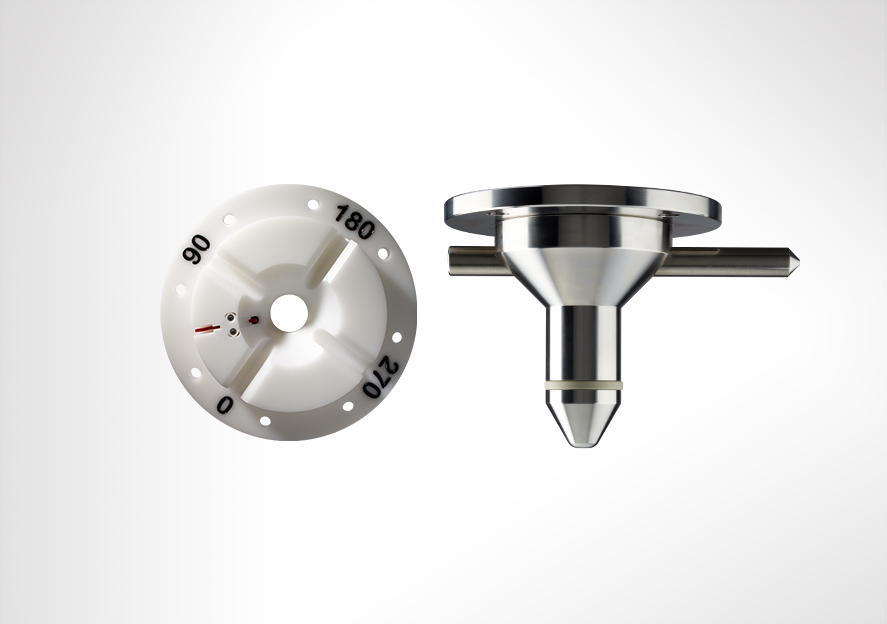
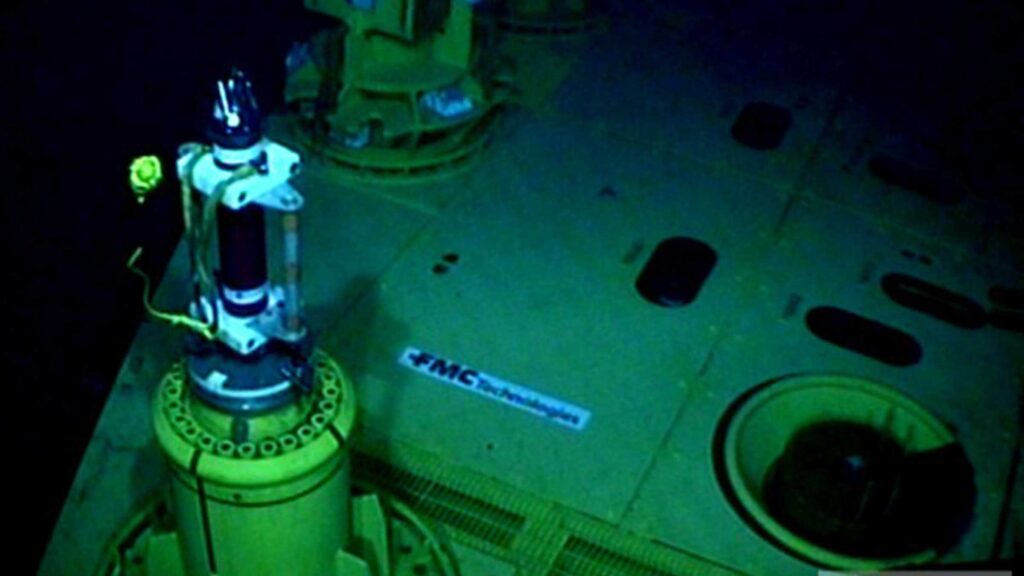
Designed for use with Compatt 6 and Gyro Compatt 6 (including plus variants), the metrology stab and receptacle enables LBL transponders to precisely and repeatedly install on subsea structures.

Overview

With a high manufacturing tolerance combined with a pop-up ‘tell-tale’ flag that provides visual confirmation the transponder is precisely docked, our stab and receptacle saves times and improves the accuracy of subsea construction.

Using our stab and receptacle, the traditional method of rotating of a stab in a hub during metrology operations to determine stab-to-receptacle slop, can be eliminated. With this time consuming task removed, acoustic metrologies have the potential to be completed in less than six hours.

The tolerance of the design allows for 0.1° for heading and 0.01° for pitch/roll which is the same quoted error of a calibrated Gyro Compatt 6. This improves the results of the metrology or other positioning tasks and reduces the need for error determination of the stab/receptacle.

At a glance

  • Allows you to accurately align transponders on structures
  • Perfect for installation during metrology campaigns
  • Allows transponders to be quickly removed and re-installed using ROV
  • Two stab variants available to bolt onto either Inclinometer Compatts or Gyro Compatts
  • Can be fitted on the back deck using existing hole patterns
  • Tell-tale indicator confirms the stab is fully docked into the receptacle

The receptacle is designed to bolt into the eight bolt hole pattern of the industry standard 8” AWWA Class D flange. This allows the user to either bolt this flange onto the structure or to provide bolt holes in the structure itself. After dimensional control techniques to determine the relationship of the bolt holes in relation to the structure points of interest (jumper hubs, CRP, spool flanges, etc), the receptacle can be bolted in with known offsets to these points. This allows fast and precise inferred metrology to one or multiple hubs or flanges from a single receptacle.

The receptacle features a 45° cone in which the stab sits. This reduces the possibility of debris building up on the interface between the two and allows for a more precise connection due to the point of contact being exactly circular regardless of any small expansion/contraction effects.

The stab also features an alignment bar rather than alignment pins to aid docking and provide superior heading alignment. An O-ring on the stab shaft assists in ensuring the two are precisely mated.

Specifications table

Feature Receptacle Type 8300-250 Stab Type 8300-240 Stab Type 8144-150
Compatible Products Stab 8300-240 & 8144-150 Inclinometer Compatt 5 & 6 Gyro Compatt 6
Outside Diameter 343 mm 185 mm 185 mm
Maximum Height 100 mm 164 mm 164 mm
Stab face to Flange Face 76 mm 76 mm 76 mm
Mechanical Construction Acetal (Delrin) Super duplex stainless steel Super duplex stainless steel
Bolt Hole PCD 298.45 mm n/a n/a
Tell-tale Removable n/a n/a
Attitude Tolerance Heading 0.1°, Pitch / Roll 0.01° Heading 0.1°, Pitch / Roll 0.01° Heading 0.1°, Pitch / Roll 0.01°
Alignment Quadrants Four (0°, 90°, 180°, 270°) Four (0°, 90°, 180°, 270°) Four (0°, 90°, 180°, 270°)

Did you know?

There are two stab variants available to be used with either Compatts or Gyro Compatts

Jump to

Overview

Mini in size – big on performance

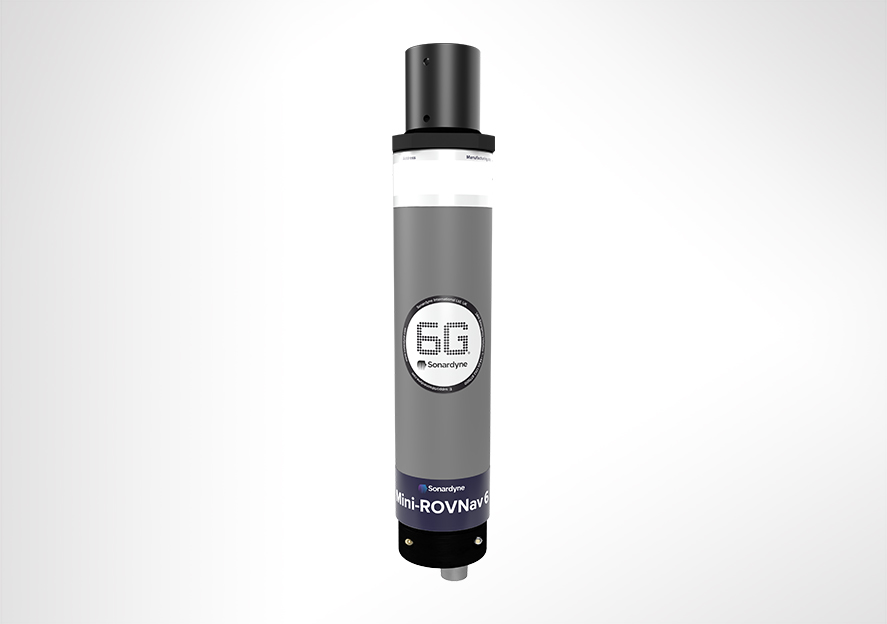
Mini-ROVNav 6+ is a 6G ranging and telemetry Long BaseLine (LBL) ROV transceiver specifically designed for installation on ROVs and USVs where payload space is tight. Suitable for a range of applications, from metrology to pipeline positioning as well as site survey and characterisation.

Overview

Mini-ROVNav 6+ is designed to be significantly lighter and smaller than our standard ROVNav 6+ instrument, whilst providing full 6G LBL capabilities.

This makes it particularly suitable for inspection-class ROVs as well now uncrewed surface vessels (USVs) which can be configured to undertake routine LBL operations over-the-horizon from your survey vessel.

Its full support of  Wideband 2 signal processing techniques offers long range and robust acoustic performance in challenging conditions such as on noisy vehicles or in multi-path environments.

At a glance

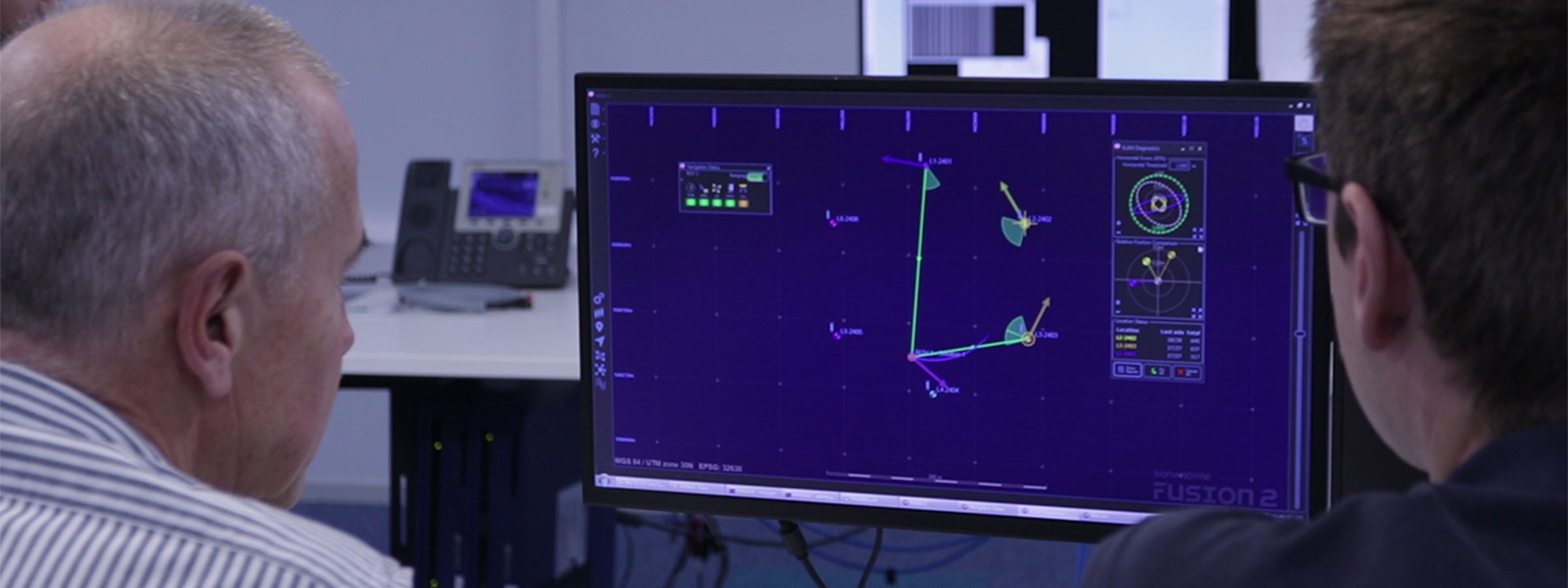
  • Use it with Fusion 2
  • Perfect when ROV space is limited
  • USBL mode for emergency relocation
  • Lightweight and easy to install
  • Modem mode for data recovery from AMTs and Fetch instruments

Mini-ROVNav 6+ is also a fully compatible USBL responder or transponder compatible with Sonardyne Wideband 1 and 2 USBL systems and HPR 400. The internal Li-ion rechargeable battery pack also enables emergency transponder mode, so if the umbilical and therefore power is cut to the ROV it can still be located using a vessel equipped with a USBL system.

The integrated omni-directional MF transducer has a hemispherical beam pattern which is ideal for acoustics to an array and to a vessel alike.

Mini-ROVNav 6+ is fully compatible with our modem and logging equipment such as AMT and Fetch products, allowing it to be used to retrieve data or configure logging regimes. Data rates of between 100 to 9,000 bps user data rates can be supported depending on the environment.

Specifications table

Feature Type 8240
Depth rating 3,000 m
Operating frequency MF (20–34 kHz)
Transducer beam shape Omni-directional
Transmit source level (dB re 1 µPa @ 1 m) 181–187 dB
(2 levels)
Tone Equivalent Energy (TEE) 187–193 dB
Receiver sensitivity (dB re 1 µPa) 90–120 dB
Range precision Better than 15 mm
Operating voltage 24 or 48 V dc (±10%)
Serial communications Primary port: RS232 (9,600 – 115,200 baud)
Responder input 4 V to 24 V,
>0.5 ms duration
Release output 12 V
(250 mA rated)
Battery life (listening) Li-ion >7 days
External power Active (listening) <2 W
Battery charging <6 W
Peak (during transmission) <50 W
Mechanical construction Hard anodised aluminium alloy and stainless steel connectors
Serial communications bulkhead connector MCBH8M
Dimensions (length x maximum diameter) 501 x 93.5 mm
Weight in air/water 5.1/2.2 kg
Operating temperature -5 to 40°C
Storage temperature -20 to 55°C
Sensors
Temperature (±0.25°C) Standard
Strain gauge pressure sensor (±0.25% FS) Standard

Did you know?

Mini ROVNav 6+ can be used with Fusion 2 software