



Pinpointing Precision: Arctia chooses Sonardyne system for subsea surveys
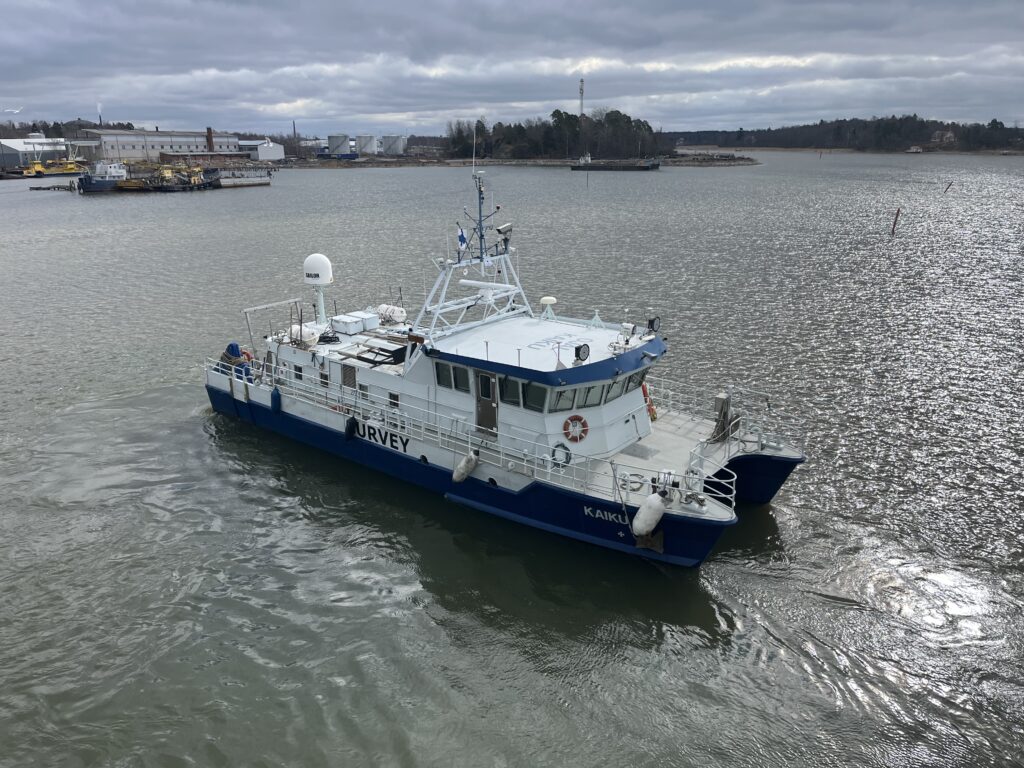
When Finnish state-owned hydrographic services and icebreaking company Arctia need to accurately and reliably position their subsea survey equipment there is only one logical solution.
Arctia provide a wide range of services for Finland’s maritime industry including icebreaking, hydraulic engineering, planning and permit services, fairway maintenance and survey services, hydrographic services and research.
Their services all rely on precise subsea navigation and tracking, especially those using towed survey equipment. This is where Sonardyne come in, Arctia have chosen their Mini-Ranger 2 Ultra Short BaseLine (USBL) system with WSM 6+ transponders for their marine survey services.
Many of their marine surveys are conducted around offshore wind farms where teams of internationally certified hydrographic surveyors and shallow water experts provide tailor-made survey, analysing and planning solutions to meet even the most demanding of customer needs.
Mini-Ranger 2 is one of Sonardyne’s most popular USBL systems, chosen for its small size, value and dependable performance in all underwater environments. It’s the perfect choice for fitting to small survey vessels, moored barges and uncrewed vessels.




Energy
ACUA Ocean and Forssea Robotics complete remote USV-ROV operations trials using Sonardyne positioning
A three-week Plymouth trial demonstrated remote ROV inspection from ACUA Ocean’s Pioneer USV, using Sonardyne Mini-Ranger 2 USBL positioning to support more than 40 deployments in challenging sea conditions.
Ocean science
First tsunami monitoring deep-sea buoys deployed in the Mediterranean Sea
The Mediterranean faces a tsunami risk, but offshore detection has been limited. MSM Ocean and Sonardyne are helping bring earlier warning through the region’s first deep-sea tsunami monitoring buoys.
Energy
Subsea flowline monitoring for asset integrity
Subsea pipelines can move over time. Fugro used Sonardyne acoustic monitoring to track flowline movement, protect integrity and reduce costly intervention offshore Australia.