




The solution
Origin 600 is an ‘all-in-one’ ADCP with onboard data processing and remote communications capability.

The Origin 600 ADCP was deployed on a bottom tripod close to the Moss Landing Marine Laboratories seawater intake, allowing current and wave observations to be gathered alongside established biogeochemical measurements.
The system was configured with multiple sampling schedules so that average current profiles could be measured every 30 minutes and surface wave characteristics every two hours, during the same 35-day deployment.
This removed the usual need to prioritise one process over another and enabled a broader view of site dynamics from a single instrument. Large onboard storage and high-fidelity data recording also gave the team flexibility in post-processing, helping them refine analysis after recovery, rather than being locked into every decision before deployment.


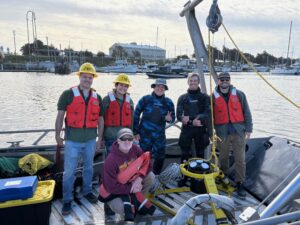 Thank you to the Synchro team! For a deeper dive into the findings, read Synchro’s complete evaluation on their website