


Underwater maritime security specialist Sonardyne Inc. will present its advanced unmanned underwater vehicle (UUV) tracking results at the Advanced Naval Technology Exercise (ANTX) this week in Newport, Rhode Island.
The event’s attendees will be shown the results of recent trials which tested Sonardyne’s Sentinel Intruder Detection Sonar (IDS) against elite US Navy divers and small UUVs. Specifically, the strength of Sentinel IDS’ combined active and passive intruder detection sonar for ship and harbour security, against even the smallest UUVs, will be demonstrated.
Sentinel is the undisputed leader in the IDS field. Since its introduction, it has been used in critical national infrastructure (CNI), vessel and VIP protection duties around the world. Sentinel IDS detects, tracks and classifies a wide range of threats including divers, swimmer delivery vehicles (SDVs) and UUVs, when approaching a protected asset from any direction. It then alerts security personnel to the threat.
ANTX has become a key naval technology collaboration, development and demonstration event in the US calendar, bringing together more than 1,000 naval, academic and industry attendees at the US Naval Undersea Warfare Center’s (NUWC) Narragansett Bay Test Facility (NBTF) in Newport. The NBTF is a test and evaluation facility designed to support research and development work in advanced underwater weapons and weapons systems, weapon launchers, UUVs and oceanographic equipment.
Ahead of the event, Sonardyne collaborated with the BAE Systems’ UUV team and navy divers to test its Sentinel IDS system.
Dan Zatezalo, Technical Sales Manager, manager – US Maritime and Defense – Sonardyne “ANTX is a great event for collaboration. Not only have we had US Navy divers swimming against our Sentinel IDS system, but also BAE Systems put its Riptide vehicle in the water. This let us collect some really good data which we have already used to further improve our Sentinel algorithms for detecting UUVs.”
“This year’s theme at ANTX is ‘Prepare for Battle: Undersea Security’ and that’s exactly what we offer. We have the tools for navies, defence and security organisations to do just that. With the ability to detect targets at ranges of up to 1,500 m, Sentinel takes reliable, long-range underwater intruder detection to a new level.”
The ANTX opening ceremony is tomorrow (Wednesday, August 28) with the ANTX Exercises run throughout Thursday (August 29).
Intruder detection sonar (IDS) are a key tool in maritime security operations, even in peacetime. But, while you hope that you will never hear it sounding the alarm that you have an intruder, putting it to the test – during peaceful exercises – does offer comfort that it will perform when you need it.
That’s just what the Slovenian Armed Forces (SAF) 430th Naval Division has been doing recently. As part of a broader multinational exercise, their Underwater Special Operations Detachment carried out operations alongside a group of divers from the Montenegrin Navy – a perfect opportunity for putting Sentinel to the test.
But first, a little fact for you. Largely landlocked, Slovenia has a lot of borders to protect. While it’s a relatively small country, it has many neighbours, from Italy, in the west, to Austria, in the north, Hungary in the east, and Croatia, to the south.
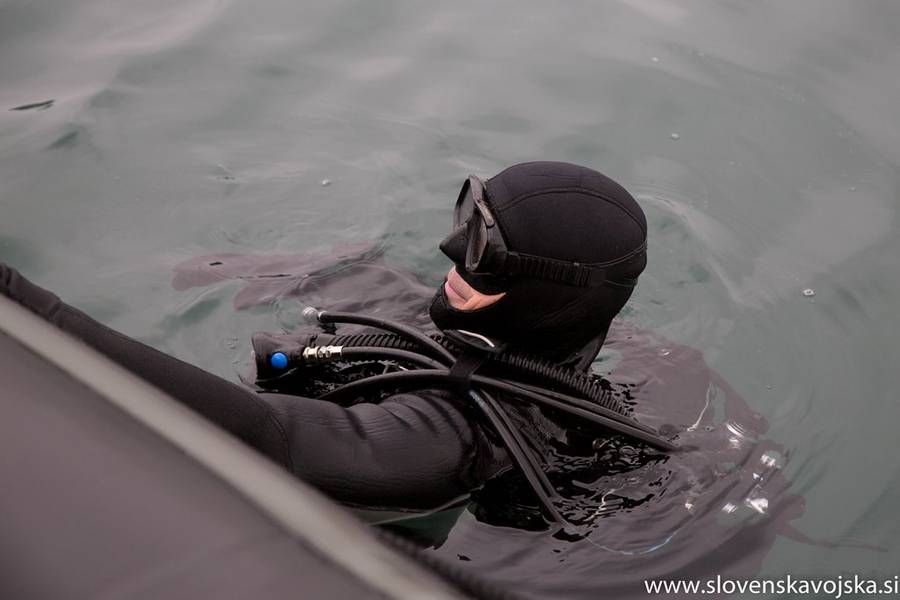 It’s also got a short, but important, stretch of coastline at the north end of the Adriatic Sea. While peaceful now, this area has been strategic since pre-Roman times. It’s been under Roman, Croatian, Habsburg, Ottoman and Napoleonic rule, to name a few.
So, Slovenia doesn’t have a navy. Instead, its army has the 430th Naval Division to protect its short section of coastline, including the port town of Koper.
But, back to the exercises. They were extensive. Starting with integration drills, involving underwater and surface inspection of the operational area, they moved on to joint inspection of navigable waterways, and then a mine hunting and detection exercise around moorings used by allied vessels.
Throughout, the underwater part of the port’s disembarkation area – which is protected by the 430th Naval Division – was monitored using Sentinel, which is able to detect divers, swimmer delivery vehicles (SDV) and autonomous underwater vehicles (AUVs) in the water. It was then used to steer the force reaction towards the simulated intruders.
Meanwhile, crews on a multi-purpose patrol boat, the Triglav, and a fast-patrol boat, the Ankaran, patrolled the Slovenian territorial sea, to provide broader protection.
For armies and navies, exercises with allies to train in command and control procedures, as well as various tactical procedures at sea, are a great opportunity to maintain or raise their competence and readiness.
It’s also a great opportunity to test kit – like Sentinel. Sentinel is the undisputed leader in the IDS field. Sentinel detects, tracks and classifies a wide range of threats including divers, SDVs and AUVs, when approaching a protected asset from any direction. It then alerts security personnel to the threat. With the ability to identify targets at ranges of up to 1,500 m, Sentinel takes reliable, long-range underwater intruder detection to a new level. Since its introduction, has been used in critical national infrastructure, vessel and VIP protection duties around the world.
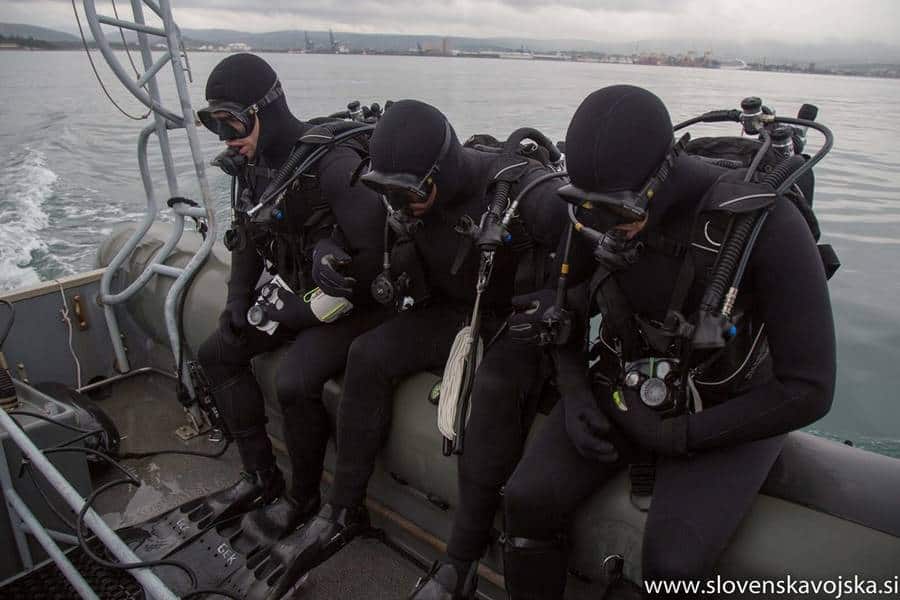
In Slovenia, the 430th Naval Division often use their Sentinel from vessels in port, while at anchor. For the multinational exercises, they deployed it from a pole mount from the patrol boat stern platform. It performed well, detecting divers at the ranges expected from Sentinel and a good detection percentage – which is always important. Too many false detections can reduce the effectiveness of any IDS.
The 430th Naval Division’s use of Sentinel shows its flexibility – it can be deployed and redeployed from different vessels, quaysides, subsea mount frames or even buoys. It’s compact, but it’s also scalable. We can network Sentinel sonar heads together to improve situational awareness. Sentinel merges the data from all the units and presents a single picture of the environment. Using simple interfaces, we can integrate it with third-party security systems or command and control (C2) stations.
There’s also a Sentinel expeditionary system configured for Portable Diver Detection Sonar (PDDS) duties. Its small topside footprint means it’s perfect for short-term operations using offshore patrol vessels (OPVs) and temporary sites on shore.
But don’t take our word for it. Those using it rely on it. For the 430th Naval Division it’s a key tool in its port protection. Or in their words: “We consider Sentinel a very reliable tool in our force protection set-up.”
By Steve Fairhead, Manufacturing apprenticeship programme lead
We value vocational skills and training – they under-pin everything we do. So we’re hugely proud of one of our apprentices, Tom Andrews, who is set to fly all the way to Kazan, Russia, this summer to represent not just Sonardyne, but the UK in the WorldSkills finals.
Tom is in his last year of a Foundation Degree in Engineering at Alton College while working with us. He is one of just 30 young professionals selected to compete for Team UK at the event, in the capital of Tatarstan, some 800 km east of Moscow.
His place on Team UK, representing the electronics discipline, follows two years of hard work getting through regional and national competitions and team selection events. In fact, earlier this summer he went to Kouvola in Finland, to join other competitors from Russia, Switzerland, Brazil, Singapore and Finland in pre-competition training.
[blockquote author=”Tom Andrews, Apprentice Engineer, Sonardyne “]“It’s already been a great experience,” he says, “Not only having the opportunity to travel to these places, but also to meet other young engineers like me and to develop workplace skills and really test and progress my electrical engineering know-how.”[/blockquote]
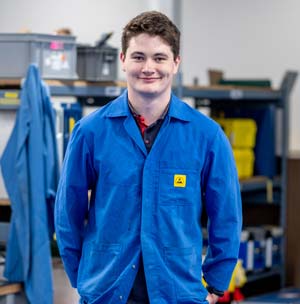
“Our training in Finland was about running through the types of challenges that will be thrown at us when we get to Kazan in a few weeks’ time. Because it wasn’t the final competition, we got to help each other, and we all enjoyed that interaction. The final will be different, of course, but it’s still going to be quite an experience. I’m looking forward to representing the UK!”
Representing the UK on the world stage is a great opportunity for Tom and us. We support skills training here at Sonardyne and this bi-annual competition, which has origins dating back to post-war Europe, couldn’t be a better way to showcase that.
A track record
In fact, we’ve been represented before. Now a junior engineer, Tua Yenwattana competed at WorldSkills in 2014. Tua studied electrical and electronics engineering at Basingstoke College of Technology and won apprentice of the year in his fourth year there. He’s now working in our engineering department, after starting as a repair apprentice, then moving into systems test. Dan Hinsley, another of our apprentices who is now a junior engineer, studied at Basingstoke College at the same time as Tua. Dan also won apprentice of the year – three years in a row!
Our apprentices today – Tom included – are working towards qualifications including Higher National Certificates (HNC), NVQ extended diplomas and foundation degrees at Basingstoke College, Farnborough College of Technology and Alton College.
Getting on the career ladder
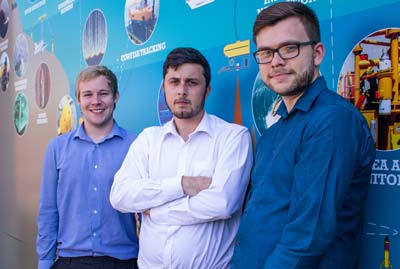
James Kinsey, Jimmy Page & Josh Hall
Taking an apprenticeship is a great first step on the career ladder. In fact, I was Sonardyne’s very first apprentice and now lead our manufacturing apprenticeship programme as well as running our repair department. I have two apprentices under my wings at the moment, Fraser Sanford and Howard Old, who are both working towards a HNC in electronics and a Level 3 NVQ extended diploma in electrical and electronic engineering. Once qualified, they will be starting their careers as repair technicians.
In our engineering team, last year saw three now former apprentices – James Kinsey, Jimmy Page and Josh Hall – graduate with First Class Bachelor degrees (with honours) in Embedded Electronics. They had studied for a Foundation Degree in engineering at Alton College before spending a year at the University of Portsmouth. Another three apprentices are now currently working on their Foundation Degrees.
Supporting engineering education
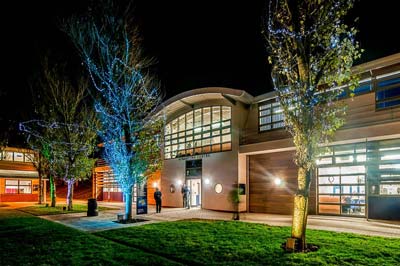
The Sonardyne Centre at Alton College
But as well as supporting our apprentices, we’re also proud of the support we offer to colleges and universities. For example, through The Sonardyne Foundation, we supported the building of Alton College with a substantial grant which enabled them to complete their engineering and design technology building, named the Sonardyne Centre when it opened in 2013.
Sonardyne has had a long relationship with Bristol University, where our founder John Partridge studied. We’ve helped to support the university’s schools outreach programme and equipped a new electrical teaching laboratory in the Faculty of Engineering.
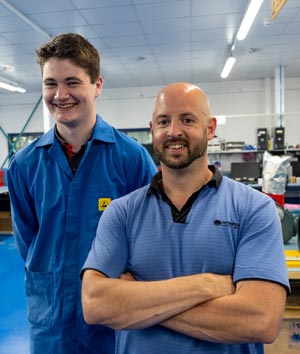
Tom and Steve
Most recently, we’ve pledged £20,000 to Newcastle University to help set up the Newcastle University Sonardyne Robotics and Autonomous Systems Student Laboratory. This will support student activities, from the school of engineering and beyond, on the design of underwater vehicles. We’ve also been supporting a three-year programme of Masterclasses in Engineering, Mathematics and Computer Science at the Royal Institution for children around the South East of England.
WorldSkills is a biennial event, dubbed the ‘Skills Olympics’. This year’s event is due to be held on August 22-27. Tom will join young professionals from more than 60 countries across the world competing in 56 disciplines, from sectors including engineering, hospitality, construction, IT and more.
The event will be broadcast live on TV and streamed around the world and we’ll be watching to see if Team UK can beat the 10th place that it achieved at the last WorldSkills finals in Abu Dhabi in 2017. We’ll also of course be rooting for Tom!
Australian headquartered subsea services specialist Neptune has become the latest company to adopt Sonardyne International Ltd.’s new, all-in-one acoustic and inertial positioning technology platform to support its offshore survey projects.
The order, made through Sonardyne’s Singapore subsidiary, includes the supply of Fusion 2 software, Compatt 6 seabed transponders and ROVNav 6 LBL (Long BaseLine) vehicle-mounted transceivers. The Compatt 6s and ROVNav 6s will be Sonardyne’s latest ‘plus’ hardware platform (6+), engineered to unlock the full capabilities of Fusion 2.
Built from the ground up, with ease of use and operational efficiency in mind, Fusion 2 software offers a seamless environment in which surveyors can perform all of their LBL, SPRINT INS (inertial navigation system) and sparse (INS-aided) LBL operations. When used alongside 6+ hardware, Fusion 2 offers the ability to simplify complex projects – all with less subsea and topside hardware.
As part of the deal, Neptune is trading-in its inventory of Compatt 5 seabed transponders which, after many years of reliable service, now date back to two generations of Sonardyne LBL subsea hardware. Their 6+ replacements are scheduled to go straight to work supporting Neptune’s upcoming rig positioning and field support campaigns in Asia and Australia.
[blockquote author=”Fournier, General Manager, Neptune”]“Sonardyne came to see us in Perth late last year, as part of their Fusion 2 and 6+ launch tour. The in-water demos they ran were impressive to say the least – particularly the display of combined data telemetry and range updates and real-time INS-aided LBL SLAM (simultaneous localisation and mapping) calibration. This new Sonardyne equipment will continue to allow Neptune to remain at the forefront of technology and demonstrates Neptune’s commitment to supply its clients with the latest subsea technology solutions.” [/blockquote]
Graeme Buchanan, Sales Manager with Sonardyne Asia Pte. in Singapore says, “Markets often need time to understand the reasons behind the introduction a generational change in a technology platform. But in the case of Fusion 2 and 6+, our customers have been very quick to appreciate how the all-in-one approach we’ve taken will transform and simplify their operations.
“Neptune is a long-standing customer of ours and we’re confident they will see the benefits of this purchase from the moment they start using it.”
Author: Graham Brown, Deputy Managing Director, Sonardyne
The recent surge of successful attacks on vessels transiting the Strait of Hormuz and the Gulf of Oman once again highlights the relative ease with which vessels at sea can be targeted.
As political tensions in the region continue to escalate, owners and operators of oil and LNG tankers are urgently rethinking how best to keep their crews and fleets safe and energy supplies flowing.
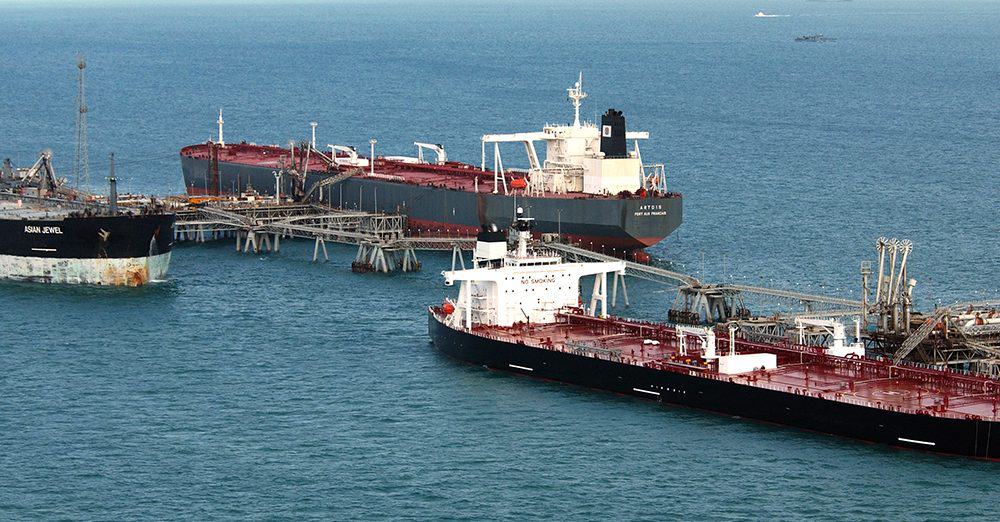
Measures such as radar and long range thermal cameras are effective at closing security gaps above the water – but what about under the water? What’s available to help security personnel spot submerged threats from reaching their target?
The answer is intruder detection sonars (IDS). In simple terms, these systems monitor the water column around a ship to alert an operator to the presence of an unauthorised target – be it a scuba diver or underwater drone. Once considered the preserve of the military, intruder detection sonars can now be viewed as commercially available, off-the-shelf security technology.
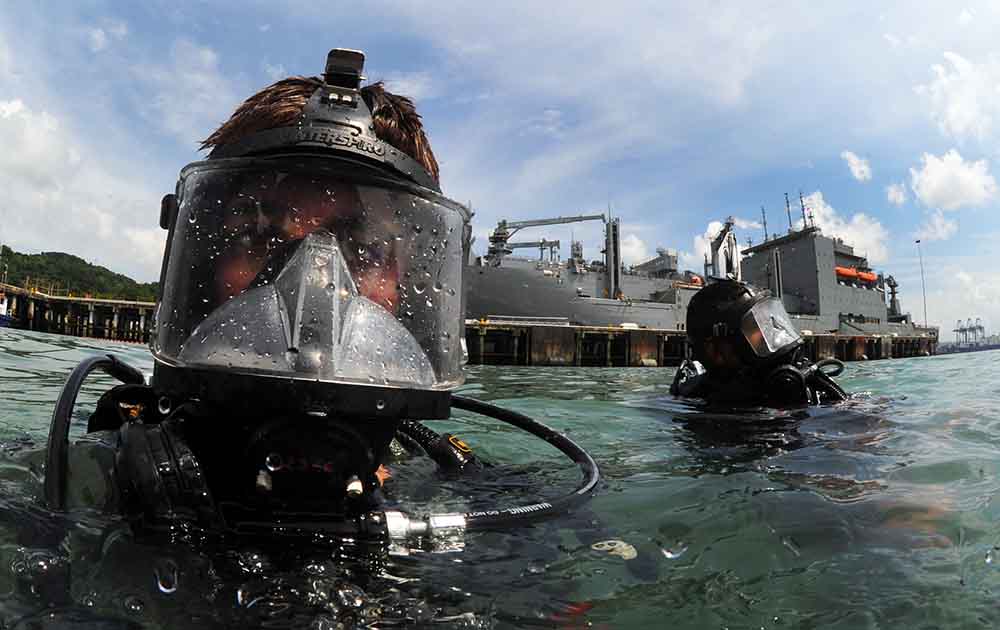
Many large commercial ports and harbours now have IDS systems deployed at key entrance points to protect visiting ships. However, why not consider fitting systems like our own Sentinel IDS to the vessel itself so that it remains protected wherever it goes? On tankers in service, how practical is that? Well, easier and quicker than you may think, as one of our original design aims for Sentinel was to protect ships.
Retrofitting an intruder detection sonar into an oil and gas tanker
There are several ways to deploy a Sentinel system from a tanker and each has its own merits. First, a quick and temporary solution to protect the vessel when it is at anchor, offshore, would be to overboard the sonar using a simple davit and free suspend the sonar by its cable several metres under the vessel.
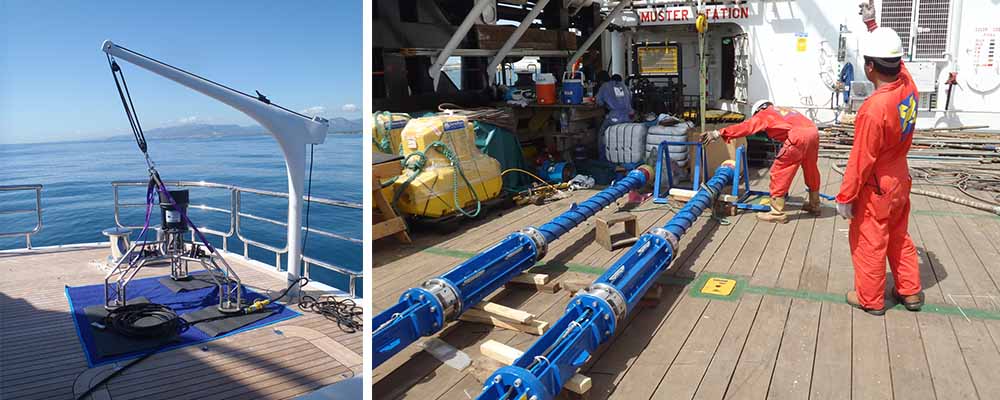
Second, a more permanent and optimal solution is to attach a vertical rail or through-tube support to the side of the vessel. These deployment systems would need to be fitted when the vessel is docked in port and would need welding to the ship’s hull. On a large, tall tanker, this will involve welding several sections together to the side of the vessel to guide the sonar from deck level down into the water below the hull, again several metres below the sea surface, to provide 360-degree coverage.
With any of these deployment arrangements, at any time the vessel is stationary, the sonar can be deployed and switched on in minutes to monitor for divers, swimmer delivery vehicles or unmanned systems that might be nearby.
The reliable detection of underwater intruders – and discrimination from marine fauna – is a notoriously difficult problem. But, our Sentinel system can detect threats hundreds of metres away – and even tells you what the threat is. In the real world, performance like this buys you time; time to consider the most effective response to the emerging threat. This could be requesting support from nearby naval forces, deploying your own security team to intercept the threat, or getting the vessel underway and simply moving away from danger.
Fitting an intruder detection sonar into a new vessel
Of course, the best approach is to consider your vessel’s security at the start of the design process rather than when it’s already entered service – devoting as much consideration as you would to say the choice of engines or bridge layout.
When fitting an IDS into a new vessel, the most discrete method – and the one that will deliver best performance – is to install it on a hydraulic pole that’s lowered and raised through the hull at the touch of a button.
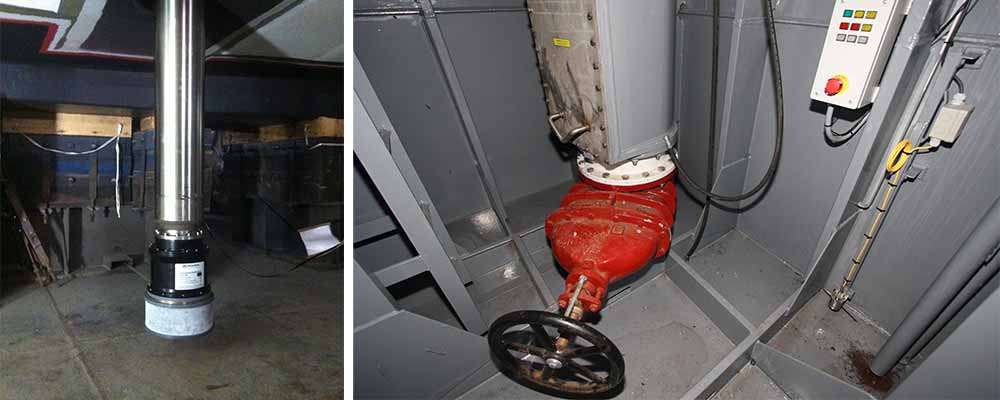
These are usually sited well away from sources of noise interference, such as azimuth thrusters and depth sounders – all of which have the potential to limit a sonar’s ability to detect threats at the maximum achievable range. We’ve a lot of experience installing acoustic and sonar instrument deployment machines on hundreds of vessels over more than forty years, with designs available that can be adapted to meet the requirements of installation through double hulls and in hazardous, eg. ATEX certified, areas.
How many sonars are required?
Smaller oil and gas tankers can be protected with a single sonar, ideally deployed as close to the centre of the vessel as possible. For larger vessels, for example the Suez-Max-class, a sonar close to the bow and another close to the stern would create an overlap to improve classification and tracking.
I mentioned at the start above-water security sensors such as CCTV and radar. Sentinel’s designed to work standalone, or in sync with these technologies. We regularly work with leading providers of maritime security systems including MarineGuard and MARSS to integrate Sentinel with bridge-based security systems for use on large private yachts, naval patrol vessels, cruise ships and commercial vessels.
The process begins with a phone call or an email to us. It is possible to do a lot of the planning based on a simple desk study, if PDF copies of general arrangement drawings of the vessel can be provided. This can allow a quick understanding of what is possible and the costs. Alternatively, a visit to your vessel would allow us to better understand your operational requirements and recommend the most economical option to close the gap in your tanker’s security. Get in touch today to learn more.
Underwater intruder detection technology from maritime security specialist Sonardyne International Ltd. has been chosen to secure the coastal perimeter of a critical national energy infrastructure (CNI) facility in Eastern Europe.
The Sentinel Intruder Detection Sonar (IDS) will be deployed to detect unauthorised divers and subsurface vehicles approaching the facility from the water. The installation, at an undisclosed location, is the first phase of a site-wide project led by MARSS Group to enhance security at the facility with their NiDAR long-range air, land and underwater situational awareness system.
Sentinel is the most widely deployed commercial off-the-shelf (COTS) underwater intruder detection sonar technology on the market, with a proven ability to discriminate between genuine targets and non-threats, such as large fish or pleasure craft in a wide range of operational environments.
Suitable for fixed, temporary and vessel installation, Sentinel detects, tracks and classifies underwater threats at up to 1.5 km range to provide a rapidly deployable perimeter intrusion capability to help safeguard commercial harbours, naval vessels, private yachts, and waterside residences, as well as critical national infrastructure.
Reliably detecting underwater intruders or vehicles in real-time at long range is essential to provide ample time for security personnel to react to waterborne incursions. Vital minutes can make the difference between successful threat interception and divers and vehicles being able to deliver their attack.
[blockquote author=” Rob Balloch, VP of Sales at MARSS”]”This is our latest project with the team at Sonardyne to incorporate Sentinel into one of our NiDAR surveillance installations. Designed specifically for ease of use by security personnel and to meet the practical requirements of everyday use, for our client, Sentinel was the only IDS that fully met their needs.”[/blockquote]
Ioseba Tena, Global Business Manager at Sonardyne said, “The recent attacks on oil tankers at sea, once again highlights the relative ease with which waterborne attacks can be carried out on strategic energy assets and facilities. With more than 150 installations worldwide, Sentinel’s track record speaks for itself and we’re confident that the level of protection the combined NiDAR-Sentinel solution will deliver the surveillance capability needed to safeguard this important facility.”
Industry leading mooring solutions supplier, SOFEC, Inc., has selected BMT and Sonardyne Inc., under their teaming agreement, to supply an innovative mooring monitoring system (MMS) for a major new deepwater development.
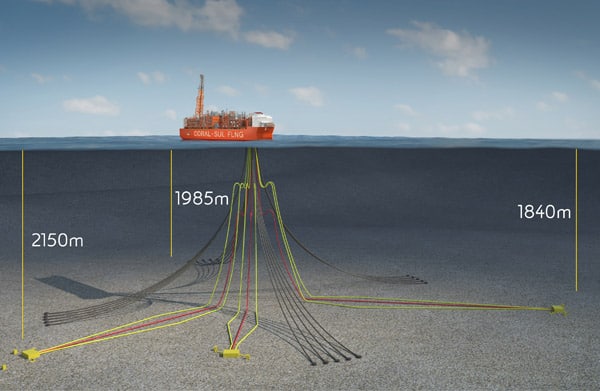
The new system will involve monitoring of the turret mooring system on a new-build floating liquefied natural gas (FLNG) facility being built in South Korea for ENI’s Coral South project offshore Mozambique. With water depths ranging from 1,500-2,300 metres, SOFEC, a MODEC Group company, wanted to integrate a robust and reliable MMS to complement their market leading turret mooring solution.
SOFEC chose to use BMT and Sonardyne’s combined engineering strength in order to acquire the most technically competent and robust MMS. Their selection was based on high data availability, ease of remote operated vehicle (ROV) installation, robustness of the subsea technology and the longevity between maintenance periods that the BMT / Sonardyne MMS offers, compared with other solutions in the market.
Above the waterline, BMT will supply the station-keeping turret monitoring system and local control panel with touchscreen interface. The control panel will also house Sonardyne’s topside equipment, to minimise the system’s footprint. Additionally, the system will allow SOFEC’s client to gain remote data access through BMT’s secure cloud-based portal, BMT DEEP.
Below the waterline, Sonardyne’s SMART (Subsea Monitoring, Analysis and Reporting Technology) will be used to constantly monitor mooring integrity on each of the 20 anchor legs. Daily summary reports and automatic fault detections will be wirelessly communicated to the surface from the SMARTs real-time.
Robert Barker, Offshore Commercial Manager at BMT, says, “We are proud to be supporting SOFEC with this work and the Coral MMS project represents a significant contract award. Our system will be providing valuable integrity data and important real-time monitoring of the mooring system to enhance operational safety.”
Stephen Auld, Global Business Manager, Subsea Asset Monitoring, Sonardyne, says, “Our SMARTs use fast burst and highly energy efficient acoustic telemetry, as well as ultra-low power electronics, reducing through-life costs for customers, and that was a real positive for SOFEC. For this project, we’ve also increased the time between battery replacement to in excess of six years, so it’s a long-life, easy to use system to ensure integrity data acquisition.”
We’re a long-term corporate patron of leading UK-based charity the Shark Trust, supporting its work globally to preserve the world’s shark populations. Ahead of World Oceans Day on Saturday, we invited the Shark Trust Managing Director Paul Cox to tell us – and you – about some of the issues the charity is addressing.
Author: Paul Cox, Managing Director, Shark Trust
 That plastic straw thing. It has a peculiar ability to both delight and dismay in equal measure. Coming from someone who spends their working life dedicated to marine conservation, how can a ban on plastic straws be anything but a good thing?
It’s great that a big sustainability issue has made it into the “mainstream” – using a plastic straw has gone from unremarkable to almost socially unacceptable in little over a year. But it feels to me a bit like misdirection. The future of our oceans doesn’t, sadly, hinge on banning plastic straws.
My hope is that the straw will become an icon, a symbol of the willingness to change. It’s not the conclusion of the story, but the beginning of a new chapter in how we deal with the ocean to which we owe so much.
An immediate threat
Alongside the plastic problem, there’s another, more immediate threat which isn’t getting the bandwidth that it deserves. And that’s overfishing. It’s not a complicated equation. We all know that if we spend more than we earn, things are going to go badly. You can get away with it for a while but ultimately, if you make a habit of it, then at some point you’ll get into trouble.
This problem is at the heart of overfishing. Think of the sea as a savings account. We inherited a lump sum which, as the fish reproduce, pays interest. Withdraw some or all of that interest and your nest egg is safe. Take more and your savings start to shrink. When your savings shrink so does your interest.
In amongst that inheritance are some priceless antiques of nature: Sharks. They’ve been in the oceans for more than 400 million years and include some of the most vital, valuable and vulnerable species in our seas.
At risk of extinction
Sharks are also particularly vulnerable to overfishing. They’re slow and thrifty at reproducing. They pay a low rate of “interest”, so they should be fished with caution. But they’re not. They’re being taken in high numbers and, for too many species, at a rate beyond their ability to replace themselves. The last comprehensive analysis by the International Union for Conservation of Nature (IUCN) Red List of Threatened Species estimated that over a quarter of the 1000+ species of sharks and rays that exist are at risk of extinction. This includes some of the most well-known and well-loved sharks.
If we’re to avoid bankruptcy, we need to act fast. The Shark Trust is the UK charity that works globally to safeguard the future of sharks and rays. Transforming fisheries to sustainability is a core goal and the we work with a range of international partners to achieve positive change.
Through various projects and campaigns the we’ve been a leader for more than 20 years in taking a sensible line on shark conservation and always placing science at the heart of decision-making. Our work cuts across governments, policymakers, industry and businesses. We find constructive solutions and drive best practice wherever sharks and people meet.
Targeting uncontrolled shark fisheries

Our No Limits? campaign targets an end to uncontrolled shark fisheries – in Europe and on the high seas. We’re determined that shark fisheries should implement science-based catch limits to prevent continued overfishing.
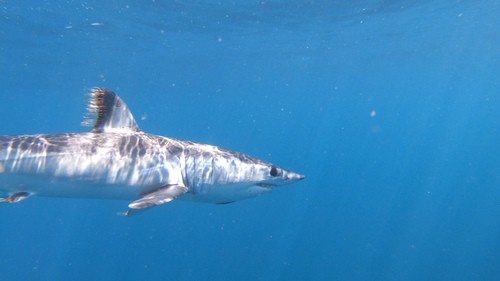
The plight of the Shortfin Mako – the world’s fastest shark – demonstrates the importance of this effort. This stunning shark, recently re-assessed as Endangered by the IUCN, has been heavily overfished in the Atlantic. In 2017, scientists estimated that, even if catches were cut to zero, North Atlantic Shortfin Makos would only have a 54% chance of recovery by 2040. Despite this dire prediction and the clear need for a prohibition, the species continues to be fished. Despite a red letter from the bank, the spending continues.
It’s not either/or. Overfishing, climate change, plastics and other issues work hand in hand. If populations are stressed by continued overfishing then they lack the resilience that they might otherwise have to deal with a changing environment. There is no single solution to safeguarding the world’s oceans, but tackling overfishing is an urgent priority.
We are making progress, but we need to keep pushing. We’re committed to bringing as many people to the party as possible. We’re grateful for Sonardyne’s ongoing support, reflecting their vision and positive attitude towards sustainable use of our oceans. Everyone can get involved and everyone can be a positive influence on the future of sharks.
Find out more about sharks and how you can get involved www.sharktrust.org/getinvolved
Images:
Shortfin Mako shark, copyright Nicolas Authier (CC BY-NC), https://www.inaturalist.org/photos/35510241
Shortfin Mako shark, copyright Alison Kock (CC BY-NC), https://www.inaturalist.org/photos/37399944
Leading seismic monitoring instrumentation and solutions provider Güralp Systems Ltd. and Sonardyne International Ltd. have signed an agreement to cooperate in the provision of cutting edge multidisciplinary ocean bottom research technology, including capabilities for earthquake or tsunami detection.
The official Teaming Agreement between Güralp and Sonardyne, announced at the European Association of Geoscientists and Engineers (EAGE) conference in London today (June 4), will enable the two companies to collaboratively provide more advanced and efficient technology for in-situ seismic and seabed monitoring.
Güralp has more than 30 years’ experience in the design and manufacture of broadband seismometers and accelerometers, while Sonardyne’s experiences stretches to more than 40 years of experience in long-endurance data collection and through-water telemetry. As a consequence, clients globally will benefit from a combined offering of technology for seismic data gathering, seabed deformation monitoring and tsunami detection, as well integrated acoustic positioning and telemetry for remote data access.
At the heart of the cooperation is Güralp’s revolutionary new Aquarius Ocean Bottom Seismometer (OBS). Comprising of a digital feedback tri-axial broadband seismometer, three-axis magnetometer, a micro-electric mechanical system (MEMS) accelerometer and absolute pressure gauge, Aquarius is also equipped with Sonardyne’s 6G Wideband low-mid frequency (LMF) acoustics.
The low profile and compact design of the Aquarius minimises flow noise, but also makes it the most compact telemetry-enabled OBS available in the market. Available in two variants, the Aquarius is capable of 12 or 18 month deployments depending on the system options selected. These options include instrument configuration, transmission of state of health and triggered event or snippet data transmission at up to 9,000 bps.
6G-inside capability also means that Aquarius is compatible with a range of other Sonardyne technologies, including Ranger 2 Ultra-Short BaseLine (USBL) positioning and telemetry, as well as its unmanned surface vehicle (USV) GPS-Acoustic payload box and Tsunami Detection System.
Both companies have global reputations for provision of class-leading technology to academic, public, governmental and private organisations for understanding and exploring our world. As a consequence Güralp and Sonardyne are confident that closer cooperation will lead to a further step-change in the solutions available to customers.
Geraint West, Global Business Manager, Ocean Sciences, Sonardyne, says, “We really welcome closer cooperation with Güralp. Our overlapping markets and complementary technologies mean that we have the potential to transform what we can individually offer to our customers.”
[blockquote author=” Neil Watkiss, Commercial Director, Güralp”]”The Sonardyne technology that we are utilising in the Aquarius is allowing us to re-define what is possible with broadband OBS. This agreement offers potential for further exciting product advancements on both sides and we look forward to further exploring the possibilities with the Sonardyne team.”[/blockquote]
You can find Sonardyne on stand 855 during EAGE (June 3-6).
Integrated navigation, positioning and communications technology from Sonardyne Inc. will support a new, fuel cell-powered long-range unmanned underwater vehicle (UUV) being designed by subsea specialist Cellula Robotics Ltd. for the Canadian defence department.
The UUV, called Solus-LR, is being designed to be able to travel up to 2,000 kilometres and stay submerged on multi-month missions, supported by an onboard fuel cell power pack. To help meet these demanding long-duration and long-distance navigational requirements, Cellula Robotics has ordered one of Sonardyne’s high-performance SPRINT-Nav subsea navigation instruments for the Solus-LR.
SPRINT-Nav, which combines a SPRINT INS, Syrinx 600 kHz DVL and a high accuracy intelligent pressure sensor in a single housing, is one of the smallest and the highest performing combined inertial navigation instruments on the market.
For tracking the vehicle from the surface, receiving data packets from it and sending mission commands to it, Cellula Robotics has also ordered a Micro-Ranger 2 Ultra-Short BaseLine (USBL) system with optional Marine Robotics software feature pack, and an AvTrak 6 combined transponder and telemetry transceiver, which will be integrated into the UUV. Micro-Ranger 2 is Sonardyne’s most compact underwater target tracking system, built around the company’s 6G hardware and Wideband 2 digital acoustic technology platform which delivers consistently in any operational scenario.
Sea trials of the Solus-LR, which are expected to start in late 2019, running through to early 2020, will also be supported by the use of Sonardyne’s Compatt 6 seabed transponders and the company’s BlueComm 200 underwater optical communication instruments. BlueComm 200s are able to transmit high-bandwidth data, including video, at up to 150 metres. The trials will be held in the Indian Arm fjord, near Vancouver, British Columbia, close to Cellula’s Robotics’ headquarters.
Solus-LR is being built for the Canadian Department of National Defence’s (DND) science and technology organization, Defence Research and Development Canada (DRDC), under the All Domain Situational Awareness (ADSA) Science & Technology (S&T) Program. The ADSA S&T program is supporting projects which could help to enhance domain awareness of air, maritime surface and sub-surface approaches to Canada, in particular those in the Arctic.
[blockquote author=” Eric Jackson, President of Cellula”]”This S&T program will showcase Cellula’s advanced UUV research and development, combining traditional technologies with innovative power and anchoring solutions. With Solus-LR able to travel for thousands of kilometers, port to port missions will become a feasible lower-cost alternative to vessel-based operations.”[/blockquote]