Marine Riser Angle Monitoring System
How it works
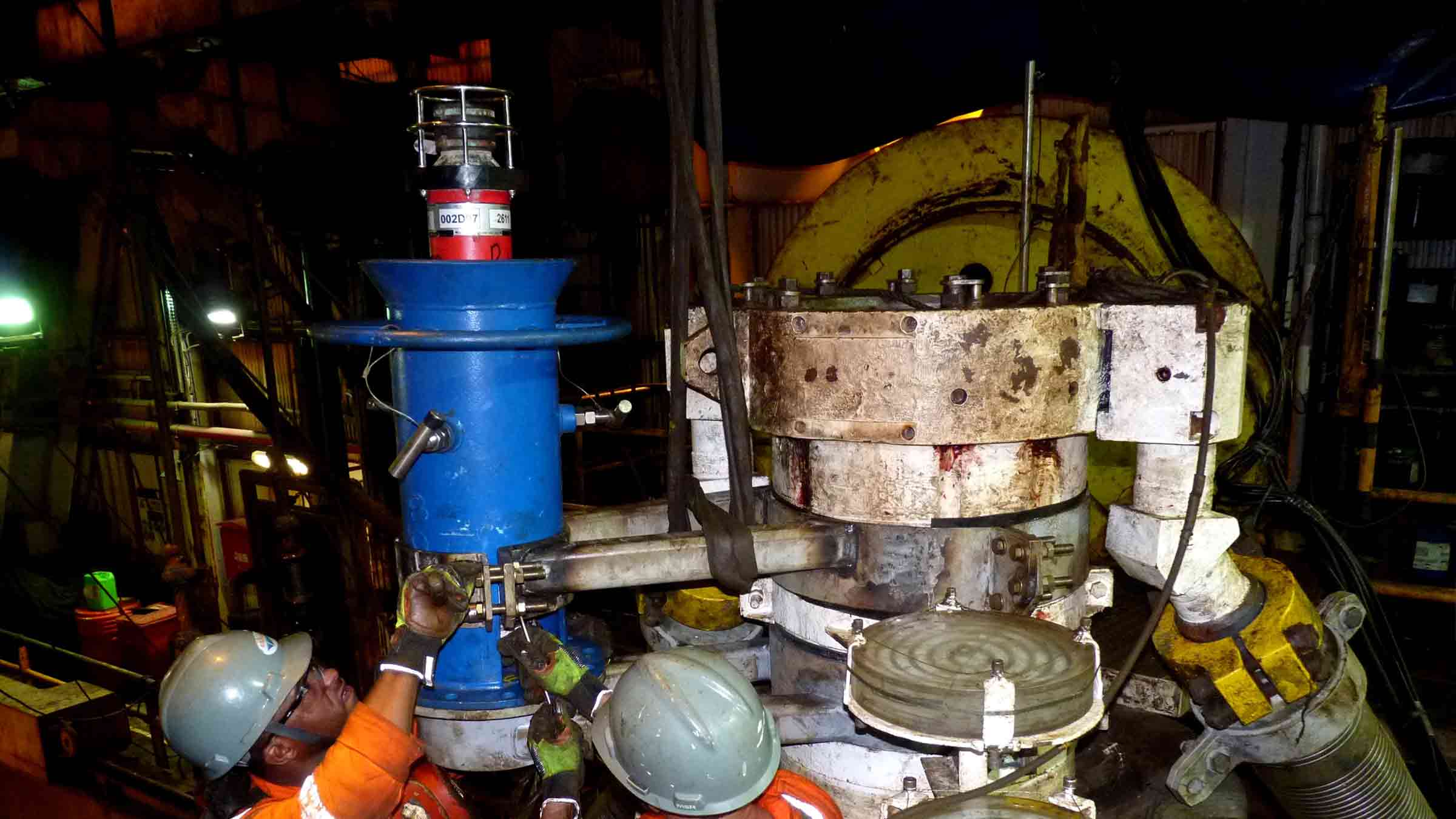
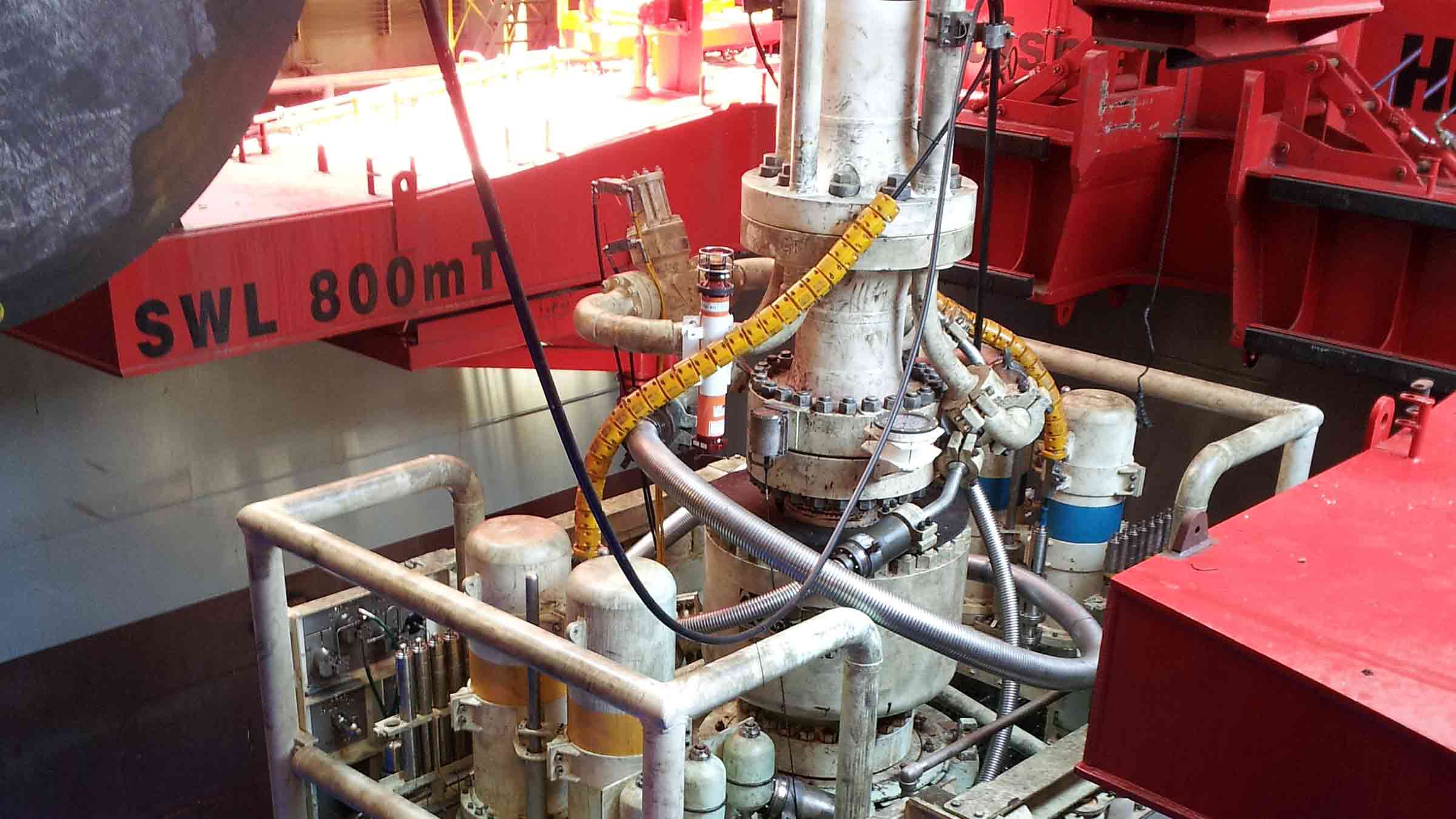
MRAMS comprises of four key elements; a Navigation Sensor Hub (NSH) and computer for controlling the transmission and decoding of acoustic signals, a vessel-based HPT 5000 or HPT 7000 transceiver which acts as an interrogator/receiver and responds to commands from the NSH, and a pair of DPTi 6 transponders; one fitted to the riser and one to the BOP.
On command from the NSH, one of three angles can be measured: the riser, the BOP or differential riser/BOP angle. During drilling operations, the riser and BOP angles are continuously measured by each DPTi 6 and the differential riser/BOP angle calculated. The angles are transmitted to the vessel using high speed digital acoustic telemetry, where they are received by the HPT transceiver, decoded, and then displayed on the bridge or drill floor. The vessel’s position and bearing relative to the BOP is also calculated and the information displayed to your DP operator or barge engineer. This data enables them to steer the rig and return the riser flex joint back to vertical.
In addition to its stand-alone capability in accurately monitoring the riser and BOP differential angle during drilling operations, MRAMS integrates seamlessly with our dynamic positioning (DP) reference system, Marksman LUSBL, to provide reliable and accurate vessel positioning for mobile drilling units.