


The AZA (Ambient-Zero-Ambient) mechanism inside a Fetch AZA instrument is an intelligent device that appears as a single sensor within the Fetch. Although appearing as a simple single sensor, the AZA mechanism actually coordinates measurements from three separate pressure sensors, an electrically-operated pump and a pair of valves in order to calibrate the sensors, with a whole AZA cycle taking many minutes (dependent on water depth). So what are the pressure sensors involved?
The Sonardyne AZA mechanism is one closed reservoir, split into three chambers by valves, with each chamber housing a pressure sensor:
1. The high pressure chamber is fitted with an ambient, high pressure sensor, which is typically a Keller or Presens sensor.
2. The intermediate chamber is fitted with the primary sensor, also known as the transfer or intermediate sensor. This sensor is always a Paroscientific Digiquartz sensor. The intermediate chamber is also fitted with an electrically-operated pump that is used to control the pressure in the chamber.
3. The low pressure chamber has a low pressure reference sensor also known as the zero pressure sensor, which is typically a Terps sensor.
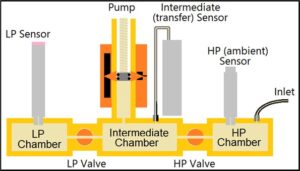
The measurements from these pressure sensors throughout an AZA cycle ensure the determination and correction of pressure sensor drift.
Want how to learn how these pressure sensors operate together in the Fetch AZA mechanism? Check out our video below and read our white paper.