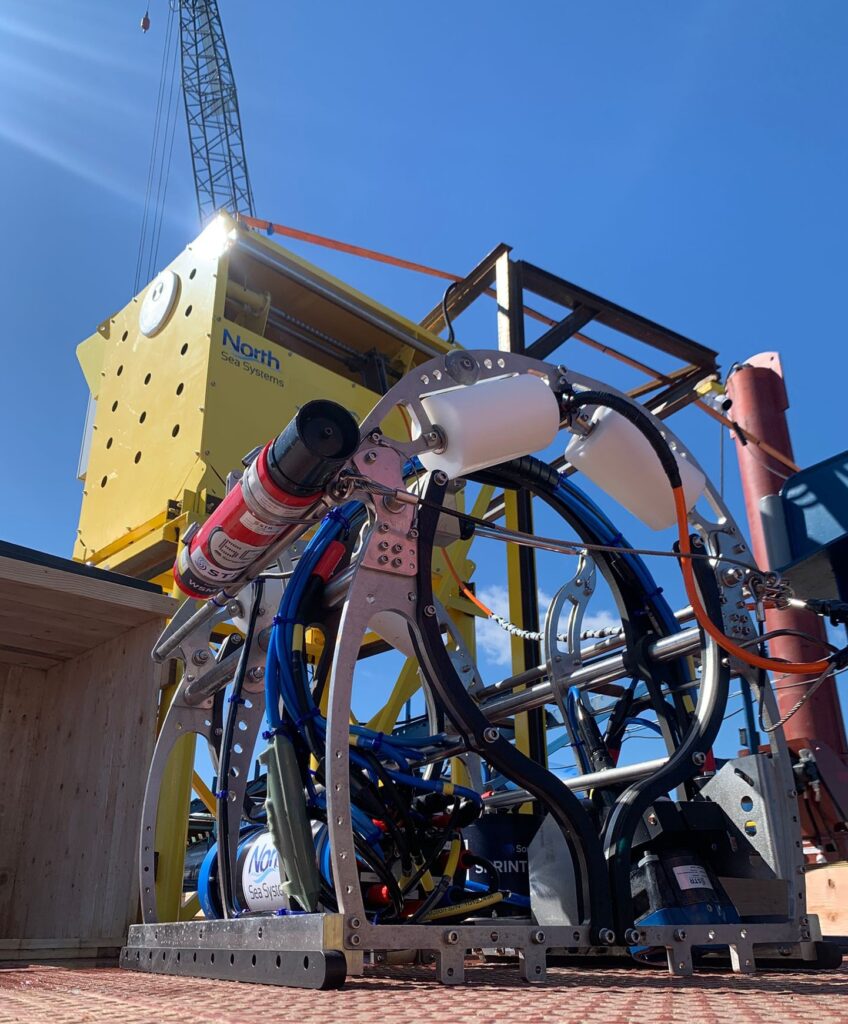
The growth of the offshore renewable energy (ORE) market has increased the need for subsea cable laying to link turbines and shore-based operations. Accuracy when laying cables is paramount to avoid obstacles such as boulders, to prevent damage to seabed ecosystems and to provide precise touchdown position data for future cable inspections.
UK-based company North Sea Systems provides innovative design solutions to support the marine renewables industry. They have 15 years’ experience in designing electro-mechanical systems for the marine environment and developing patented products to help bring down the cost of offshore construction work, including CableFish® a tool dedicated to touchdown monitoring of subsea cables.
During operations, it is crucial for North Sea Systems to accurately monitor the cable’s heading and touchdown position as it’s being laid onto the seabed. This can be challenging when using acoustic positioning in noisy shallow waters. Additionally, the ferrous material in the cables interferes with instruments that rely on magnetic sensors for heading, rendering them extremely unreliable and often ineffective.
In comparison to an ROV, CableFish® has proven to be a more cost-effective and higher-performance solution for touchdown monitoring. However, in order to improve their product further, North Sea Systems sought a solution that would increase the accuracy of their touchdown position calculation.
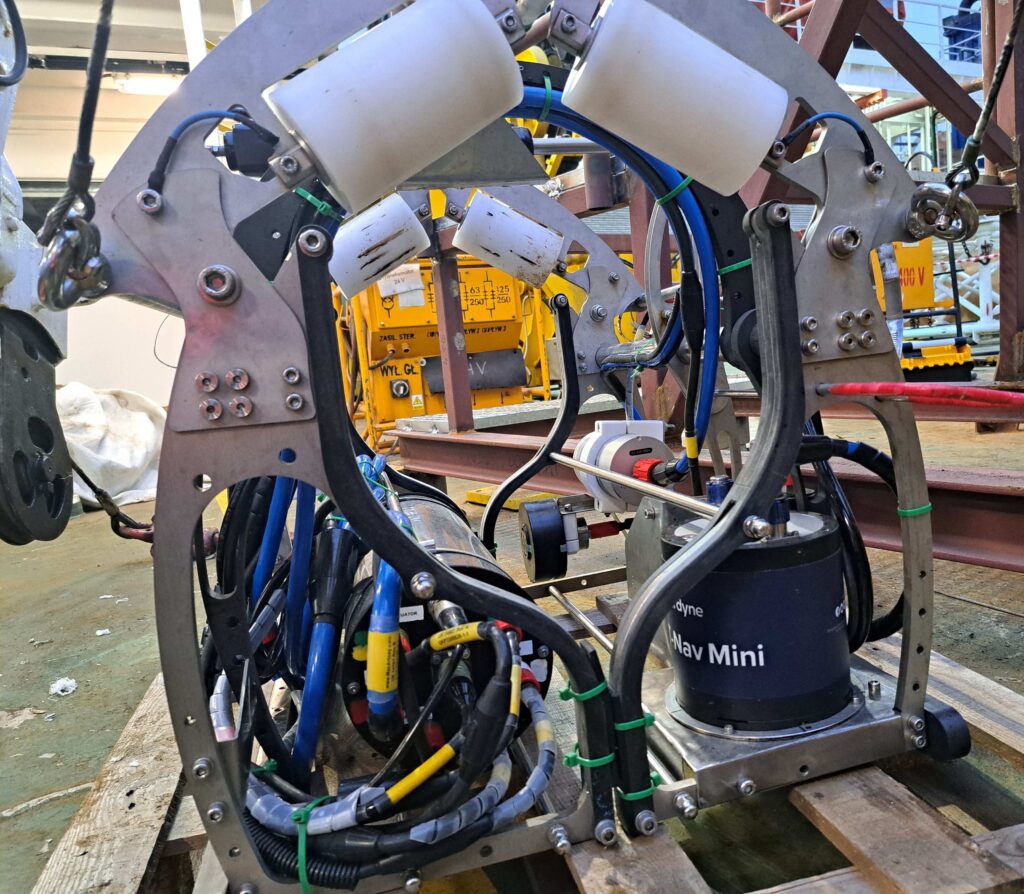
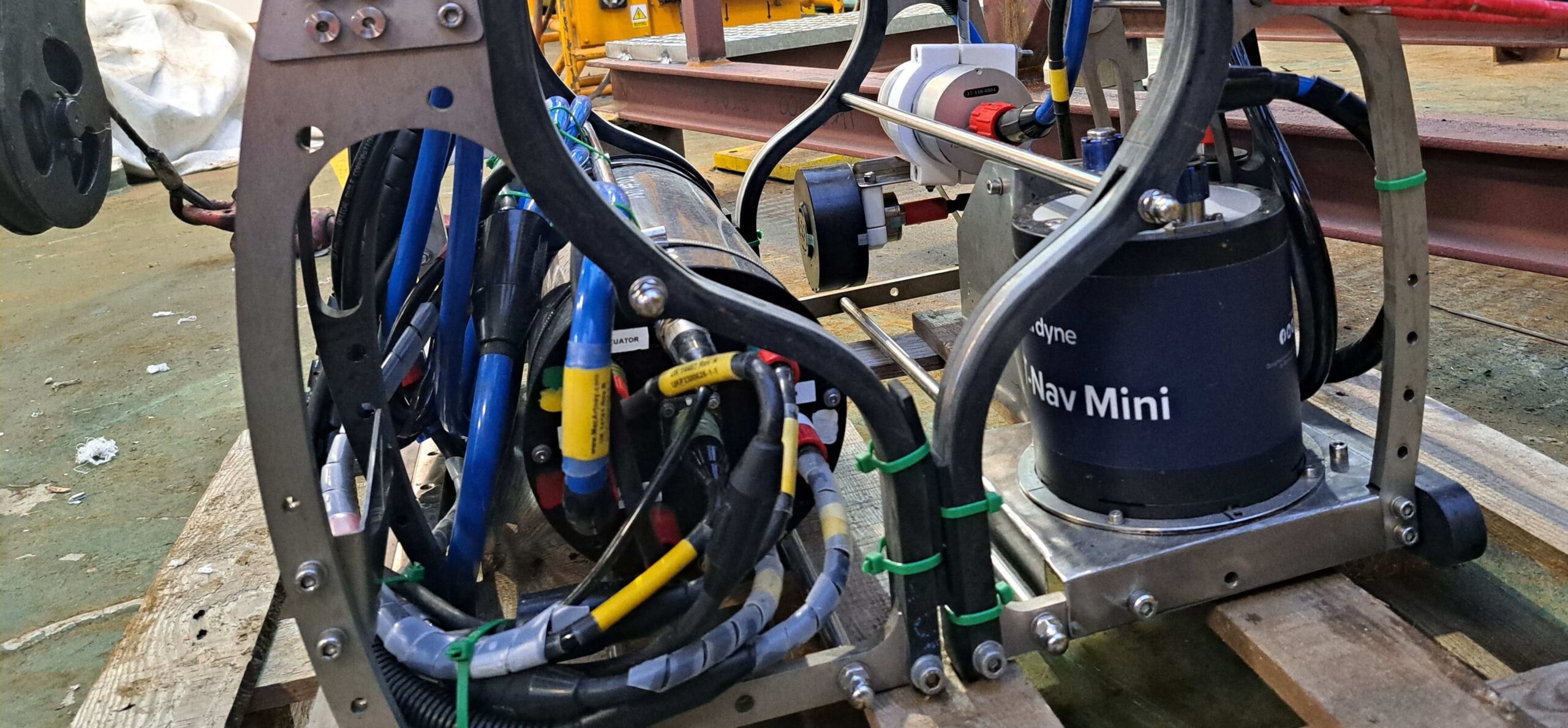
A CableFish fitted with a SPRINT-Nav Mini