

Sonardyne
Support Centre

Pioneering new era in deepwater seismic monitoring: OD OBN 

Shell Brasil, Petrobras, Sonardyne, and SENAI CIMATEC are pioneering autonomous technology that transforms how Brazil's challenging pre-salt fields are monitored. Now entering a major pilot array phase, the ground breaking On-Demand Ocean Bottom Node programme promises more efficient, cost-effective 4D seismic surveillance—with fewer people and lower environmental impact. This critical milestone brings us a step closer to a fundamental shift in deepwater reservoir management.

The challenge

Brazil’s pre-salt reservoirs lie in more than 2,000 m water depth, plus another 3,000 m beneath the seabed, making seismic imaging particularly challenging.

Traditional seismic surveys using ocean bottom nodes (OBNs) provide high-quality seismic data, but are often expensive and logistically complex, involving the repeated deployment and recovery of nodes using remotely operated vehicles (ROVs).

These factors can limit the frequency and economic viability of frequent 4D seismic campaigns, which are essential for understanding reservoir dynamics over time.

This is particularly challenging for monitoring large pre-salt carbonate fields where production by alternating water and gas injection (WAG) generates subtle and complex 4D signals that are difficult to measure.

These signals require on-demand monitoring with sufficient fidelity and repeatability to overcome the high levels of survey noise prevalent in conventional node-based surveys.

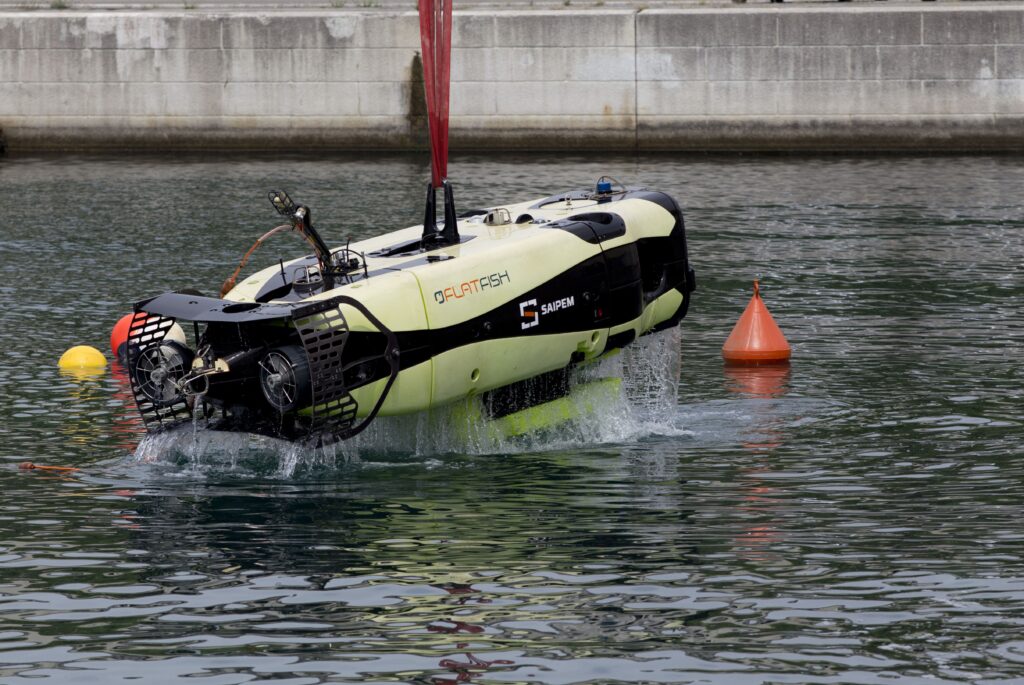
Saipem's FlatFish

The solution

Launched in 2018, the OD OBN programme is a research and development collaboration between partners Shell, Petrobras, SENAI CIMATEC and Sonardyne, supported under the Research Development and Innovation funding clause of the Brazilian National Agency for Petroleum, Natural Gas and Biofuels (ANP).The On-Demand Ocean Bottom Node (OD OBN) programme marks a pivotal step in addressing these challenges, providing a disruptive approach to time-lapse seismic data acquisition.

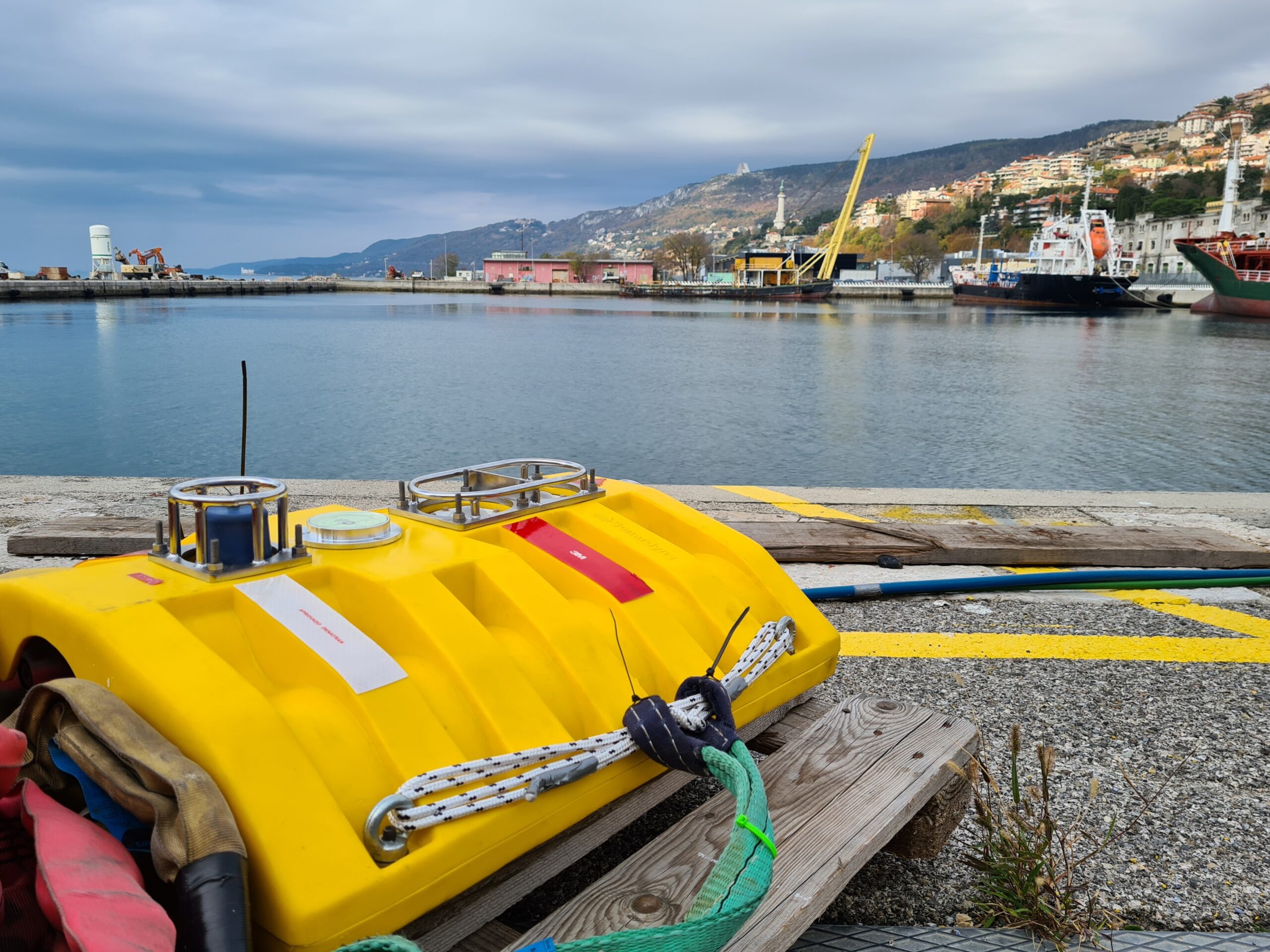
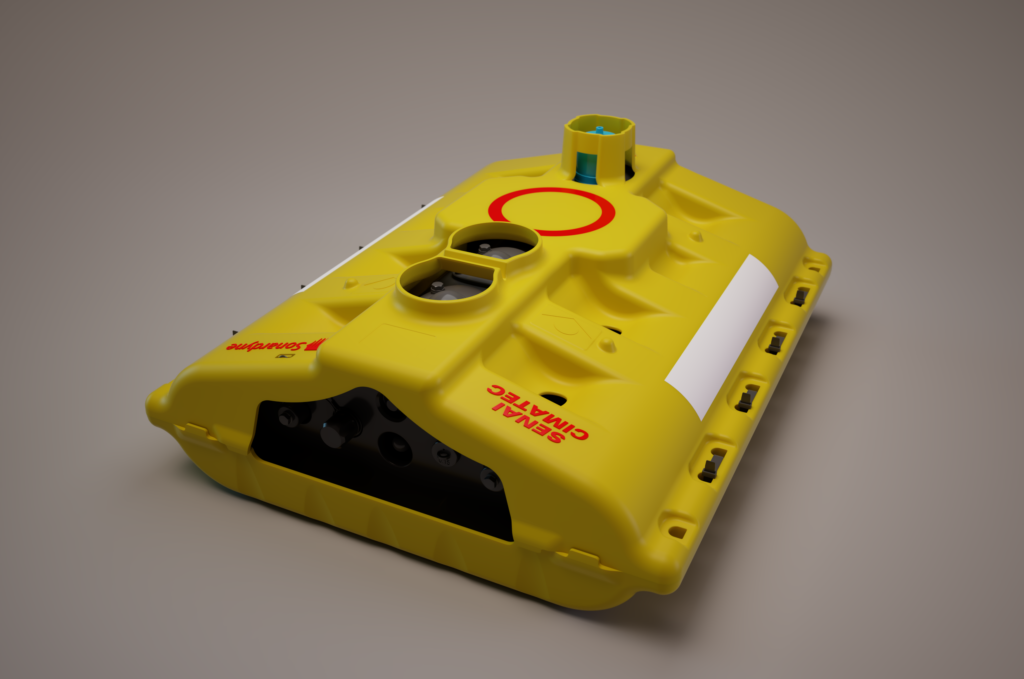
It is a pioneering new [system for] acquiring 4D seismic data, which delivers more efficient and cost-effective surveillance of complex pre-salt fields. At its core is a long-term OBN system that can remain on the seabed for several years, capturing seismic data that can be recorded and harvested “on-demand” using autonomous underwater vehicles (AUVs), without the need for repeated deployment and retrieval cycles.

Vast quantities of seismic data are harvested wirelessly using an AUV such as Saipem’s ‘Flatfish’, that implements the through-water optical interface to interrogate the OD OBNs, as developed under a separate ANP programme sponsored by Shell.

This AUV data harvesting approach eliminates the need for node recovery, dramatically reducing vessel time, operational complexity and associated costs.

Key Sonardyne technologies include wireless acoustic communications, required for long range recording control and node clock time offset measurement, and Sonardyne’s BlueComm extremely high-speed optical communications for short range data harvesting to a nearby AUV or remotely operated vehicle (ROV).
The results

Over 2,000 days of trials of pre-production nodes have been conducted across various pre-salt fields including Sapinhoá, Itapu and Buzios. These have successfully demonstrated acoustic control, high-fidelity data acquisition and optical data harvesting using BlueComm, as well as comparing OD OBN data with that of other commercial nodes.

The final round of tests concluded successfully in 2025, with results presented at the IMAGE ‘25 conference in Houston and SBGf Rio’25 conference in Rio de Janeiro.

Next steps

A pilot array of 660 pre-production nodes is currently being produced at a brand-new manufacturing facility in Camaçari, near Salvador, Brazil. Hundreds of these nodes will soon be deployed at the Mero field operated by Petrobras for extended testing and performance evaluation.

The long-term vision is to use autonomy and state of the art communications technologies to enable operators to conduct more frequent ‘on demand’ seismic surveys, with higher fidelity data, at a fraction of the cost of conventional seismic survey methods.

This capability will provide clearer insights into fluid movements and pressure changes within the reservoir, helping to optimise production strategies, improve decision making and enhance recovery rates in one of the world’s most challenging offshore provinces.

OD OBN is not just an incremental improvement, but a fundamental shift in how the industry approaches deepwater reservoir management.

Your challenges. Our solutions

Learn how our custom engineering team can support your project, no matter how big or small, from the shallows to the deep.