Sonardyne
Support Centre

It’s DP, but not as you know it: DP and ROV-follow credentials for work class boats

Traditional pipelay and pipeline inspection operations involve the use of dedicated, often large, crewed DP-class vessels. But does a requirement for DP-level control and ROV-follow capability need to be met with a DP class vessel?

Australian vessel operator Tenggara Explorer wanted to find out. Together, Greenroom Robotics, Unique Group and Sonardyne, took on their challenge. The result is a fast, economical upgrade to DP and ROV-follow capability for non-DP-class workboats, making a wider range of vessels available for work. The next step? Hybrid autonomy.

The Challenge

Many offshore and nearshore operations, from inspection to hydrographic surveys, require precise station-keeping.

Pipeline inspection is particularly demanding: vessels must follow a remotely operated vehicle (ROV) or autonomous underwater vehicle (AUV) as it tracks pipeline systems with centimetre-level accuracy.

This requires integrating an underwater positioning system—such as Ultra-Short BaseLine (USBL)—with a dynamic positioning (DP) system to enable accurate, controlled ROV-follow capability.

Until now, this has typically meant using a fully DP-classed vessel. The alternative—relying on skilled crew to make constant thruster corrections—is prone to human error under sustained operational demands.

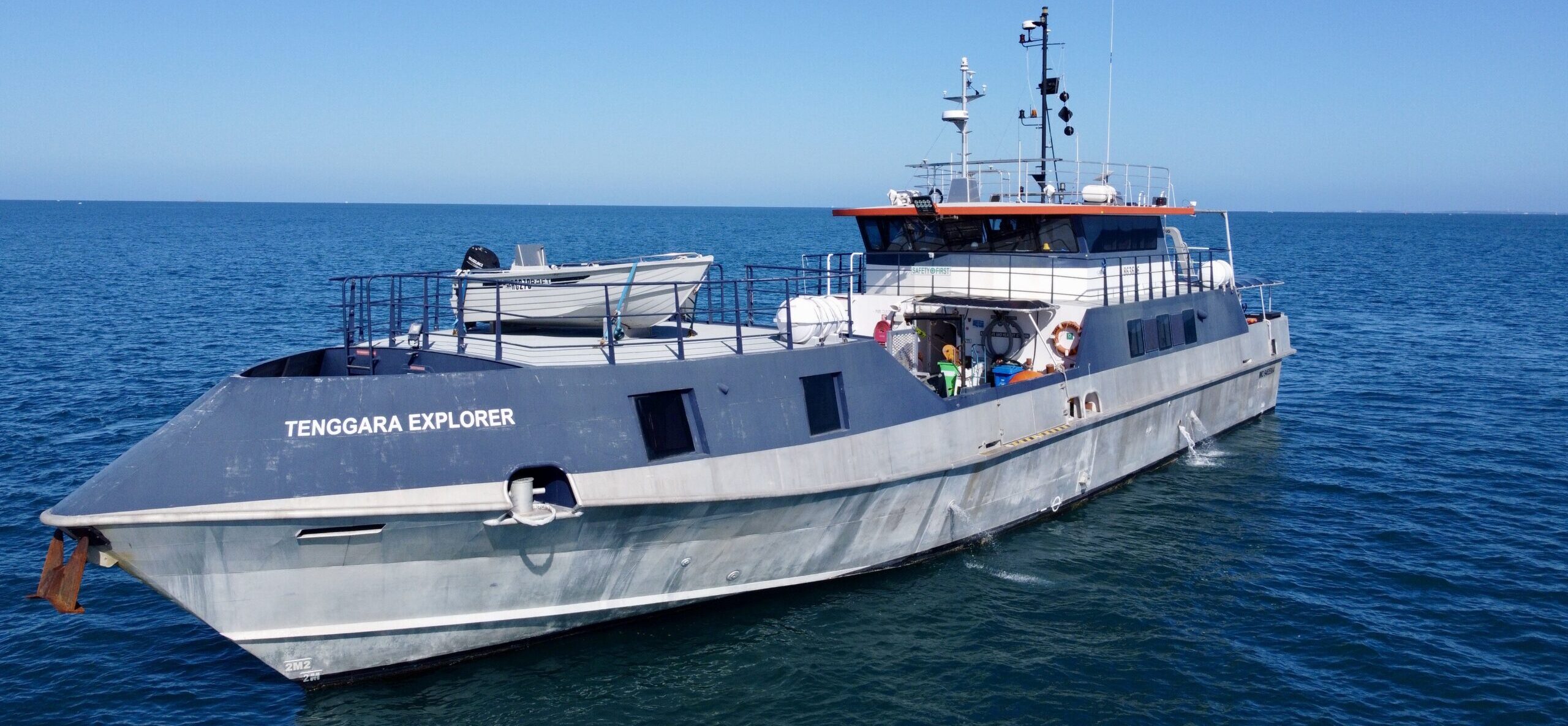
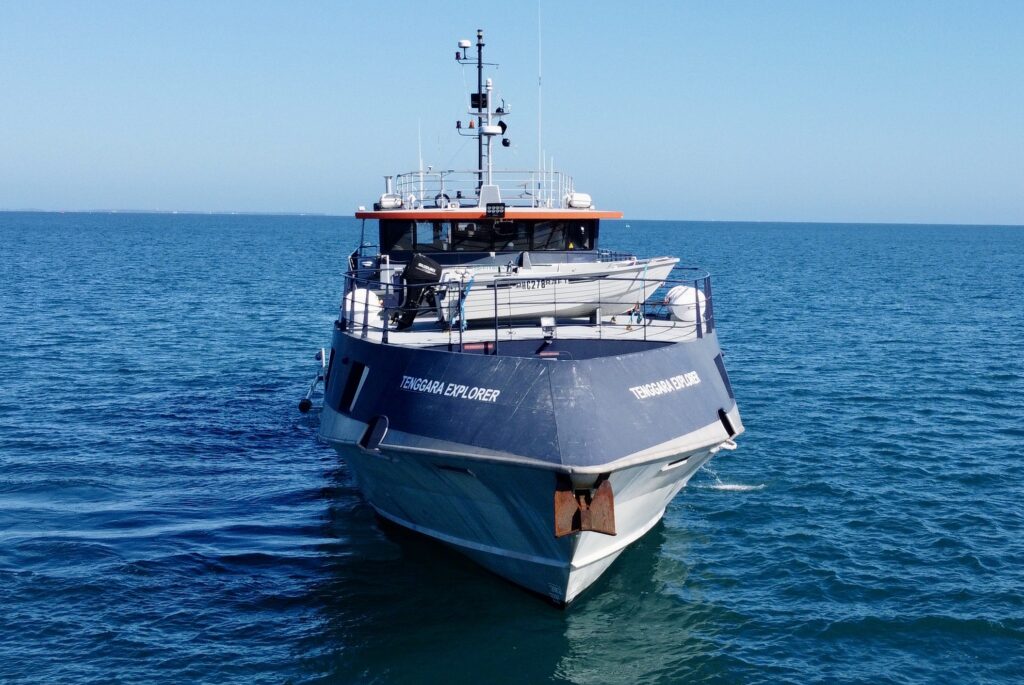
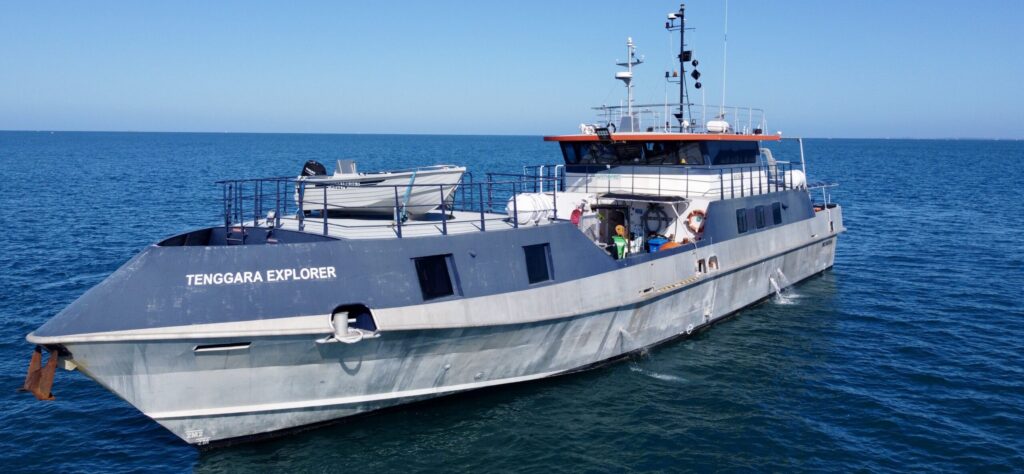
The MV Tenggara Explorer.

The MV Tenggara Explorer.

Australian vessel operator Tenggara Explorer wanted to see if there was another way. Could DP-level control for ROV-follow capability be achieved on a non-DP class workboat?

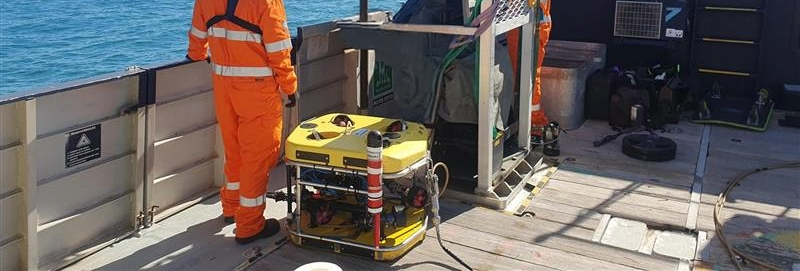
Together, maritime autonomy and AI specialist Greenroom Robotics, ourselves and Unique Group equipped the 34 m-long Tenggara Explorer multipurpose vessel with integrated DP-level control and USBL for ROV-follow capability for their client’s medium-size inspection-class ROVs (with the capability to attach the Sonardyne transponder to any unit).

The Solution

The core of the solution was the integration of two key systems, Greenroom Robotics’ autonomy software, GAMA and our Mini-Ranger 2 USBL system.


Greenroom Robotics’ GAMA

GAMA is advanced autonomy software that is hardware agnostic and can be retrofitted to existing vessels to enable remote, hybrid and autonomous control.

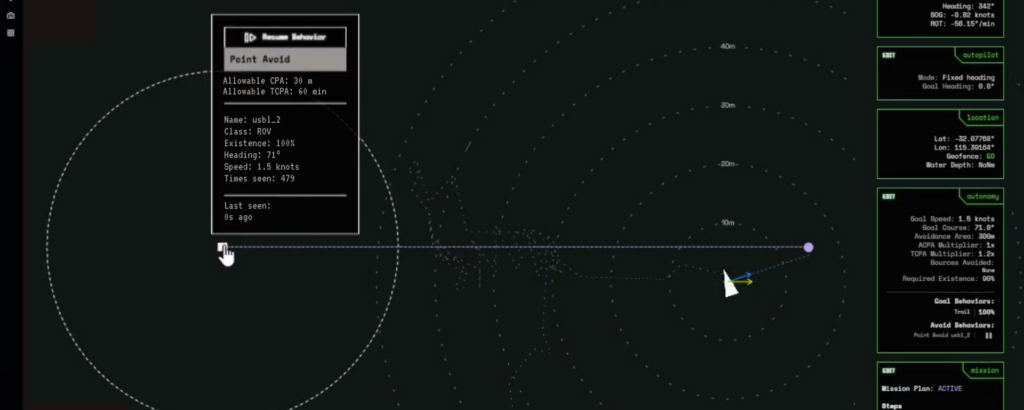
GAMA’s Dynamic Predictive Control (DP-C) independently controls thrusters, propellers and rudders using sensor feedback and control algorithms to counter wind, waves and current. This provides DP-level control to smaller more agile workboats, like Tenggara Explorer enabling precision positioning.

As a result, survey teams on smaller vessels can execute complex manoeuvres and survey patterns with high precision, at day rates around 80% less than a DP-class vessel, and with lower risk than manual precision control.
Mini-Ranger 2 USBL

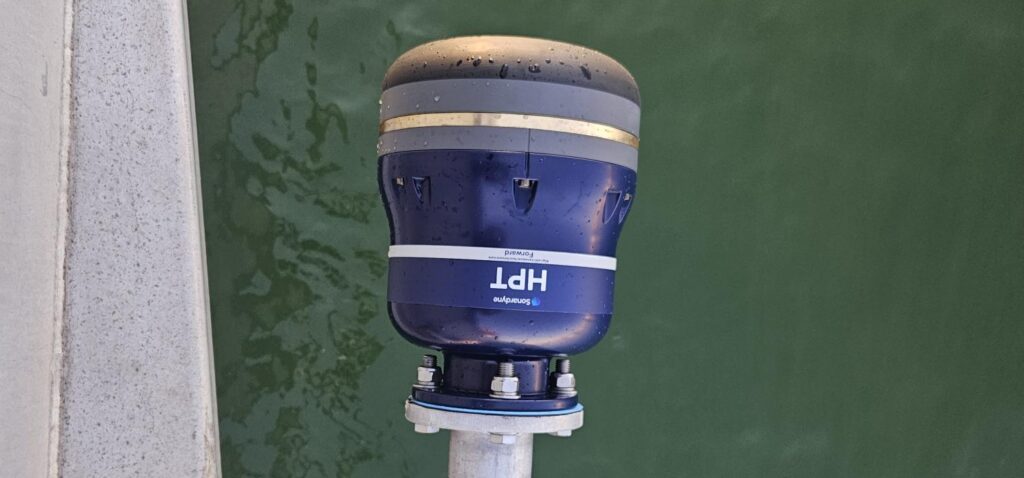
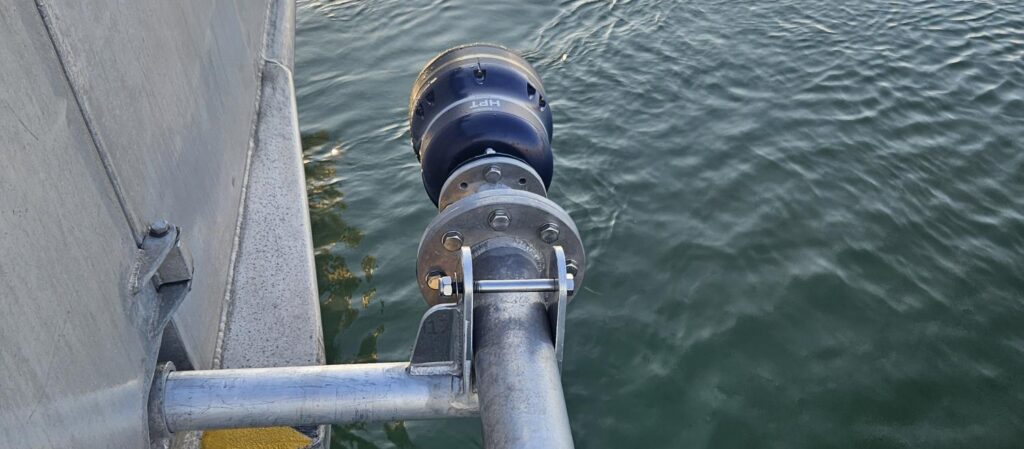
Our industry-leading Mini-Ranger 2 USBL system is engineered for high-performance tracking of underwater targets from surface vessels in shallow waters and coastal environments, providing stable and reliable tracking, even in challenging sea conditions.

It’s lightweight and portable, making it easy to integrate into smaller vessels, even including smaller uncrewed surface vessels (USVs). Installed on the Tenggara Explorer, Mini-Ranger 2 provides the high-accuracy positioning data required to track the ROV during inspection tasks and survey work.

Crucial to successfully integrating these systems onto the Tenggara Explorer was:

  • Robust platform integration: direct interfacing with helm, propulsion and auxiliary thruster systems to enable smooth, coordinated actuation.
  • Sensor fusion and target tracking: combining GPS, IMU, wind, and USBL subsea positioning data to maintain stable lock on both fixed coordinates and moving underwater assets.

Unique Groups’ team was the crucial integration partner, ensuring the vessel’s complex systems worked together, enabling its transformation to DP-level control and ROV-follow capability.

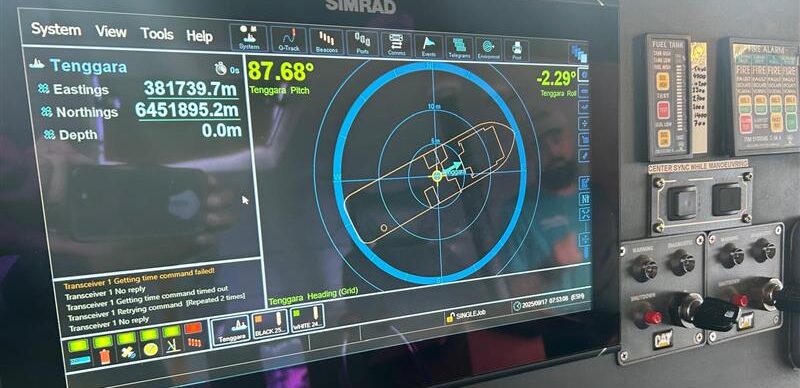
The Mini-Ranger 2 was expertly integrated into the vessel along with human machine interfaces and GAMA and Sonardyne displays into pre-existing Simrad units on the Bridge. This was followed with extensive in-water testing and performance verification and calibration.

Through this work, Unique Group enabled GAMA to perform critical autonomous functions, including precise ROV following, station-keeping and survey line tracking off Australia’s West Coast.

The Results

Our collaboration with Tenggara Explorer demonstrates how high-precision station-keeping and target-following can be done without the DP price tag. With the integration of GAMA and Mini-Ranger 2, the vessel is proving its ability to deliver DP-level capability, including ROV-follow operations.

Kai Lebens, Director and Operations Manager, at Tenggara Explorer:

“What stood out most was the stability during ROV/AUV following. We consistently held position and heading within DP-equivalent tolerances, even in variable wind and swell, while following a moving subsea target through USBL updates. The feel is ‘DP-like’ – the helm simply stayed where it needed to be, without the constant micro-corrections they were used to.

With GAMA managing fine vessel motion, bridge teams can maintain higher vigilance and focus on project oversight, data quality and safety. It’s also an advancement on the autonomy roadmap – helping to unlock the benefits of autonomy, alongside DP-level control.”

Peter Baker, General Manager of Growth, at Greenroom Robotics:

“Mini-Ranger 2 provided the reliability and fidelity needed for predictive tracking. It provides high update rates, dependable accuracy and stable performance in the shallow-to-midwater environments typical of survey and inspection work.

“That consistency is essential as the autonomy needs trustworthy subsea positioning to predict vessel motion relative to the ROV/AUV. Sonardyne effectively gave us the ‘subsea truth source’ that GAMA’s Dynamic Predictive Control depends on.”

Aidan Thorn, Marine Robotics Business Development Manager at Sonardyne:

“For vessel operators like Tenggara Explorer, it means new mission types – allowing them to use their existing workboat to take on tasks that historically required a DP-class vessel, unlocking a broader variety, and potentially higher-value, jobs.”

“Unique Groups’ integration work was the linchpin that allowed the Tenggara Explorer to fully leverage the GAMA package and Mini-Ranger 2’s capabilities, enhancing operational efficiency and safety while reducing environmental risk,” adds Lebens (at Tenggara Explorer). “Their contribution was fundamental to the success of this project.”

The road to maritime autonomy

Greenroom Robotics has its sight set on expanding this capability, not just rolling it out to more work boats, but also building in and enabling more autonomy.

This includes scaling from single-vessel deployments to fleet-level collaborative capability, using Dynamic Predictive Control to support multiple vessels coordinating station-keeping, target following, launch/recovery and survey tasks.

They’ll also be building in more of their AI perception to directly inform the control loop, enabling vision-informed station-keeping and obstacle-aware positioning.

“The power of hybrid autonomy is that it unlocks autonomous functionality for ROV-follow type operations while enabling the vessel to operate with a leaner crew. This represents the next logical step in the evolution of maritime operations and a huge opportunity for innovative operators like Tenggara Explorer,” says Baker at Greenroom. “It also aligns with current regulatory frameworks that still require human oversight, while demonstrating the real-world value of autonomy in commercial service.

“As autonomy is proven under human supervision, confidence will build with classification societies and regulators, enabling a gradual transition to fully autonomous operations.”

“Through collaborations like this one with Greenroom Robotics, Tenggara Explorer, and Unique Group, we’re helping to build the safety case for autonomous operations,” adds Thorn.

“The key to future autonomy is demonstrating that these systems can complete missions successfully without requiring any human intervention. Helping to prove this capability builds the evidence base needed to move toward fully autonomous operations with confidence.”

Case studies