
Sonardyne
Support Centre

Case Study:

Energy Blog

Author:

Mike Ellis Business Development Manager - Offshore Renewable Energy

A single solution for accurate underwater cable operations

05022026

The growth of the global subsea cable network – especially with the huge demand from the offshore renewable energy (ORE) market, as well as subsea telecommunications cable expansion – means that the challenges of installation, survey and maintenance are going to define the next decade of offshore operations.

About 7,500 km (around 4,660 miles) of export cables had been laid globally by the end of 2020, with an additional nearly 40,000 km are forecast to be laid by 2030. This is on top of an already huge – and growing – global network of nearly 600 subsea telecommunications cables in operation or under construction*.

Given this global expansion, positional accuracy is critical for the cable lay vessel’s position, cable installation precision, its maintenance and repair. This is because every stage, from pre-lay surveys to integrity monitoring – depend on tight operational specifications that enable subsea cable custodians knowing exactly where the cable and all their surrounding seabed features are, often to within a metre or better.

This is work that is often done in challenging environments. GNSS signals could be unreliable (increasingly so due to geopolitical tensions), which could impact your vessel’s dynamic positioning (DP) system. Ferrous cable material can interfere with underwater navigation solutions, degrading the positioning of your remotely operated robotic platform, or heavy machinery such as your cable plough or trencher.

Across all these challenges we have a single instrument that can deliver the positional precision you need.

SPRINT-Nav

Our SPRINT-Nav high-performance hybrid acoustic-inertial navigator is an all-in-one instrument that delivers continuous, robust navigation outputs, enabling operations even in challenging, GNSS-denied subsea environments.

It tightly integrates an inertial navigation system (INS), Doppler velocity log (DVL) and a pressure sensor into a single pre-calibrated unit that is unaffected by magnetic interference.
Five ways SPRINT-Nav supports accurate subsea cable operations

1. Resilient vessel positioning for continuous laying

For large, dynamically positioned (DP) vessels engaged in laying operations, our SPRINT-Nav DP variant is invaluable. It provides resilient navigation reference, independent of GNSS, that is crucial for maintaining your vessel’s position and heading, even if satellite signals are intermittent, restricted or denied.

By integrating this technology in real-time with surface systems, you can ensure precise track-keeping and maintain optimal cable tension and route alignment during continuous lay operations, reducing downtime and ensuring the cable is installed exactly as planned.

2. Pin-point touchdown monitoring

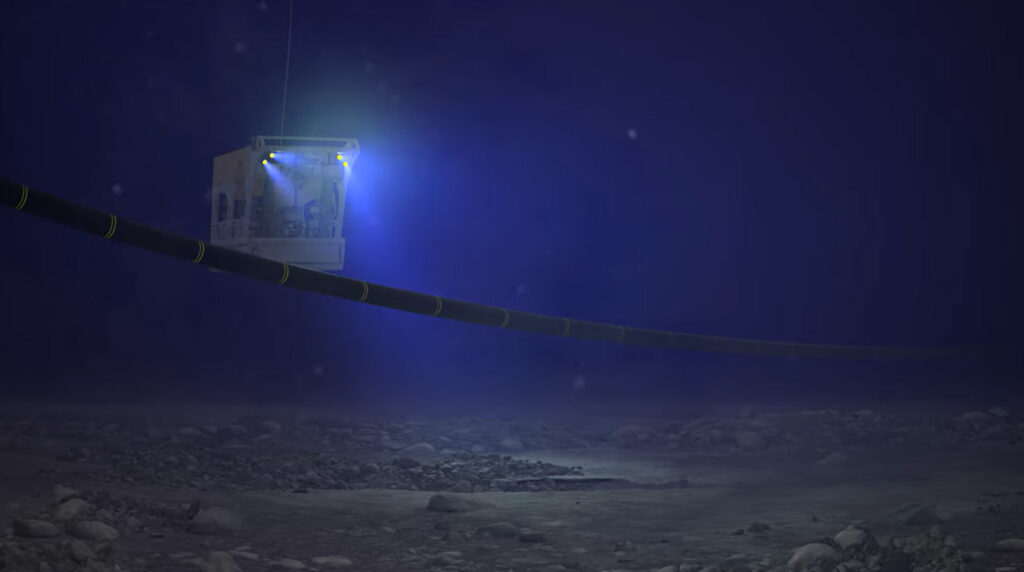
Accuracy is most critical at the seabed, specifically at the cable’s touchdown point. SPRINT-Nav can support you in two main ways here:


  • Integrated ROV operations: An ROV equipped with SPRINT-Nav, often aided by our Ranger 2 Ultra-Short BaseLine (USBL) underwater positioning system, can accurately survey the cable’s touchdown point and the surrounding seabed.
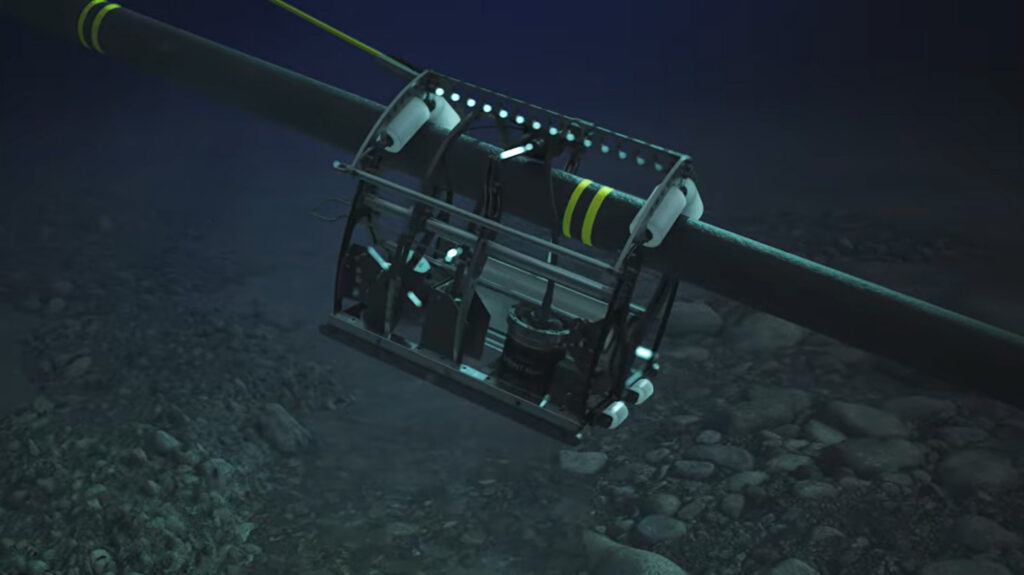
  • Specialised tools (for example, CableFish): We have successfully supported innovative systems like North Sea Systems’ CableFish, a tool dedicated to touchdown monitoring. Our smallest SPRINT-Nav unit, the SPRINT-Nav U, is specified onto the CableFish, optimising the system to provide uninterrupted, pin-point positional accuracy. This approach, trialled using a SPRINT-Nav Mini, has proven to be a more cost-effective and higher-performance solution than using a traditional ROV or hull-mounted sonar. The accurate heading, attitude and positional data provided by SPRINT-Nav is critical to validate crucial measurement requirements and ensure your cable’s as-laid cable position is accurately known.

3. Trenching and burial guidance

Once your cable is laid, burial is necessary for long-term protection. Trenching tools or ROVs equipped with SPRINT-Nav are used to navigate reliably at depth. The system provides stable position and attitude data, continuously tracking and confirming that the cable is following the exact as-planned route and being buried to the correct depth.

SPRINT-Nav’s integrated pressure sensor provides highly accurate depth measurement (0.01% full-scale accuracy), which significantly aids altitude control from SPRINT-Nav’s DVL during your vital trenching and burial operations.

4. Precision rock installation

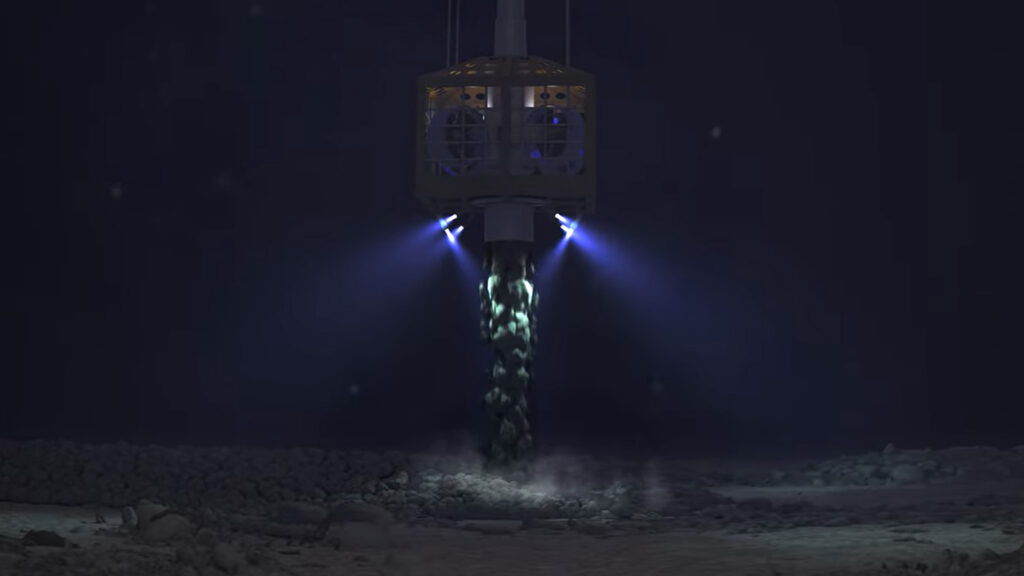
Even after burial, sections of the cable may remain exposed, requiring protection. You can ensure your protection material is delivered exactly where needed using fallpipe ROVs fitted with SPRINT-Nav.

When guided by SPRINT-Nav, often alongside our Ranger 2 USBL system, the vehicle can place rock with centimetric accuracy over exposed areas, making sure your cable is fully protected against external hazards while minimising over-dumping and reducing costs.

5. Long-term integrity monitoring and inspection

Beyond installation, SPRINT-Nav supports a variety of survey, inspection and intervention tasks. Regular inspections are vital for monitoring long-term cable integrity.

To locate buried cables, systems like EIVA’s ScanFish can be deployed with high-resolution 3D sub-bottom profilers and magnetometer arrays. These tools demand high-speed positional accuracy – which SPRINT-Nav delivers.

Cable operation application Asset SPRINT-Nav (or variant) is mounted on Purpose/key function supported 
Pre-lay surveys / route surveying Subsea vehicles or inspection assist vehicles (e.g., USV, AUV or ROV) Providing precise navigation for route planning and confirming seabed conditions. 
Continuous cable laying DP vessels (using our SPRINT-Nav DP variant) Delivering a resilient navigation reference independent of GNSS to maintain precise vessel positioning and heading. This ensures optimal cable tension and route alignment during continuous lay operations. 
Touchdown point monitoring ROVs Accurately surveying the cable’s touchdown point and the surrounding seabed. SPRINT-Nav provides precise subsea positioning of the cable as it meets the seabed. 
Touchdown point monitoring (specialised) CableFish (inspection and installation assist vehicle) Providing uninterrupted pin-point accuracy for touchdown position calculation, ensuring the as-laid cable position is within the specified corridor.  
Trenching and burial guidance Trenching tools or ROVs Navigating reliably at depth, providing stable position and attitude data. The system tracks the burial depth and alignment continuously, providing verification that the cable is following the exact as-planned route. 
Rock installation/armouring Fallpipe ROVs Installing rocks with submeter to centimetric accuracy over exposed cable sections, ensuring they’re protected. 
Long-term integrity monitoring and inspection EIVA’s ScanFish system (used with high-resolution 3D sub-bottom profilers) Locating and verifying buried cables, demanding exceptional, high-speed positional accuracy. Supports automated route verification and cable condition monitoring 

Whether providing primary navigation and positioning data or serving as valuable redundancy capacity alongside other systems, you can rely on the accuracy and reliability of the SPRINT-Nav family, even in challenging environments.

Watch the video

Learn more

Read about subsea cable touchdown monitoring with SPRINT-Nav in our Knowledge Base article.